In mid-November, with the summer crowds gone and Rome wearing its quieter, golden-light version of itself, we packed for a short trip that would take us from the capital’s cobbled streets to the dripping ceilings of an underground cave system and, finally, to the steaming rim of an active volcano. We travelled as two couples, which made the whole thing feel less like sightseeing and more like a shared adventure – the kind where someone always has a map open on their knees and someone else is arguing (affectionately) about which turning to take.
This post won’t include prices, since our trip took place a few years ago and costs for flights, accommodation and entry tickets in Italy will have moved on considerably since then. Think of it instead as a route to borrow and adapt for your own version of the trip.
It’s also the first instalment in our Italy series – more is coming on Mount Etna and the Puglia region, so if central Italy whets your appetite, there’s plenty more to come.
We’d flown out from Riga, where November already has a distinct winter edge to it, so touching down in Italy felt like buying ourselves a little extra autumn.
Rome as Our Base
We flew into Rome and used the city as our base for the best part of four days, picking up a hire car on the third day to head further afield. Rome wasn’t really the star of this particular trip – we’d have needed a fortnight for that – but as a base, it’s hard to beat. Everything else on this itinerary, from the caves to the volcano, is reachable as a long day trip, which meant we could sleep in the same bed each night and simply come home to it, slightly footsore, after each excursion.
We’d booked an apartment just a few hundred metres from the Vatican and the banks of the Tiber, and it turned out to be one of those rare bits of holiday luck: the landlord’s agent met us exactly on schedule, the flat was every bit as clean and comfortable as the listing promised, and the location meant we could walk to most of what we wanted to see. It’s the kind of find that makes you want to book again the next time you’re in the city, and we would.
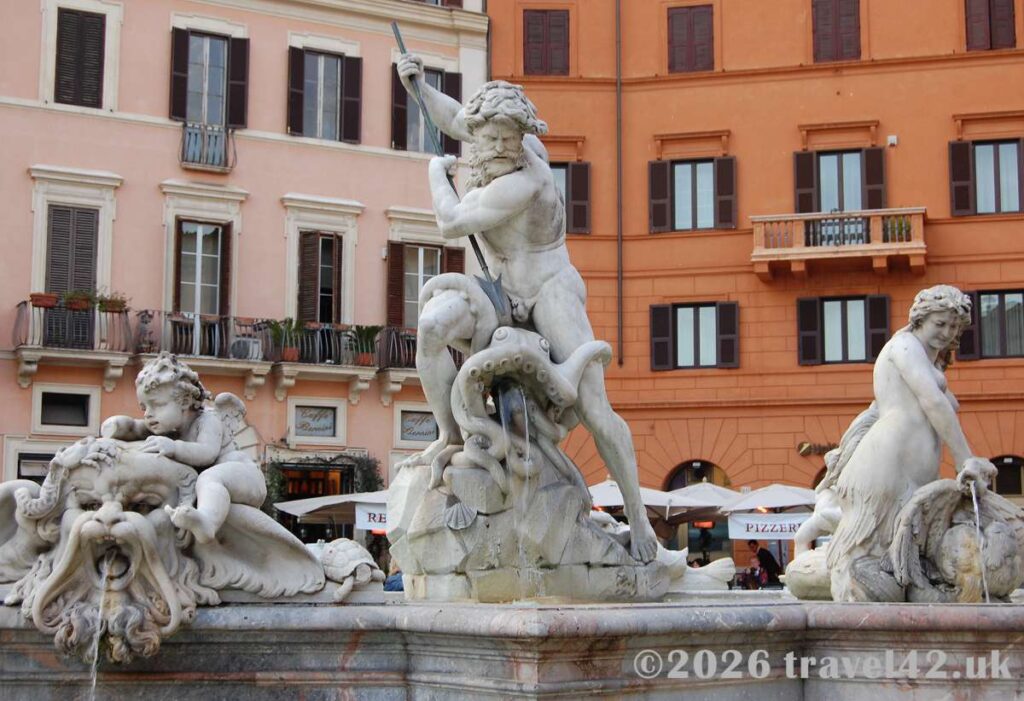
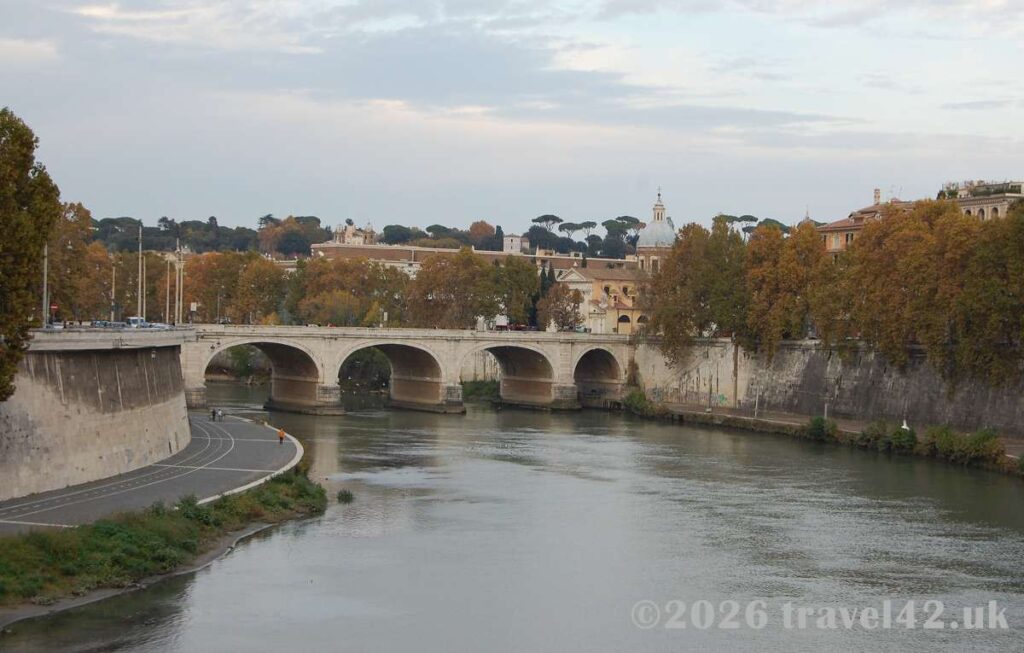
Rome itself needs little introduction. With a history stretching back more than two and a half thousand years, it’s less a city than a layered timeline you can walk through – Renaissance churches beside medieval streets, themselves sitting alongside imperial ruins, all still very much part of everyday life. A few days wandering between the Pantheon, the Vatican and whichever piazza catches your eye are more than enough to understand why Rome is such a magnet for visitors.
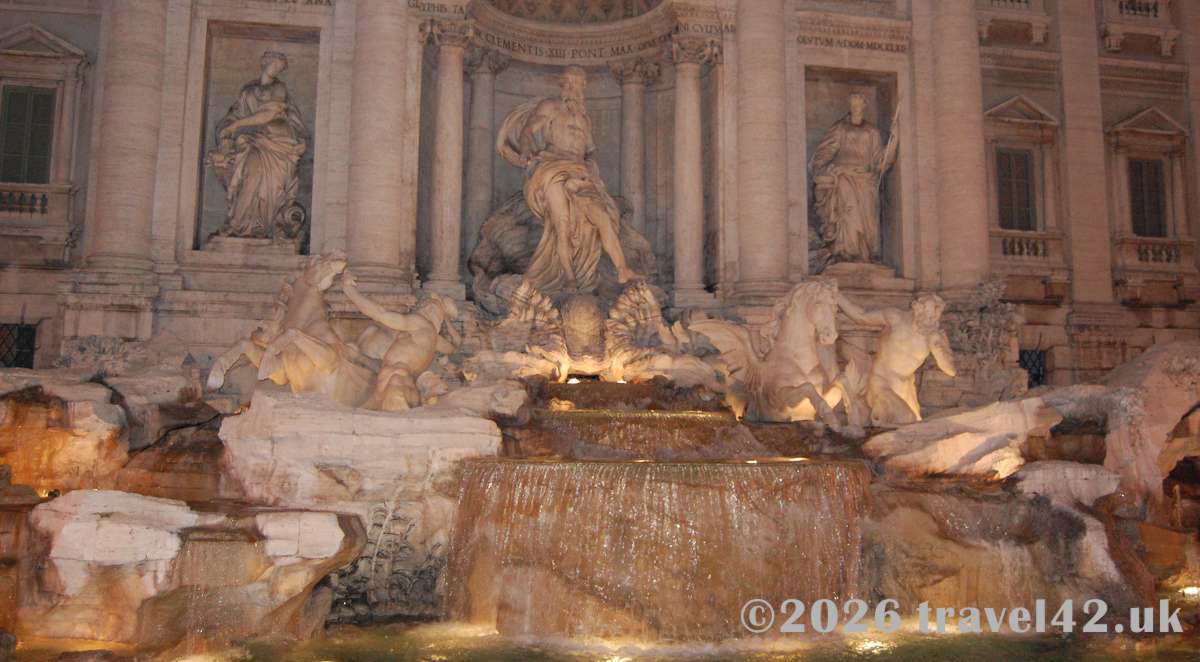
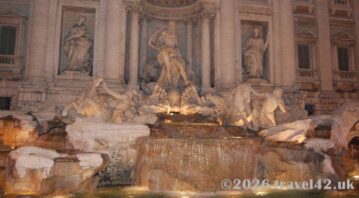
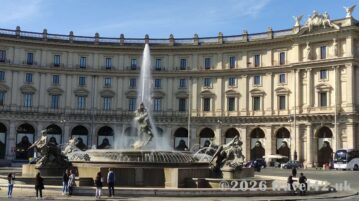
Our most memorable first impression, though, was the Trevi Fountain, where we went on our very first evening, straight off the flight. The atmosphere was extraordinary – the kind of scene that feels staged for a film, until you remember it’s simply a Tuesday night in Rome.
A Cooking Class for Two
While the other couple explored the city for half a day on their own, we slipped away for a Roman cooking class – a lovely, slightly indulgent way to spend a few hours together, elbow to elbow over a floured worktop, learning the difference between a proper carbonara and the versions we’d been making at home for years.
It’s the sort of activity we’d recommend to any couple visiting Rome: less about the finished dish and more about the two hours of teasing each other over rolled pasta.
You can read the full story of that afternoon, including where we went and how it turned out, in our separate post on cooking and eating in Rome.
Grotte di Frasassi: Italy’s Underground Cathedral
With Rome explored, we set off on the first of two single-day trips, this time north-east into the Marche region to visit the Frasassi Caves (Grotte di Frasassi), near the town of Genga in the province of Ancona. It’s a proper day out – around 250 kilometres from Rome each way, mostly along local roads rather than motorway, so we left early and treated the drive itself as part of the adventure.
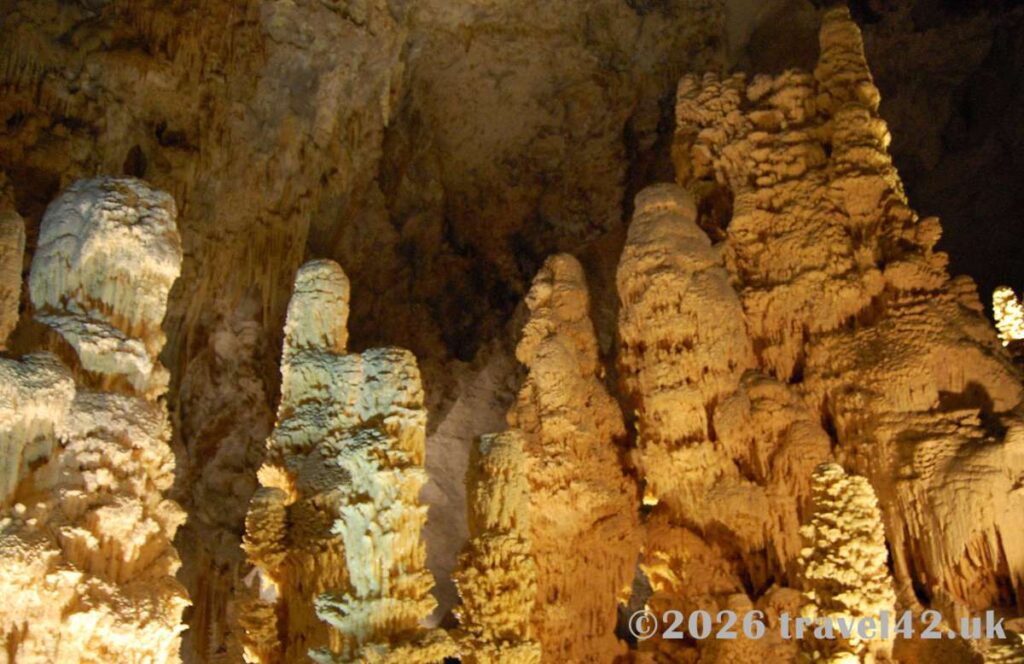
The caves were discovered in 1971 by the CAI Speleological Group of Ancona and opened to the public in 1974. The complex extends for many kilometres underground, although only a section is accessible on the standard visitor route. The enormous Grotta Grande del Vento, known as the Ancona Abyss, is particularly spectacular – so large that Milan Cathedral could fit comfortably inside it. The standard guided visit takes around an hour.
Wandering through room after room of stalactites and stalagmites, formed over thousands of years by the slow action of water, was a proper change of pace after the noise of Rome. The caves’ huge chambers and strange natural formations are difficult to convey in photographs; seeing them in person is another matter entirely.
We’d crossed from Lazio into the central Italian countryside on the drive up, and the shift in landscape – softer hills, quieter roads and far fewer people – was noticeable almost immediately. It made the return to Rome that evening feel like coming back to a different kind of busy, one we were glad to have a break from for a day.
The lighting inside the caves was surprisingly good, and we came away with far more photographs than we’d planned on taking.
Climbing Vesuvius
Our second day trip away from Rome took us in the opposite direction, south-east towards Naples on the A1, then onto quieter, more congested roads as we neared Vesuvius itself. The motorway stretch to Naples was straightforward; the last section, through the densely populated towns that ring the volcano’s lower slopes, was slower going, with narrow streets and traffic that tested our patience more than the mountain ever would.
On the way, on the lower slopes of Vesuvius, we stopped at a local producer for a taste of wine grown in the volcano’s own soil, along with a few local snacks – a good excuse to stretch our legs before the climb.
Reaching the summit isn’t something you can simply drive to directly. From the access area, visitors continue on foot along the route towards the crater. The approach and access arrangements have changed over time, so this is one part of the trip worth checking before setting off. The current official route leads to the Gran Cono and provides views across the Gulf of Naples.
From the crater rim, the view opens out over the whole Bay of Naples – one of those panoramas that has you reaching for your other half’s hand without really deciding to. Wisps of steam still rise from fumaroles inside the crater, a quiet, ongoing reminder that this is very much a living volcano rather than a museum piece. Vesuvius last erupted in 1944.
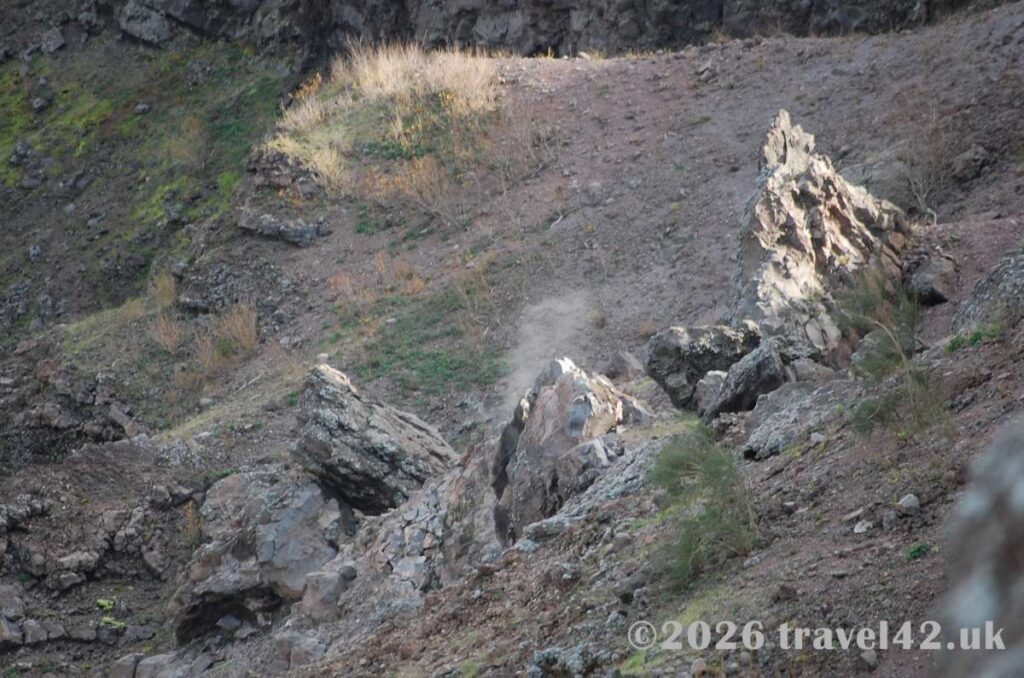
We had around an hour to walk the rim before heading back down to the car and, eventually, back to Rome.
The strangest part was watching steam rise from the ground in several places around the crater itself – a faintly unsettling sight, if we’re honest, and a quiet reminder that this sleeping giant could, in theory, wake up again one day.
A Short Trip, Long Memories
Two full days away from Rome, two very different landscapes and one shared base in the city itself – this was never meant to be an exhaustive tour of central Italy, but rather a taster of what’s within reach of the capital if you’re willing to get in a car for a day.
Between the quiet drip of the Frasassi caves and the steam rising from Vesuvius, it’s a trip that pairs history with something a little wilder. And for couples, there was something particularly enjoyable about returning to the same Roman apartment each evening after a completely different adventure during the day.
We’d happily recommend either leg to any couple planning their own Roman base – especially if, like us, you enjoy mixing famous sights with something a little less predictable.
If this has whetted your appetite for more of Italy, keep an eye out for our upcoming posts on Mount Etna and the Puglia region, both part of our growing Italy collection here on Travel42 UK.
Travel42 UK is a couples travel journal dedicated to immersive road trips, slow travel, and destination storytelling.
Explore More of Italy:
The long way round, as a couple
About the Author
The author, ainarsbl, is a Level 7 Google Local Guide, Master Reviewer and expert travel reviewer focused on scenic landscapes, UNESCO sites and meaningful couples travel experiences.