Germany, front and back
This was the German part of a longer spring trip through Western Europe, taking in Germany, France and Switzerland before returning to Germany. Because we began and ended in the same country, this article covers two episodes from opposite ends of the journey: a thermal-bath weekend in Baden-Baden at the start, and a day among the flowers of Mainau Island at the end.
They are very different places, but they work surprisingly well together. One is about soaking, slowing down and doing very little; the other is about wandering slowly through a garden together. If you like your breaks gentle and unhurried, both are made for two.
For more ideas for planning a trip like ours, see our Western Europe Travel Guide for Couples.
Baden-Baden: soaking in history and healing waters
A late arrival at Gasthaus Linde
We flew into Karlsruhe/Baden-Baden Airport late in the evening and took a taxi for the journey of just over 20 minutes to Gasthaus Linde (Yburgstraße 79, 76534 Baden-Baden), in the quiet suburb of Steinbach. The owner was expecting us and made our arrival easy. He suggested we sort out the formalities in the morning, so we went straight to our room and unwound. After a day of travelling, it was the best possible start.
This was our second stay at Gasthaus Linde, a simple three-storey building. Our first visit had been so good that we didn’t hesitate to return: the location was convenient, there was parking, the hotel had a good restaurant, and the rooms were comfortable and fairly priced. On our earlier visit, we had walked into town from here. Baden-Baden itself struck us as a calm, distinctly German town, with an easy-going atmosphere.
Why Baden-Baden feels different
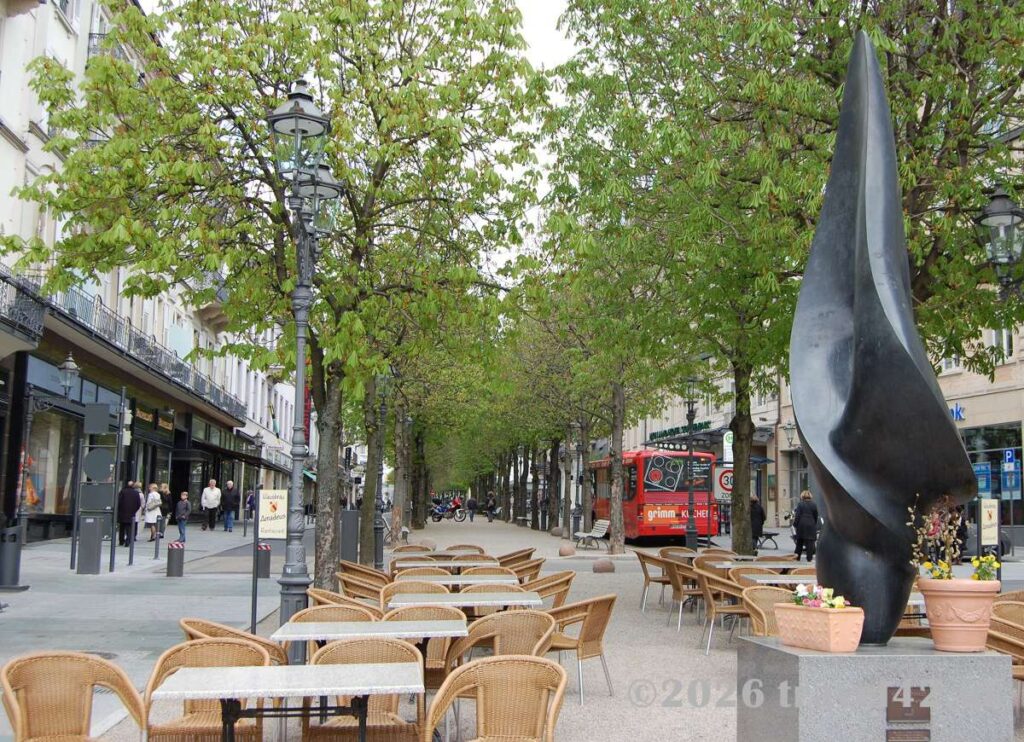
Baden-Baden is a thermal spa town set in the green, rolling landscape of Baden-Württemberg, and it wears its reputation for luxury quite openly. People have been coming here to take the waters since Roman times, and you can still feel that history in the elegant architecture and unhurried cafés.
We noticed the higher standard of things quite quickly. It showed in the taxi fare and restaurant menus, but also in the service and the quality of the experiences we enjoyed. The thermal baths aren’t cheap, but we felt we got what we paid for. Even writing this back home in the summer sunshine, I can still remember the relaxing effect of the experience.
A short history of the baths
The name gives you a clue: Baden means ‘bathing’. The Romans valued the hot springs nearly 2,000 years ago. In the Middle Ages, the town was known simply as Baden, and it officially became Baden-Baden in 1931 to distinguish it from other places with the same name.
Its history wasn’t always peaceful, with periods of destruction followed by rebuilding. By the 19th century, however, Baden-Baden had become one of Europe’s most fashionable spa resorts. Its visitors included Queen Victoria, Kaiser Wilhelm I and Napoleon III, as well as the writers Ivan Turgenev and Fyodor Dostoevsky.
You can still explore much of this heritage on foot. The Kurhaus and its gardens, the Casino, the Fabergé Museum and the two famous bathhouses, Caracalla Therme and Friedrichsbad, are all within a relatively short distance of one another.
Caracalla Therme or Friedrichsbad?
We chose Friedrichsbad for this visit. Caracalla Therme is more modern and has a livelier, leisure-pool atmosphere, whereas we wanted a quieter spa experience. We had already tried Caracalla on an earlier visit, so we could compare the two from personal experience.
Caracalla Therme: the modern spa
Our first bathing session in Baden-Baden was at Caracalla Therme (Römerplatz 1, 76530 Baden-Baden), during that previous visit. It’s a sleek, modern spa complex, named after the Roman emperor Caracalla in a nod to the town’s Roman roots.
At the time, the prices felt fair for what we got. Entry started at €20 for two hours, and we found the three-hour session at €29 the sweet spot. A full-day pass covering the bathing and sauna areas cost €39. Extras such as foam massages cost more, although time spent being pampered wasn’t deducted from our pool time. There were also options to add breakfast, VIP tickets or a spa lunch. Children under seven weren’t allowed in the main bathing area, although there was a supervised play area for younger children.
These were the prices when we visited, so check the current tariffs before planning your visit.
For couples who prefer to keep their swimwear on, Caracalla is the easier choice. It’s also a good option if you enjoy moving between pools, relaxing in the water and spending a few hours at a modern spa.
Friedrichsbad: the Roman-Irish experience
Just a short walk away is Friedrichsbad, the traditional bathhouse. This is a quieter, ritual-based experience, deliberately different from a leisure pool full of splashing and activity.
You follow a sequence of bathing stages, moving through progressively warmer rooms and steam baths before finishing with a cool plunge. The architecture is beautiful, and the whole experience encourages you to slow down and forget about the outside world for a while.
There is one famous rule to know before visiting: Friedrichsbad traditionally operates without swimwear on most days. Since July 2024, however, it has offered swimwear-only bathing on Wednesdays and Saturdays. The bathhouse admits visitors aged 14 and over, which also helps maintain its peaceful atmosphere.
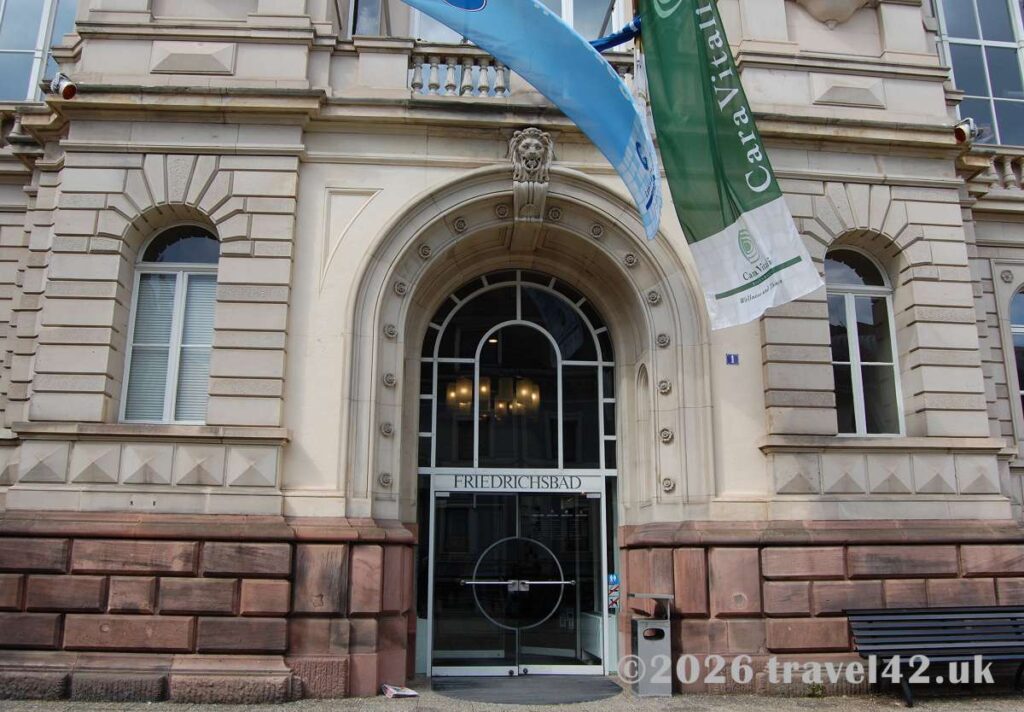
In practice, any self-consciousness melts away surprisingly quickly. The architecture is beautiful, the water is soothing, and the bathing sequence is so absorbing that you soon stop noticing anyone else.
We took the full four-hour programme, which included a soap-and-brush massage and a final cream massage, for €43. Not a cent of it felt wasted. This was the experience that made the Baden-Baden part of our trip, and we’d happily return.
The soap-and-brush massage was the most enjoyable and surprising part. We went through the rooms and pools together, and the only place where we hesitated before getting in was the ice-cold water.
The basic Roman-Irish bathing ticket was listed at €38 in 2026 when I checked, although prices and treatment options can change. It’s worth consulting the official Friedrichsbad website before you go, particularly if you want to plan your visit around the bathing programme or a massage.
Magnolias and a bus ride
Getting into town was easy. We walked to the nearby bus stop, and German public transport took us into Baden-Baden quickly and comfortably. The return journey to our guesthouse was just as straightforward.
Before leaving town after our visit to Friedrichsbad, we wandered through the streets and found the magnolias just beginning to bloom. Ever since, seeing magnolias in flower has reminded us of that spring trip to Baden-Baden. They have become some of our favourite trees to look at in springtime.
Our next task, after returning to the hotel, was to collect the hire car so we could continue the trip on wheels.
Mainau Island: a flower island on Lake Constance
Arriving from Switzerland
At the other end of the trip, as planned, we visited Mainau Island on our way back from Switzerland. This is a completely different corner of Germany, near Konstanz on Lake Constance.
Before arriving, the surrounding area had given us the impression of somewhere rather remote and not particularly exciting. Mainau dispelled that impression almost immediately.
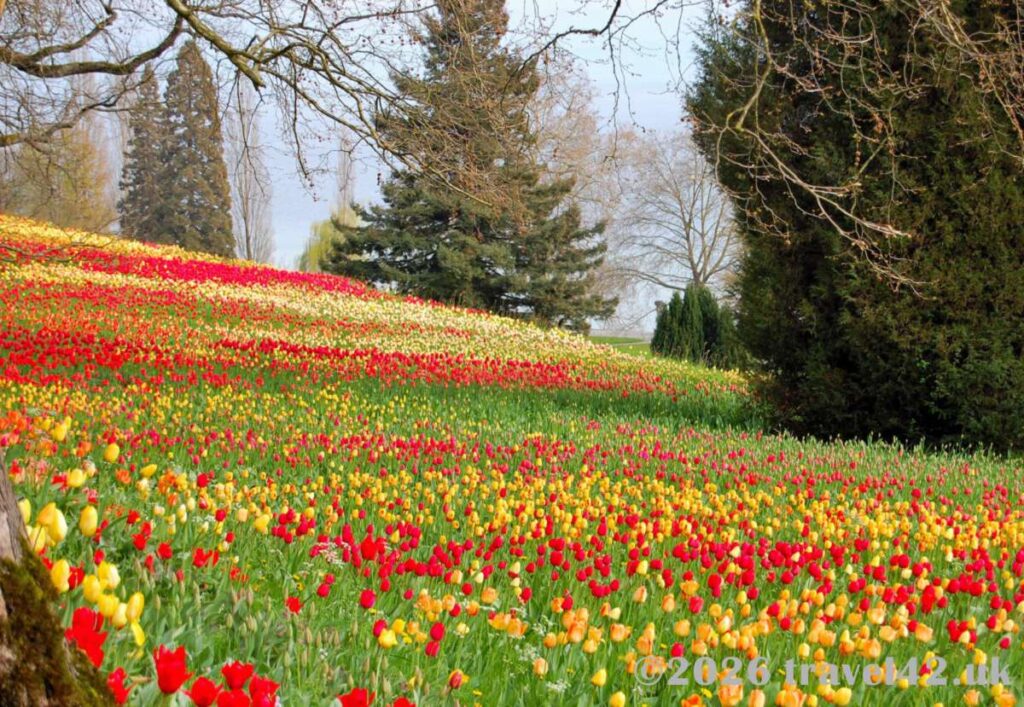
I’ll say up front that this isn’t a comprehensive description of the island. Mainau is a place to see rather than simply read about, and the photographs say more than my words can.
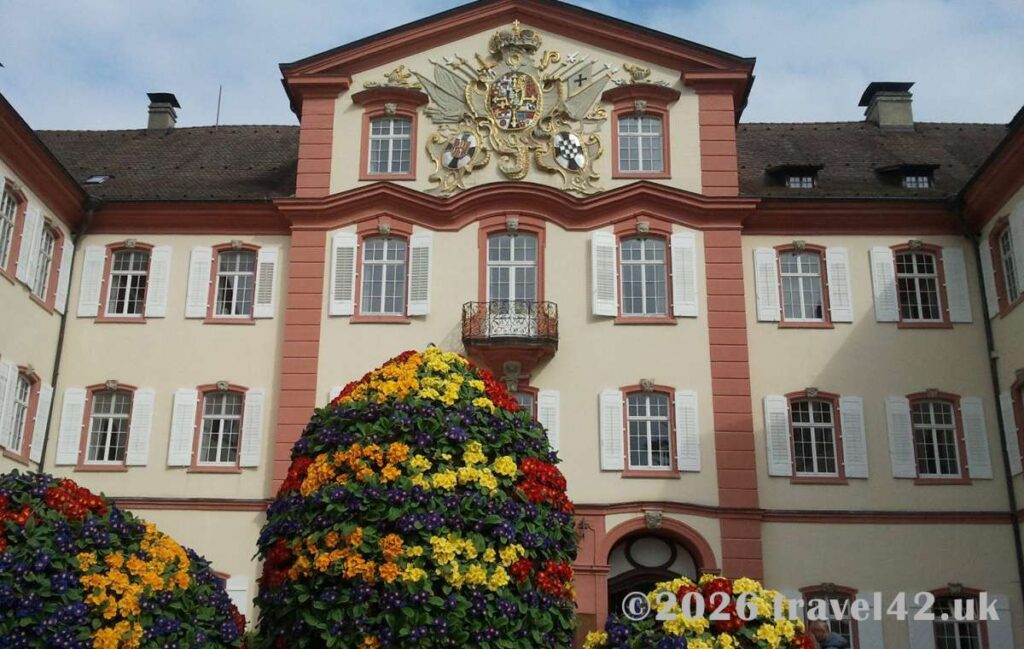
Flowers all around
Mainau is home to an extensive botanical garden, and we deliberately chose spring for our visit. The spring flowers were out in force, and the island was full of colour.
It isn’t a particularly large island, and you might imagine that you could walk around it in a couple of hours. In reality, you probably won’t. The lawns, planting and flower beds are so carefully designed and maintained that you keep stopping to look. And you can’t really explore the island properly without taking a break in one of its cafés.
The admission price at the time of our visit – €17 for an adult and €34 for a family ticket – seemed rather high at first. By the time we had seen everything, however, we understood how much work goes into creating and maintaining such a place.
Admission has since increased considerably. For the 2026 main flower season, adult tickets cost €26.90 online or €29.50 at the entrance, so it’s worth checking the official Mainau Island ticket prices before visiting.
Tropical house and butterfly house
Among the gardens are several buildings housing shops and exhibitions. One of the most striking is the Palm House, a large greenhouse with an impressive collection of tropical plants and orchids. Another highlight is the Butterfly House, where butterflies of different sizes and colours live in tropical, jungle-like conditions.
The air inside both houses is warm and humid. It can feel a little uncomfortable at first, especially if you’re used to the cooler spring weather outside, but you soon forget about it and concentrate on the flowers and butterflies.
These indoor attractions make a visit to Mainau more than just a walk through flower beds. They offer a different atmosphere from the open gardens, and they’re well worth including in your wander around the island.
Two ends of one trip
Looking back, Baden-Baden and Mainau made good bookends for our trip. We began by soaking in thermal water and ended by wandering slowly through a garden. Both experiences were gentle, easy to enjoy together and pleasantly unhurried – exactly what we wanted from a spring break for two.
If you’re planning a similar trip, Baden-Baden is easy to incorporate into a longer road trip, while Mainau makes a lovely final stop before heading home. Germany doesn’t have to be merely a stopover on the way somewhere else: a couple of well-chosen days here can become a highlight in their own right.
The motorways make travelling by car convenient, although traffic jams can build up in certain places or after an accident. Leave some flexibility in your schedule, particularly on the day you’re heading home.
Our journey continued through France and Switzerland. You can read about our Switzerland road trip for couples and our spring in Switzerland, and our France article. Together, these trips show how easily a few different experiences can be combined into a varied Western European journey – with time for adventure, relaxation and a little romance along the way.
Travel42 UK is a couples travel journal dedicated to immersive road trips, slow travel, and destination storytelling.
Explore More of Western Europe:
The long way round, as a couple
About the Author
The author, ainarsbl, is a Level 7 Google Local Guide, Master Reviewer and expert travel reviewer focused on scenic landscapes, UNESCO sites and meaningful couples travel experiences.