We landed at Bergamo, collected our little hire car and pointed it north – not really sure yet whether this trip was going to be about mountains, lakes, or both. As it turned out, it was both, plus an opera under the stars that we hadn’t planned for. That’s often how our best trips go.
Getting to the Dolomites
We flew into Bergamo Orio al Serio and picked up a Fiat booked in advance through Economy Car Rentals, our usual choice for Italian road trips. From there, it’s a straightforward run east towards Lake Garda before the road climbs north into the mountains – a drive that changes character completely somewhere around the first alpine passes, as motorway gives way to switchbacks and the temperature drops with every hairpin.
We stopped at a viewpoint to photograph Lake Garda from above, and the view was so good we couldn’t resist lingering. Good job we did, too – when we drove the same stretch a few days later, the weather wouldn’t have allowed anywhere near as nice a picture.
Our base for the week was Canazei, a small resort village in the heart of the Val di Fassa, chosen mainly because it put us within easy reach of several different hiking areas without needing to change accommodation.
Settling into Canazei
We’d booked an apartment through Fassappartamenti, and it turned out to be a genuinely good find: centrally located on the main street and considerably larger than the photos suggested for the price. The landlady didn’t speak English, and between our patchy Italian and her German, we muddled through well enough – a small reminder that this corner of Italy still carries its Austrian past close to the surface.
One thing worth flagging for anyone booking the same way: a deposit may be required that isn’t always made clear at the time of booking, so it’s worth asking directly or having some cash to hand.
South Tyrol’s double identity
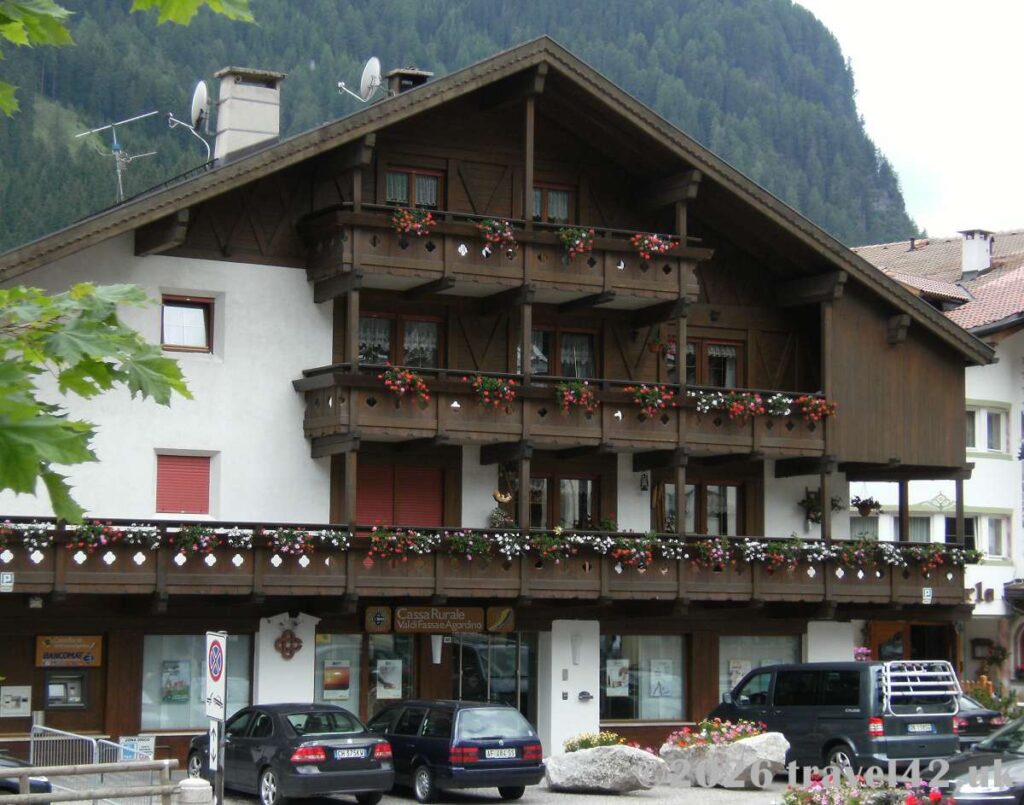
Canazei sits in Trentino-Alto Adige, the autonomous region made up of the provinces of Trento and Bolzano. The area’s history is still written on the road signs: towns carry both Italian and German names – Bolzano/Bozen, Castelrotto/Kastelruth – and after a few days it stops feeling like a curiosity and starts feeling like the region’s actual character.
Bolzano is worth a detour in its own right. Its position at the edge of the Dolomites makes it a natural gateway to the mountains, but it’s also an easy town to wander for an afternoon, with the mountains visible from almost every street corner. The Dolomites were declared a UNESCO World Heritage Site in 2009, recognised not just for their looks but for their geological importance – a collection of nine distinct mountain areas spread across five provinces, famous for their pale rock and dramatic formations.
Bolzano is a medium-sized town, similar in scale to Trento but with a different feel. We sat in a café for a while, watching people pass by, and it struck us as noticeably less hurried than a typical Italian city – not slower in a dull sense, just more measured. Definitely a place we’d happily go back to.
A short drive from Canazei, the Piramidi di Segonzano are one of the more unusual natural sights we’ve come across: rows of sandstone columns, each capped with a boulder that has protected it from erosion for thousands of years, some reaching around 20 metres in height. We’d seen something similar before at the Belogradchik Rocks in Bulgaria, though the two sites have little in common beyond the basic geological trick.
A day on the trails
The main event of the week was a full day’s hike above Canazei. A cable car just a few minutes from our apartment took us up to around 2,300 metres, from where marked trails fan out in every direction for walkers of pretty much any ability. We covered about 11 kilometres over four and a half hours, then caught the local alpine bus back down into the village – no need for a car all day.
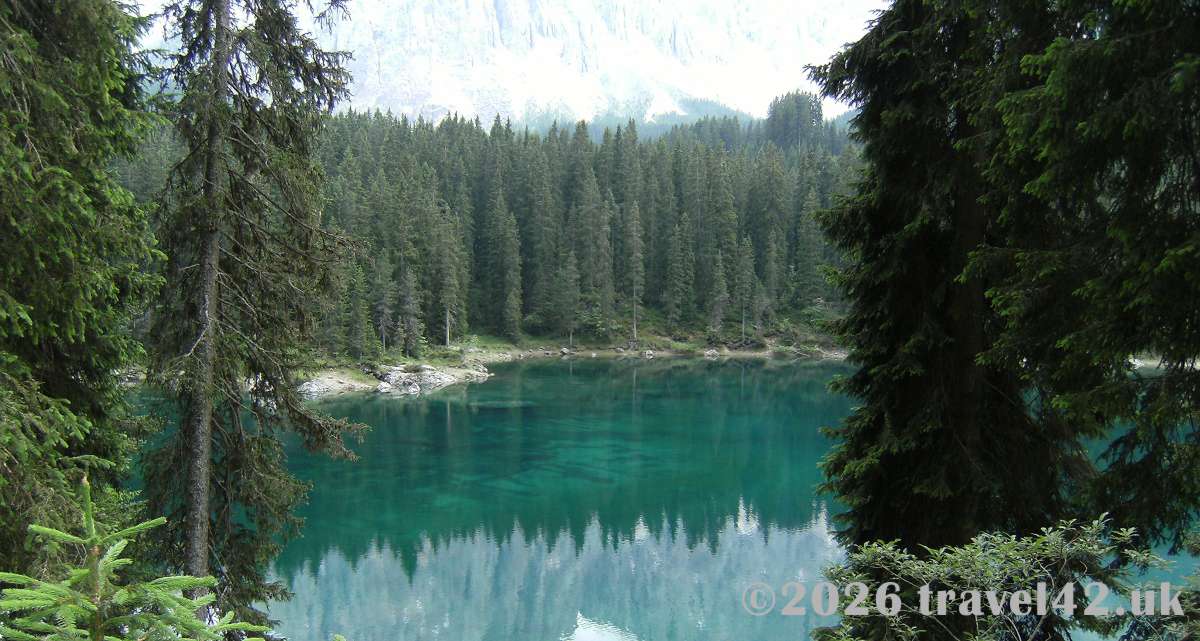
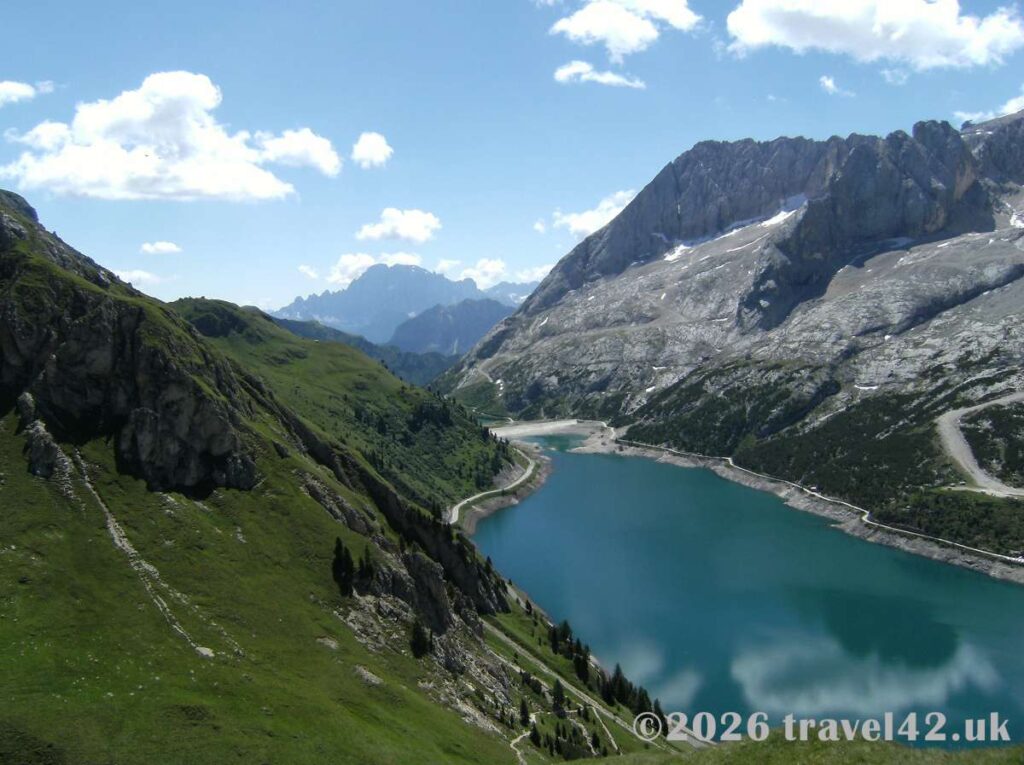
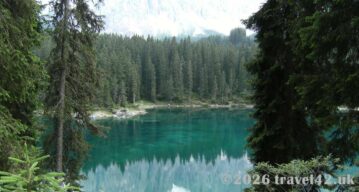
The most memorable moment was spotting an alpine lake from the edge of the mountain. The first time we saw it, it looked so far away that we doubted we’d actually reach it – but by the end of the walk, we were standing right beside it.
There’s also a small but pretty waterfall nearby, just before you head back down to catch the bus.
An unplanned festival
We hadn’t realised, when booking, that our stay coincided with Canazei’s town festival, which turned into one of the most memorable parts of the trip.
A parade came through the main street on the first evening – we watched most of it from our balcony – and the following day the whole village opened up: food stalls from local producers, small exhibitions and private houses thrown open to show off everything from embroidery to historic collections. Many kept guestbooks going back decades, filled with visitors from a surprisingly wide spread of countries.
One highlight was watching local cheesemakers at work in huge bowls, with the chance to try the results. Another exhibition displayed historic equipment used in mountain rescue work over the decades.
It was exactly the sort of unexpected experience we could never have built into an itinerary in advance – and one of the reasons we like travelling independently.
Chasing the sun to Verona
Midway through the week, the weather in the mountains turned properly foggy and grey, so we drove south to look for sunshine and ended up, almost by accident, in Verona.
The city’s Roman amphitheatre is impossible to miss – built in the 1st century AD, it’s one of the best-preserved surviving Roman amphitheatres and remains very much part of the city’s life. Verona’s historic centre is UNESCO-listed in its own right.
Verona is also, of course, the setting Shakespeare chose for Romeo and Juliet, which adds an extra note of romance to wandering its old streets hand in hand. Juliet’s balcony wasn’t hard to find, either – a short walk in more or less any direction seemed to lead us there eventually.
As luck would have it, Verdi’s Aida was showing at the Arena that same evening, and we decided on the spot to stay. Tickets were still available, which felt like a small miracle.
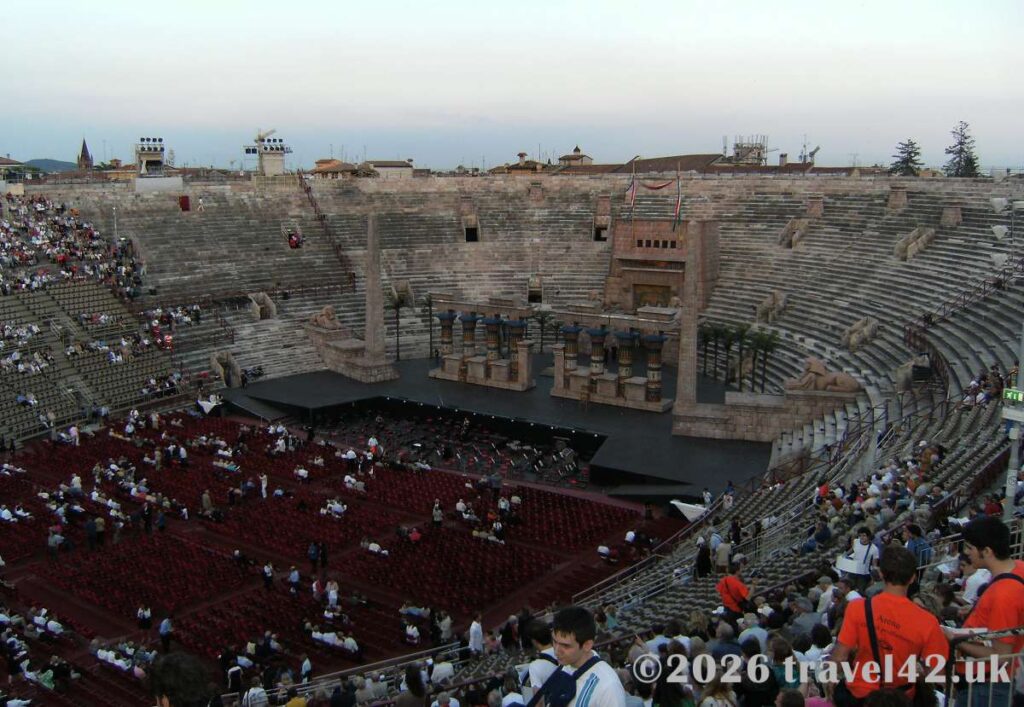
Watching an opera after sunset inside a nearly 2,000-year-old amphitheatre, with the performance carrying across the arena, is one of those experiences that’s hard to oversell – so we won’t try, beyond saying it was well worth the change of plan.
One practical note: if you’re seated higher up in the amphitheatre, bring a warmer layer than you’d expect. The wind picks up more than you’d think once the sun’s gone down.
Sirmione and Lake Garda
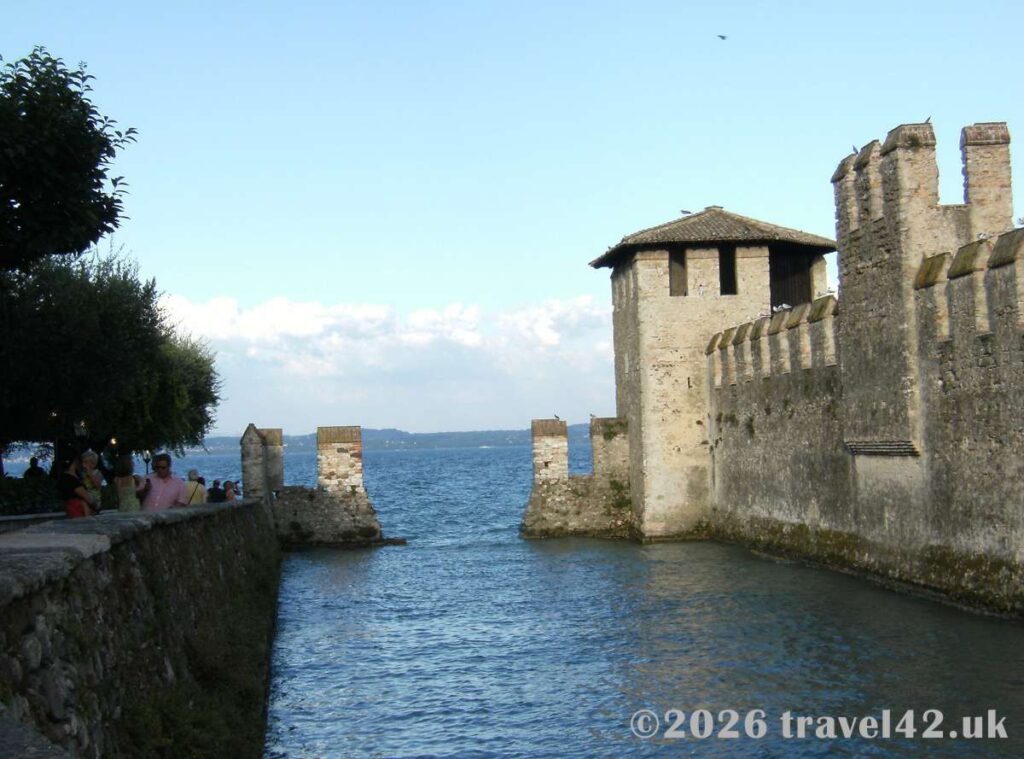
After a week in the mountains, we came back down to Sirmione, a town set on a narrow peninsula jutting into Lake Garda – Italy’s largest lake. We spent a couple of nights at Hotel Mirabello, comfortable and well placed for wandering the town on foot, and gave ourselves a few unhurried days of sun after all the walking.
We got lucky here too, catching another unplanned local event: a display of sbandieratori, Italy’s traditional flag-throwers.
It’s a genuinely old art form – performers in medieval costume toss, spin and catch large flags in time with drums, sometimes trumpets too, a tradition with roots going back centuries and still kept alive by dedicated local groups across the country. Watching it up close, with the lake as a backdrop, was a proper slice of Italian pageantry we hadn’t expected to see.
We spent the whole evening wandering the old town, browsing the shops – we even treated ourselves to a rather nice watch – before finishing with dinner at a lovely restaurant on the walk back to the hotel, which sat about two kilometres south of the castle.
Last stop: Bergamo
With an early flight ahead of us, we spent our final night at Hotel Donizetti in Bergamo – not the most central option, but an easy commute into town.
To see something of the city, we rode the funicular up to Bergamo’s old town, wandered the hilltop streets and found a proper pizza to close out the trip. Bergamo is a modest city by Italian standards, but its upper town has an atmosphere that punches well above its size.
This trip gave us a far wider range of experiences than we’d expected – mountains, a lake, unplanned festivals, a night at the opera and towns we hadn’t even had on our radar when we set off.
That’s usually the sign of a good one.
And perhaps that’s what we like most about travelling as a couple: the itinerary can give you the route, but it can’t predict the moments you’ll end up talking about long after you’ve come home. For us, this fortnight had plenty of those – from reaching an alpine lake we’d initially thought was too far away to finding ourselves sitting beneath the stars at an opera in Verona. The best parts weren’t necessarily the things we’d planned; they were the things that happened along the way.
This trip sits alongside our other Italy posts – read on for Rome’s food scene, Vesuvius and Umbria, and more from our time in the country
Travel42 UK is a couples travel journal dedicated to immersive road trips, slow travel, and destination storytelling.
Explore More of Italy:
The long way round, as a couple
About the Author
The author, ainarsbl, is a Level 7 Google Local Guide, Master Reviewer and expert travel reviewer focused on scenic landscapes, UNESCO sites and meaningful couples travel experiences.