Wherever you go, go with all your heart.
January and February are among the most dispiriting months in the UK, so we usually try to get away somewhere before spring properly arrives, chasing a bit of sunshine and warmth. This time we wanted somewhere in Europe, and southern Italy felt like the obvious choice. We’d been to the region before, but wanted to explore more of it, and two places in particular – Matera and Ostuni – had been on our list for a while.
Most people picture Puglia in high summer – white towns, blue sea and heat haze over the olive groves. We went in January instead, and came away thinking it might actually be the better time. We were lucky with the weather throughout, but there was another advantage: entire piazzas, viewpoints and winding old towns were often almost ours alone, which is not something you’ll manage in July.
This is part one of two: Matera, the extraordinary Fòcara di Novoli bonfire, and the Salento coast around Lecce. Part two picks up in the Valle d’Itria and finishes in Bari.
Matera: a city built into the rock
We began in Matera, leaving the car at a car park on the edge of town and walking in – sensible, since much of the historic centre is pedestrian-only and best explored on foot.
Matera is one of Italy’s oldest continuously inhabited settlements, with the Sassi – cave dwellings carved directly into the limestone – now forming part of a UNESCO World Heritage Site. People lived in the old cave districts until the 1950s, when the population was relocated as part of a major programme to address poor living conditions. The Sassi were later restored, and people gradually began returning.
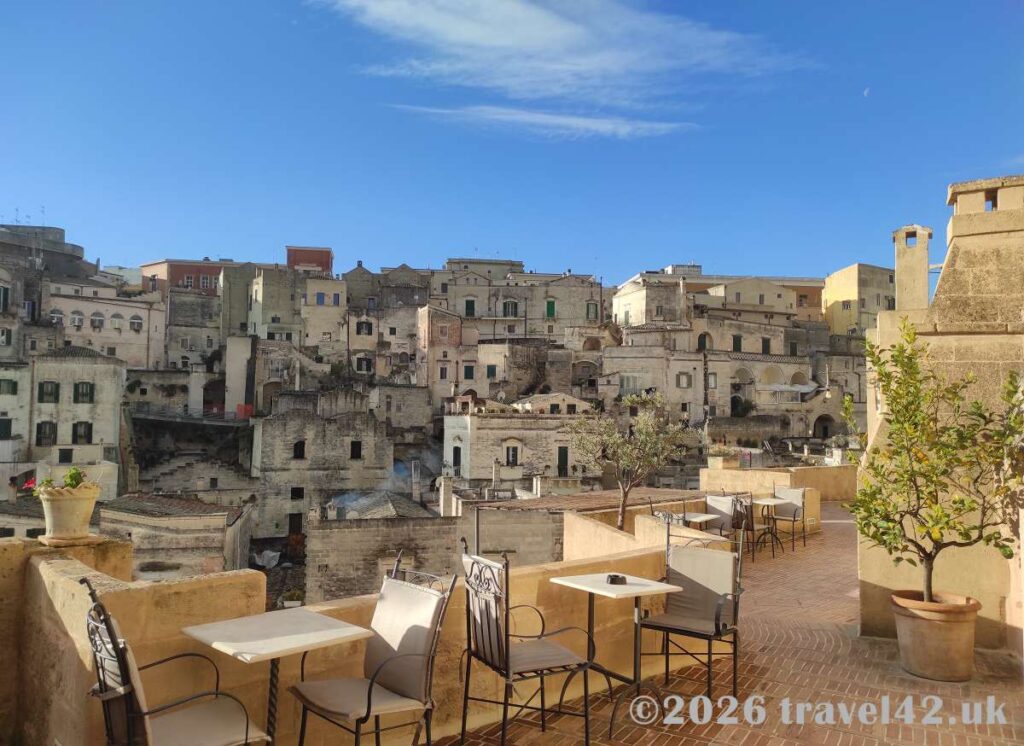
We spent two nights here, first at Locanda di San Martino Hotel & Thermae Romanae, then at B&B La Corte dei Pastori. Splitting the stay gave us a chance to experience two very different corners of the old town, both hotels built right into the rock itself, and both delivering exactly the kind of stay we’d been hoping for.
T42 Vibe – Locanda di San Martino Hotel & Thermae Romanae, Matera
| Category | Rating | Verdict |
| Couple Factor | ▰▰▰▰▰ | Excellent |
| Comfort | ▰▰▰▰▱ | Very Good |
| Value for Money | ▰▰▰▱▱ | Good |
| Location | ▰▰▰▰▰ | Excellent |
| Facilities | ▰▰▰▰▱ | Very Good |
| Atmosphere | ▰▰▰▰▰ | Excellent |
T42 Vibe – Overall: ▰▰▰▰▰ 5/5
The room was €99 plus tax when we stayed.
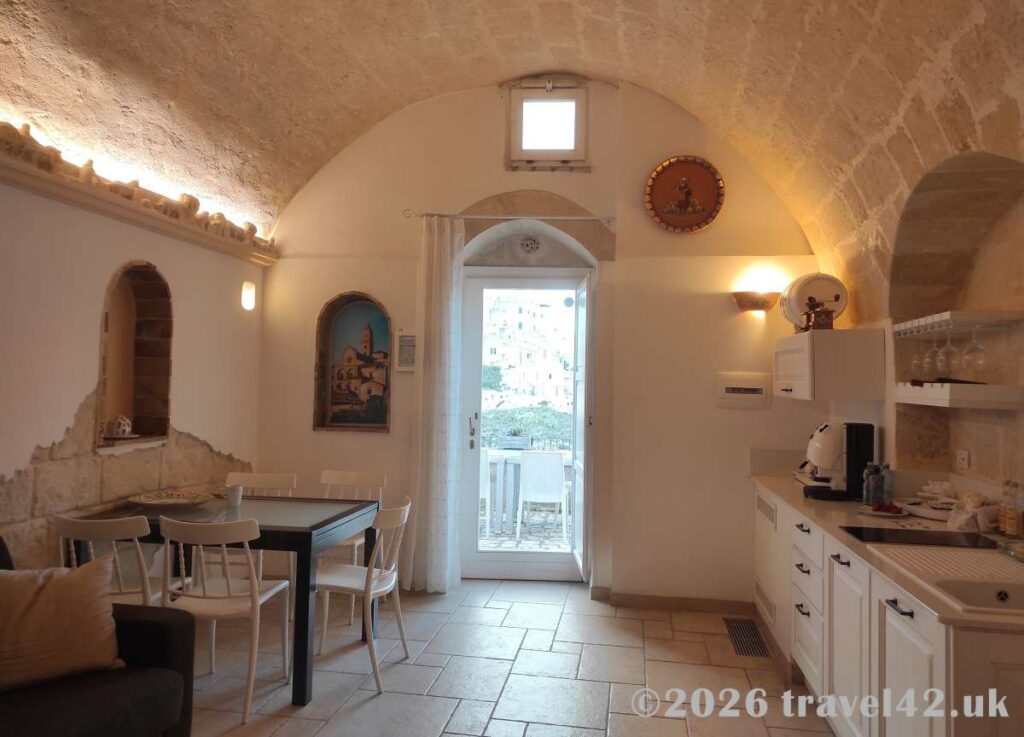
T42 Vibe – B&B La Corte dei Pastori, Matera
| Category | Rating | Verdict |
| Couple Factor | ▰▰▰▰▰ | Excellent |
| Comfort | ▰▰▰▰▰ | Excellent |
| Value for Money | ▰▰▰▱▱ | Good |
| Location | ▰▰▰▰▱ | Very Good |
| Facilities | ▰▰▰▰▰ | Excellent |
| Atmosphere | ▰▰▰▰▰ | Excellent |
T42 Vibe – Overall: ▰▰▰▰▰ 5/5
Our room was €112 plus tax.
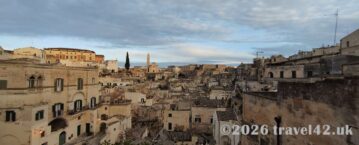
While staying in these two hotels, we walked through all three historic districts – Sasso Barisano, Civita and Sasso Caveoso – taking in the viewpoint by the Church of San Pietro Barisano, Matera Cathedral, Piazza Vittorio Veneto, the Church of San Francesco d’Assisi, the Belvedere di Piazza Giovanni Pascoli overlooking Sasso Caveoso, and the Tibetan-style suspension bridge across the Gravina ravine.
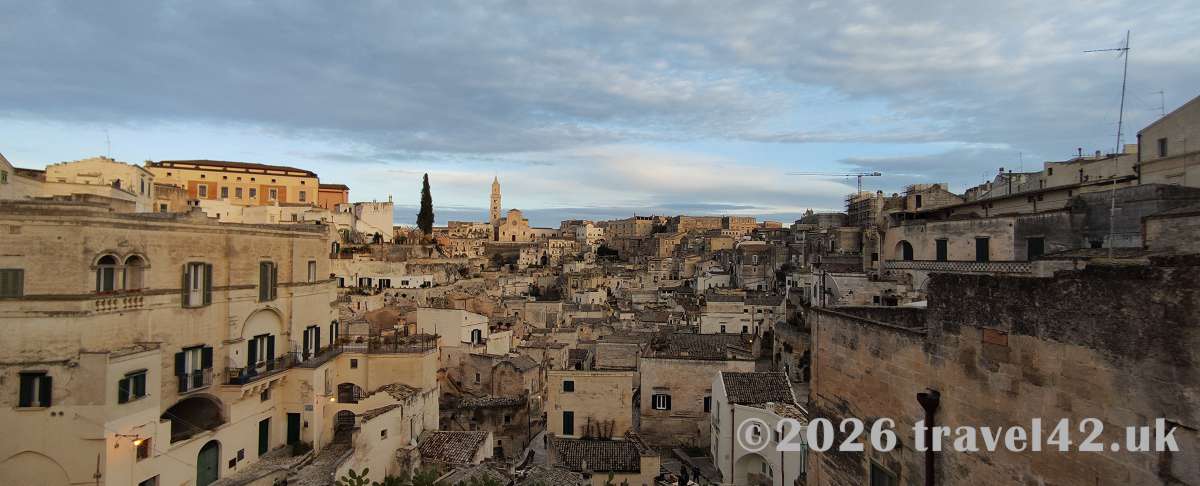
In winter, with soft afternoon light low across the ravine and barely another visitor in sight, it’s easy to see why Matera has become one of Italy’s most photographed towns – and also why it rewards slowing down rather than ticking off sights.
Along the coast road to Salento
We knew the following day would be a demanding one – around 275 kilometres of driving to reach our next base.
From Matera we drove east towards the Salento peninsula, following the coast for part of the route, bypassing Taranto and Gallipoli, and stopping now and then to stretch our legs and take photographs. It wasn’t a drive built around any single sight so much as a chance to watch the landscape change – flat farmland gradually giving way to the gentler, more cultivated country of Salento.
We finally stopped in Santa Maria di Leuca around sunset. The place was fantastic – the southernmost point of Salento, where the Adriatic and Ionian seas meet, and we thoroughly enjoyed the sunset there. We ended up staying longer than planned before turning back north towards our next base in Messapia.
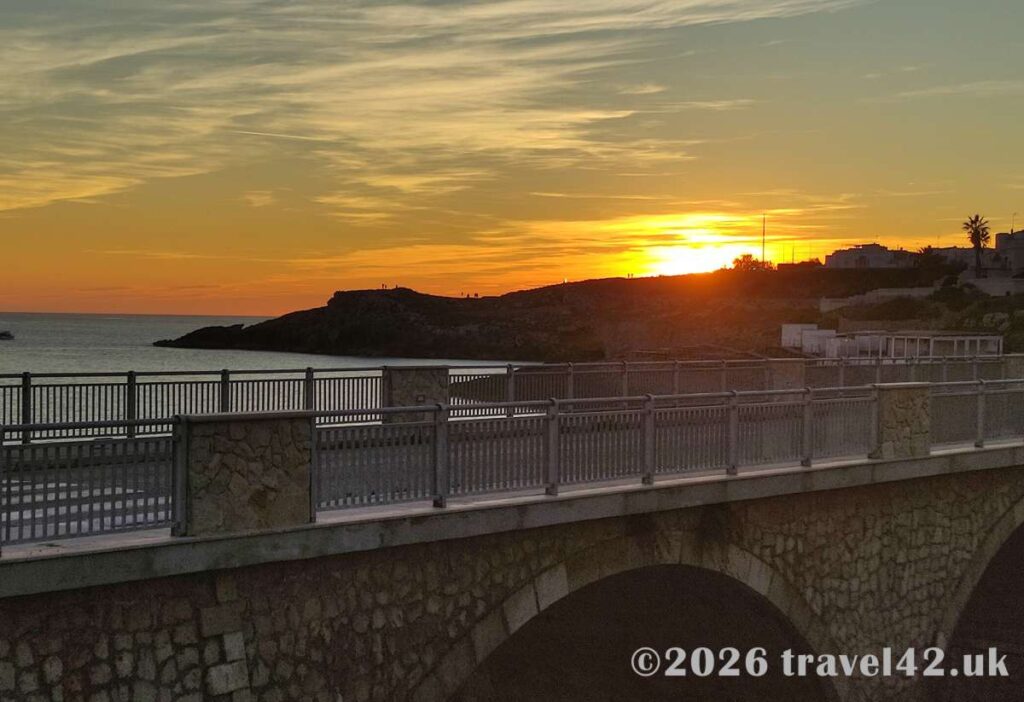
We based ourselves for three nights at B&B Messapia, in a watchtower-adjacent spot at Torre Saracena near Torre dell’Orso – a good, central base for exploring this stretch of the Adriatic coast.
We’re not giving a T42 Vibe Score for this one, as it was a fairly basic stay booked mainly for its location and price as a longer stopover rather than for the experience itself. Worth adding, though, that it was very good value for money – €98 plus tax for three nights.
Torre Sant’Andrea
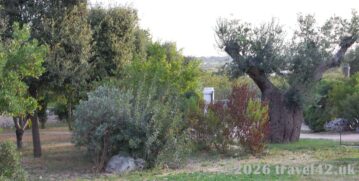
Early the next morning we drove out to Torre Sant’Andrea, a small stretch of coast known for its sea stacks and clear water rather than a settlement in its own right. The drive there alone is worth the trip – mile after mile of olive groves under a soft winter light, with the landscape rolling gently rather than dramatically.
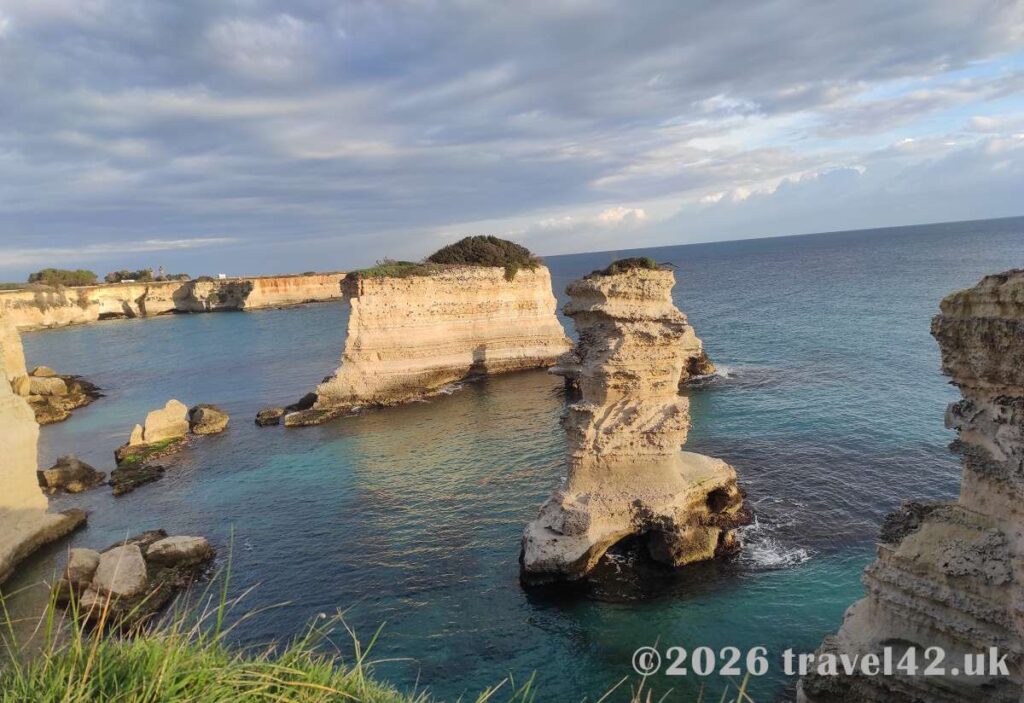
Puglia’s two coastlines are genuinely different experiences: the Ionian side to the west is gentler, with long stretches of sandy beach, while the Adriatic side here is more dramatic – cliffs, sea caves and rockier shores, with a bit more wind to go with the drama.
We preferred the Ionian coast for swimming, on balance, but the Adriatic side for scenery, and having both within reach is one of the real advantages of basing yourself in Salento.
Lecce and the Fòcara di Novoli: Puglia’s biggest bonfire
With the bonfire not due to be lit until late evening, we gave Lecce almost half a day beforehand, which felt about right for a first visit. Known as the “Florence of the South” for its exuberant Baroque architecture, carved from the local honey-coloured stone, it’s a town that rewards aimless wandering as much as any checklist of sights.
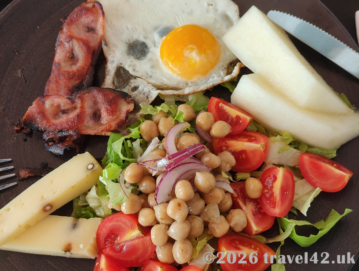
Beyond the historic sites, we particularly liked the local market, with its huge selection of fruit, vegetables and meat. Since our base had a kitchen, we couldn’t resist picking up a few things to bring back for meals, especially breakfast, over the following days.
One of the main reasons for timing this trip around mid-January was the Fòcara di Novoli, held in Piazza Tito Schipa for the feast of Sant’Antonio Abate.
It’s a remarkable piece of folk tradition: a huge bonfire built by hand from bundles of dried vine cuttings. The fire is the centrepiece of several days of celebrations, with a torchlit procession through the streets before the Fòcara is lit. The event draws enormous crowds – entry is free, but arrive early if you want to actually see anything.
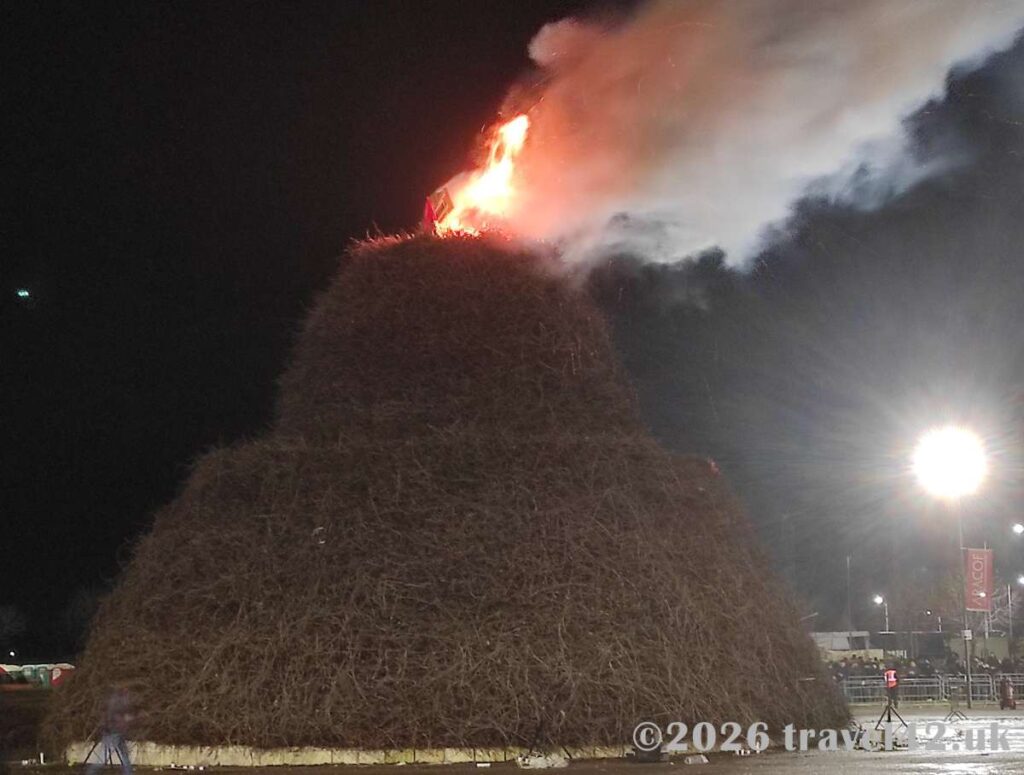
By the time we arrived, it was already dark, and the first thing we noticed was just how busy the streets, and the whole town, were. Parking wasn’t easy, though arriving early meant we found a space with a bit of wandering. Finding the fire itself was simple enough – everyone was heading the same way through the streets, so we never had to ask for directions.
It’s not a conventional romantic outing, but there’s something quietly moving about standing shoulder to shoulder with thousands of strangers, locals included, watching a centuries-old tradition play out exactly as it has for generations.
Lunch at Masseria Le Stanzie
Our most memorable meal of this leg of the trip was lunch at Masseria Le Stanzie, a converted Apulian farmhouse near Supersano, deep in the heart of Salento.
It’s the kind of place that trades on setting as much as food – a working farmhouse turned restaurant, surrounded by the countryside it draws its ingredients from.
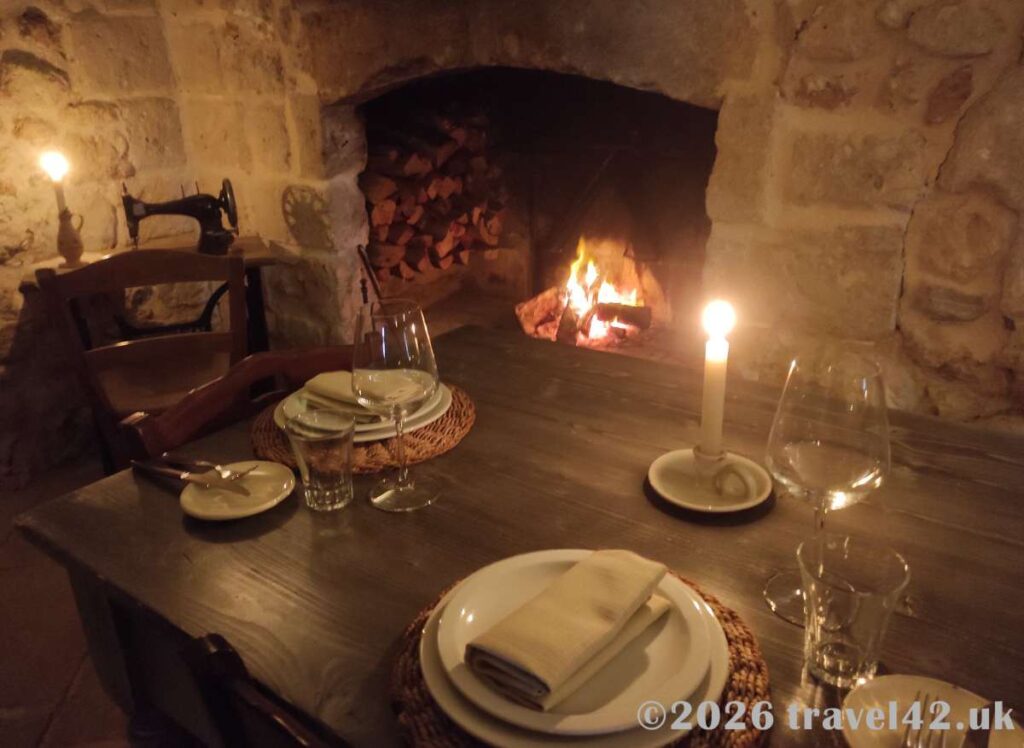
We ordered the traditional Puglian food we’d come for, though it’s worth knowing that the cooking in this area tends to be quite rich, so a full set menu may be more than you need. Everything we had was tasty and thoroughly enjoyable, but we did end up ordering more than we could finish.
The grounds are picturesque too, and worth a short walk before or after the meal.
A wine stop and a quick visit to Galatina
On the way towards our next base, we stopped at Tenuta Merico & Il Contadino, a winery near Frassanito, for a tasting. Tours on offer ranged from €12 to €23 per person depending on what was included, though prices are very likely to have shifted since our visit, so it’s worth checking current rates before booking.
We also allowed a few hours for Galatina, a town that packs a good deal of Baroque architecture and atmosphere into a brief visit. Short on time as our stop was, it left enough of an impression that we’d happily give it longer next time.
These weren’t the only places we stopped – our route wasn’t random, and everything we visited had been planned before the trip, which worked well.
That preparation mattered, too, because January is properly off-season in Puglia: plenty of places are simply shut, and a little homework beforehand goes a long way towards avoiding disappointment. Even with ours, there were a couple of occasions when we turned up somewhere for a meal only to find it closed.
Part two continues from here, heading into the Valle d’Itria towns of Ostuni and Locorotondo, an olive oil tasting that’s since become a standing order, and a last night in Bari before flying home.
Travel42 UK is a couples travel journal dedicated to immersive road trips, slow travel, and destination storytelling.
Explore More of Italy:
The long way round, as a couple
About the Author
The author, ainarsbl, is a Level 7 Google Local Guide, Master Reviewer and expert travel reviewer focused on scenic landscapes, UNESCO sites and meaningful couples travel experiences.