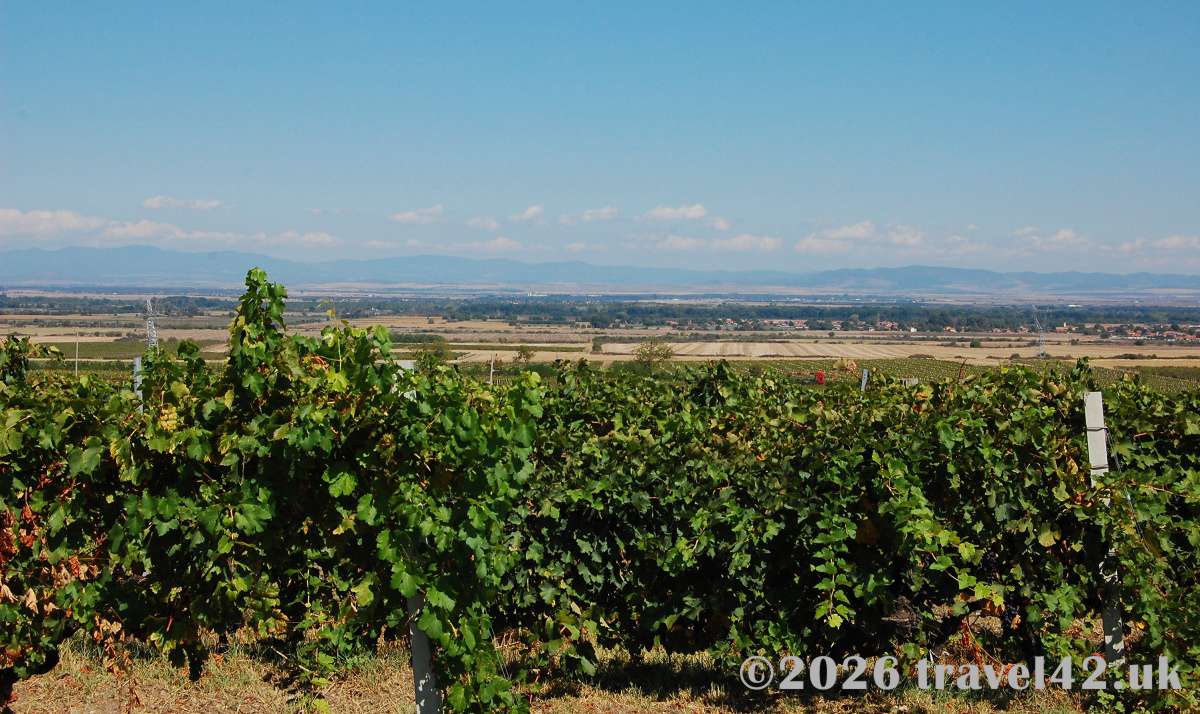
Our first taste of Bulgaria came a long time ago, in 2007, on a spring drive that took in the Belogradchik Cliffs, the hush of Bachkovo Monastery and a run along the Black Sea coast. It stayed with us for seventeen years. By the autumn of 2024, we were back, this time with a narrower brief: eat well, drink better, and let central Bulgaria’s wine country do the talking.
We returned to Bulgaria once more in 2026, this time for an 11-day road trip through Bulgaria and North Macedonia – you can read the full itinerary here: Bulgaria & North Macedonia Road Trip: 11-Day Travel Itinerary.
Want to see the journey as well as read about it? Our Bulgaria 2024 video follows the route from Sofia through the country’s wine country and on towards the Black Sea.
A Different Way to Explore Bulgaria
This trip skipped the long overland drive from Riga altogether – we flew from London to Sofia and picked up a rental car, trading hours behind the windscreen for time with a glass in hand. Local firm CarRent Bulgaria, booked through DiscoverCars, did the honours. We’d used DiscoverCars before, for cars in Riga and Greece, and the pattern held: straightforward booking, fair pricing compared with the likes of Booking.com, and no surprises at the counter.
Picking Up the Car
Local rental firms in Bulgaria tend to keep their offices off airport grounds, and this was no exception – the walk from Sofia Airport would have been a flat forty minutes, roughly two and a half kilometres. We didn’t have to find out: a friend based in Sofia had us at the rental desk within a few minutes. If you don’t have anyone to pick you up, the company runs a convenient shuttle bus service, so you can reach the rental office without worrying about the transfer.
The car itself was close to new, and handover in both directions was brisk. Returning it washed – a condition buried in the contract – earned us an approving nod from the desk. A small thing, but worth doing.
Bulgaria, Briefly
Bulgaria sits at the crossroads of Greece, Turkey, Serbia, North Macedonia and Romania. At 108,489 square kilometres, it is the sixteenth-largest country in Europe – a shade smaller than Cuba and roughly half the size of neighbouring Romania. Its population, just under six and a half million, has been sliding steadily since a 1985 peak of nearly nine million, a demographic story familiar across much of Eastern Europe.
Sofia holds around 1.2 million people; Plovdiv, Varna and Burgas follow at a considerable distance. During the communist era, the Black Sea coast was the country’s holiday engine, drawing budget-conscious sun-seekers in their thousands. Turkey and Spain have since taken a good deal of that traffic, but what’s left behind is arguably more interesting: real hospitality, real prices and – as we were about to find – a wine industry punching well above its profile.
For more on Sofia and the country’s second city, see our Sofia & Plovdiv: Bulgaria City Guide for Couples.
Wine Country, on the Way to Somewhere Else
Bulgarian wine doesn’t get much airtime outside the region, which is precisely the appeal. Tastings are run with real polish – proper glassware, thoughtful food pairings and guides who know their subject – while pricing stays well below what you’d pay for equivalent quality in Western Europe.
The genuine surprise was how many indigenous grape varieties are still in commercial production, with growers who specialise in them rather than defaulting to the usual international names.
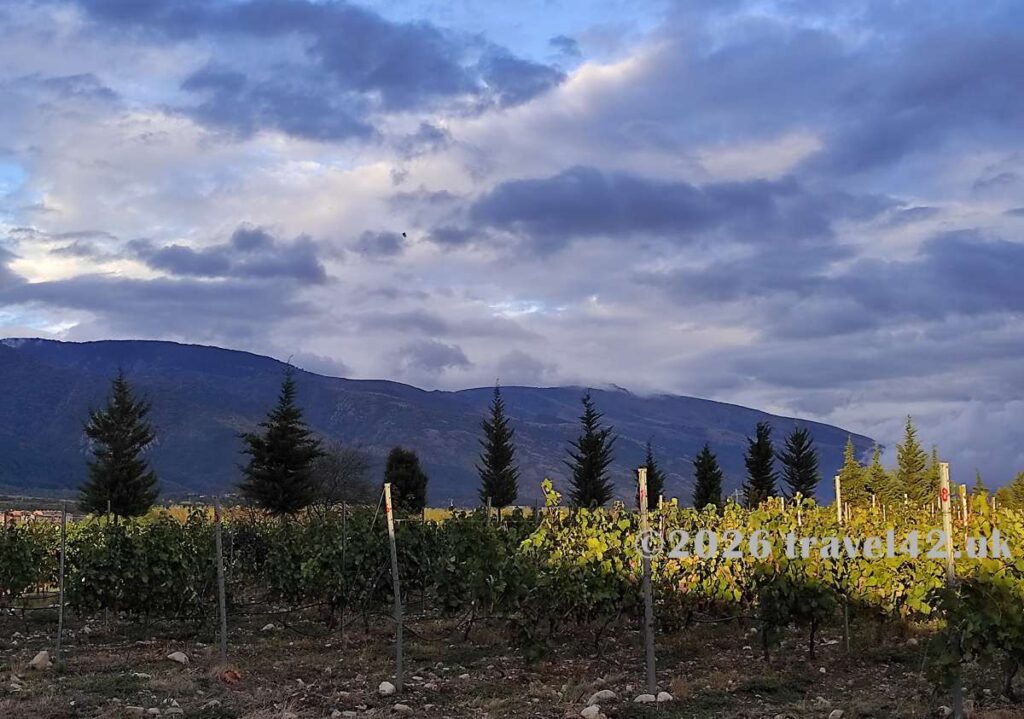
Our route from Sofia to the coast ran through two very different corners of that wine country over two days: a fortress winery in the Rose Valley on the first afternoon, and a modern Thracian estate the next.
Chateau Copsa: A Fortress in the Rose Valley
Chateau Copsa sits outside the village of Moskovets, near Karlovo, in the valley between the Stara Planina and Sredna Gora ranges – Bulgaria’s Rose Valley, better known for its attar of roses than its reds.
There’s no useful postal address; you leave the Sofia-Burgas road near Anevo, follow the signs onto a dirt track, and the castle appears above a flat field like something misfiled from another century. It was built recently, as fortress hotels go, but the illusion holds – until you clock the two separate hotel wings, the stone Chateau Copsa castle and the more contemporary Art Hotel Maison Copsa alongside it.
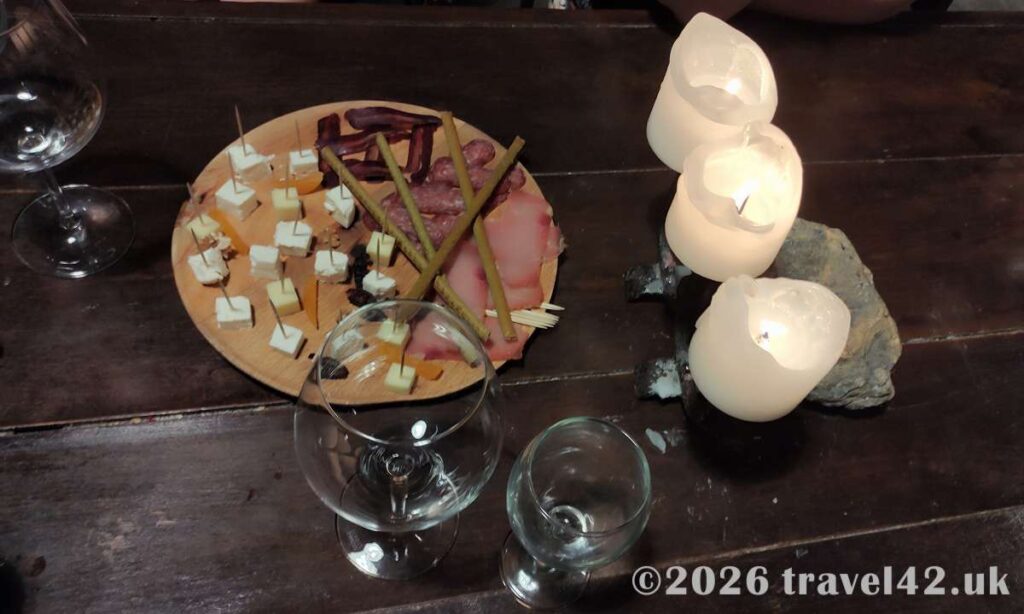
The wine cellar sits beneath the castle, built into the artificial hill the whole complex stands on, and that’s where the tasting happens: cool stone, low light and a guide with a genuine feel for storytelling rather than a script.
The cellar itself is well laid out, with proper space to sit and taste rather than perch at a counter, and it’s easy to lose track of time once the stories about Bulgarian history start flowing. The pours are generous enough that you’ll likely leave with a bottle or two.
Book ahead. Chateau Copsa draws a steady stream of visitors and day-trippers from the Sofia-Plovdiv road, and tastings fill up.
🧭 T42 Vibe – Chateau Copsa
| Category | Rating | Verdict |
| Couple Factor | ▰▰▰▰▱ | Very Good |
| Setting & Views | ▰▰▰▰▰ | Excellent |
| Wine Experience | ▰▰▰▰▱ | Very Good |
| Value for Money | ▰▰▰▰▱ | Very Good |
| Guide & Storytelling | ▰▰▰▰▱ | Very Good |
🧭 T42 Vibe – Overall: ▰▰▰▰▱ 4/5
A memorable wine stop with a real sense of occasion. The castle setting makes it particularly enjoyable as a couple, although the experience depends on booking ahead.
Zagreus Winery: Thracian Valley, Mavrud Country
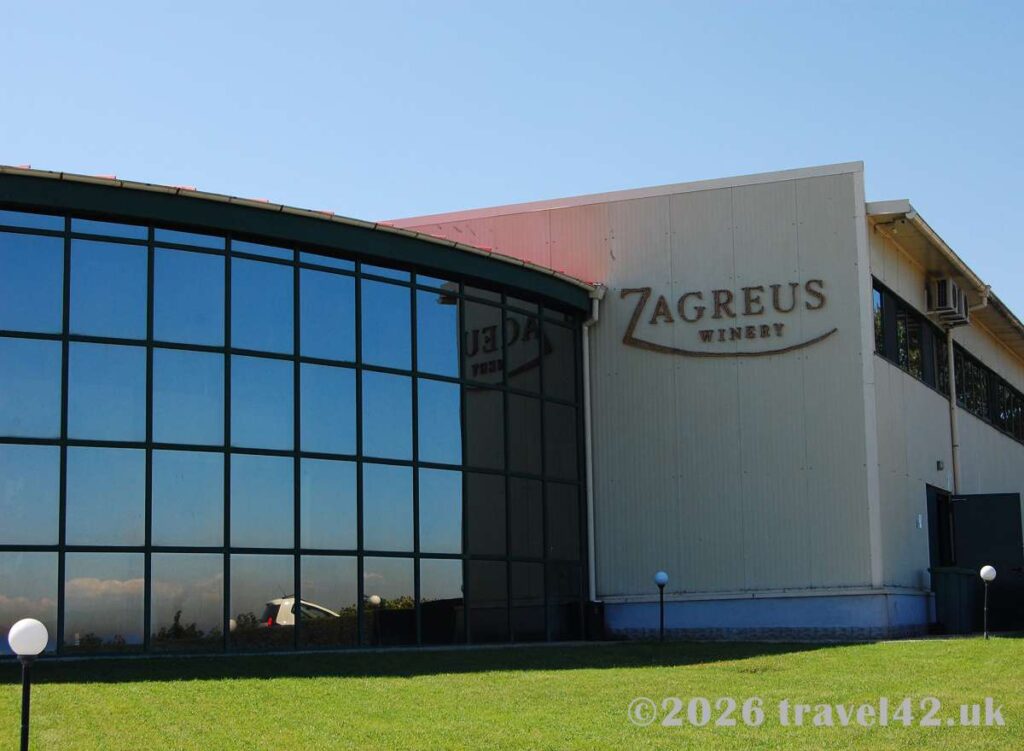
After a night’s stay in Plovdiv, we crossed into the Upper Thracian Valley, near Parvomai in Plovdiv Province, for a tasting at Zagreus Winery – a considerably more modern operation, named for the Thracian precursor to Dionysus, god of wine, joy and unrestrained excess.
The Kostadinov family began planting here in 1998, and the estate has been certified organic since 2010, farming around 120 hectares within a couple of kilometres of the winery itself.
Our guide walked us through the production and ageing facilities before the tasting proper, along with the story behind the family name and the winery’s mythological one. Her name, Grozdina, translates roughly to “grape” – a neat coincidence, or perhaps no coincidence at all for someone who ended up leading wine tours.
Mavrud is the estate’s flagship – Bulgaria’s oldest native red grape, dense and dark-fruited and built for oak ageing – and it’s what most visitors come for.
We tasted four wines in total, paired with local snacks, in an atmosphere considerably less formal than the cellar at Chateau Copsa. We’ve been partial to Mavrud ever since, and later spotted the same grape doing good work in wines from Melnik, further south (see our Melnik, Bulgaria: Sand Pyramids, Wine & Baba Vanga’s House post).
🧭 T42 Vibe – Zagreus Winery
| Category | Rating | Verdict |
| Couple Factor | ▰▰▰▰▱ | Very Good |
| Setting & Views | ▰▰▰▰▱ | Very Good |
| Wine Experience | ▰▰▰▰▰ | Excellent |
| Value for Money | ▰▰▰▰▰ | Excellent |
| Guide & Storytelling | ▰▰▰▰▰ | Excellent |
🧭 T42 Vibe – Overall: ▰▰▰▰▰ 5/5
A more relaxed and personal wine experience than Chateau Copsa, with excellent wines, a knowledgeable guide and particularly good value. If you’re interested in discovering Bulgarian wine rather than simply visiting a pretty winery, this is the one we’d prioritise.
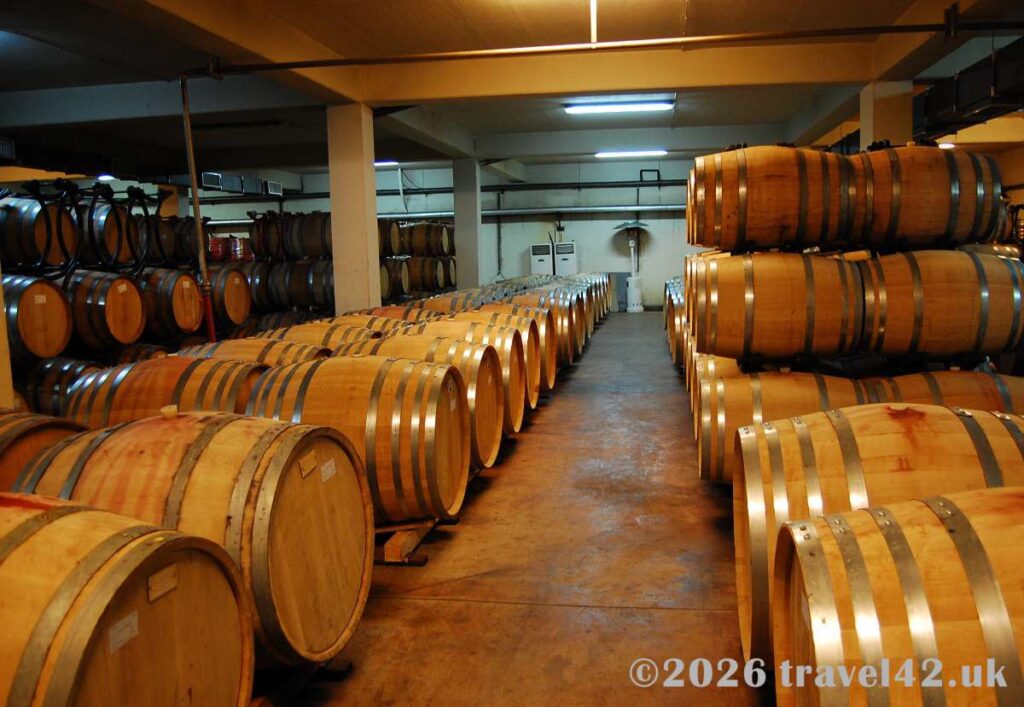
If you’re choosing one over the other, Chateau Copsa is the better half-day outing – castle, cellar and a proper sense of occasion. Zagreus is the better bottle to bring home. Ideally, as we did, you fit in both.
Practical Tips for Wine Touring in Central Bulgaria
- Book tastings in advance, particularly at Chateau Copsa, which also functions as a hotel and gets busy with overnight guests.
- A designated driver is non-negotiable if you’re covering two wineries in a trip – the pours are generous.
- Ask about Mavrud specifically if red wine is your thing; it’s the grape Bulgaria does best and is least known for.
- The dirt road into Chateau Copsa is manageable in an ordinary rental car – just take it slowly.
On to the Coast
Wine tasting done, we rejoined the road east, picking up local lanes before the A1 motorway swallowed the last stretch to the Black Sea coast – a shift in gear from vineyard hush to open-road driving, and the start of the next leg of the trip. More on that stretch of coastline in a post to follow.
Final Thoughts
Central Bulgaria turned out to be one of those places where the journey was as enjoyable as the destination. We weren’t setting out specifically to become experts in Bulgarian wine; we simply wanted a couple of good tastings along the way, and ended up discovering indigenous grapes, generous hospitality and wineries we’d happily return to. For couples travelling through Bulgaria, Chateau Copsa and Zagreus make an easy addition to a wider road trip – especially if, like us, you enjoy breaking up the driving with a long lunch, a good bottle of wine and somewhere beautiful to sit together afterwards.
This post is part of our Balkans Travel Guide | Montenegro, Bulgaria & North Macedonia. Related reading: Bulgaria & North Macedonia: 11-Day Road Trip, Melnik, Bulgaria: Sand Pyramids, Wine & Baba Vanga’s House, Tikvesh Lake: Popova Kula & Tikveš Winery Guide, and Sofia & Plovdiv: Bulgaria City Guide for Couples.
We do not receive any payment or other benefit from any company mentioned in this post. All views are based on our own experience.
Travel42 UK is a couples travel journal dedicated to immersive road trips, slow travel, and destination storytelling.
Explore More of Balkans:

The long way round, as a couple
About the Author
The author, ainarsbl, is a Level 7 Google Local Guide, Master Reviewer and expert travel reviewer focused on scenic landscapes, UNESCO sites and meaningful couples travel experiences.