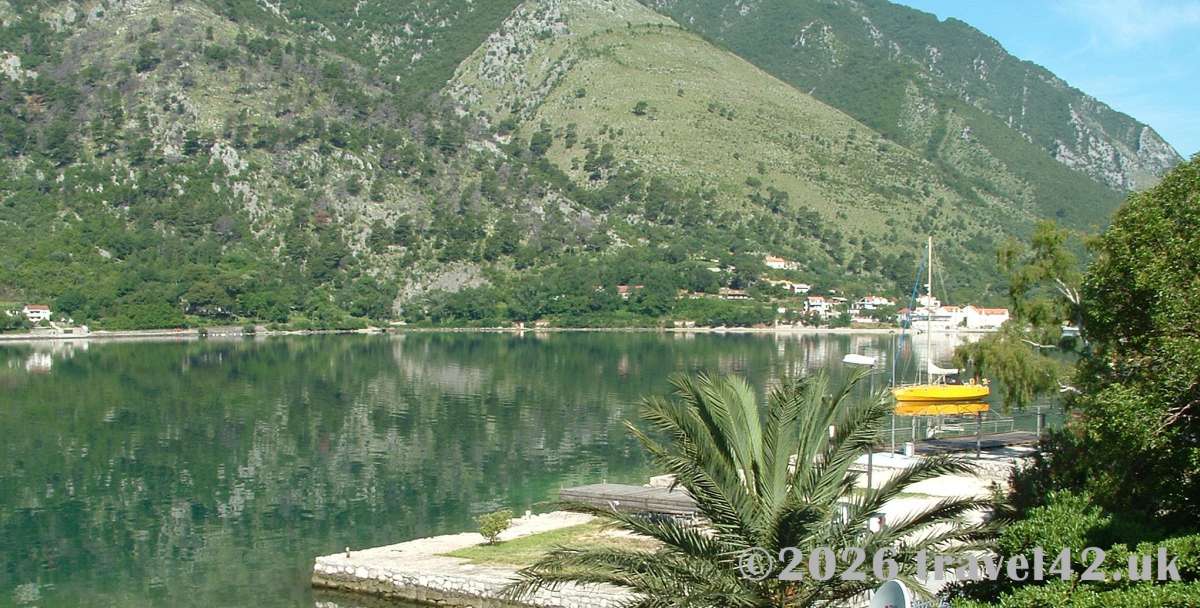
After Durmitor National Park, the Tara River Bridge and a fairly memorable stretch of off-road driving through metres of June snow, reaching the Adriatic coast felt like arriving in an entirely different country. Mountains gave way to turquoise water, hairpin bends to shaded seafront promenades, and for the rest of our time in Montenegro, the biggest decision of the day was usually which stretch of coast to explore next.
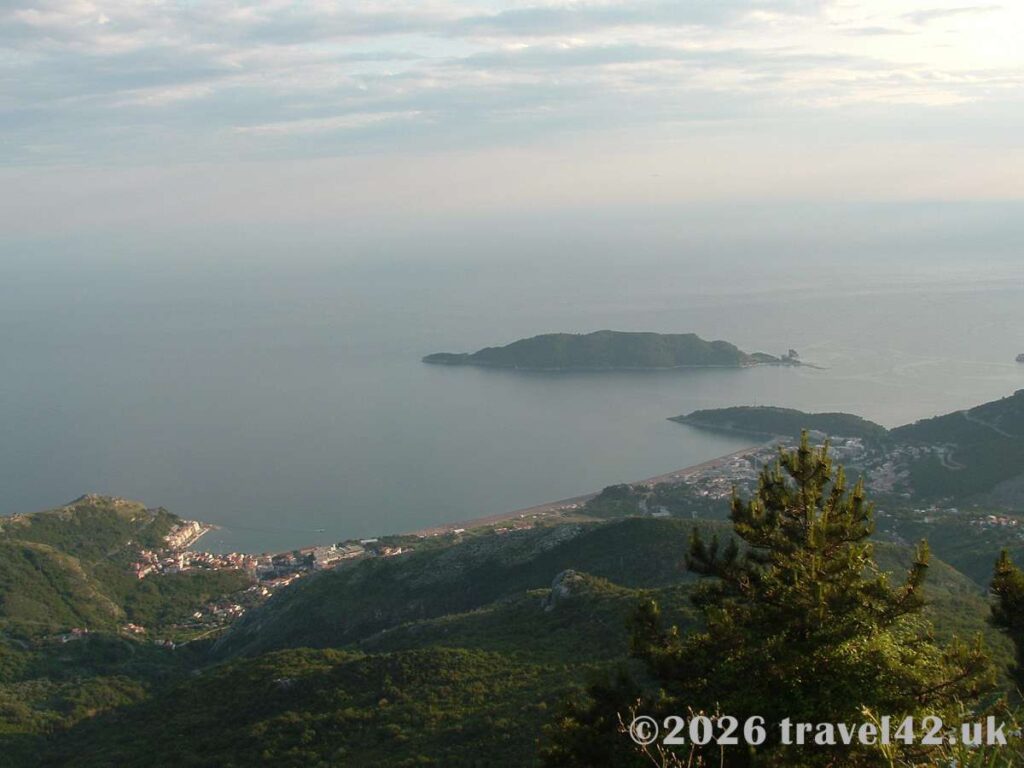
We caught our first glimpse of the sea while we were still high in the mountains, a thin strip of blue that made the descent look deceptively short. It wasn’t – but from that first sighting onwards, it felt as though we were driving down into an entirely different world.
Dobrota and the Bay of Kotor
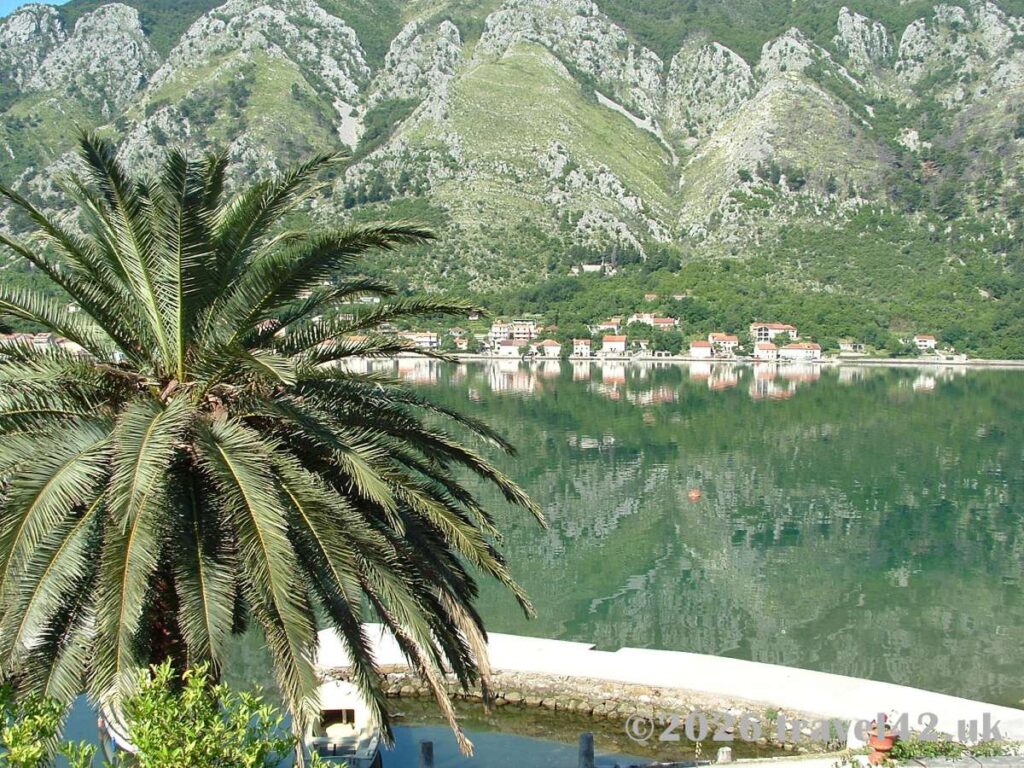
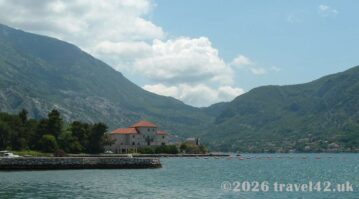
Our base for the week was Dobrota, a quiet village about 3.5 kilometres from Kotor itself, though in practice it’s often hard to tell where one coastal settlement ends and the next begins along this stretch of the bay. Dobrota looks out towards Mount Vrmac, and its seafront promenade runs for several kilometres, lined with small stone jetties that seem to appear every few hundred metres.
We’d booked our accommodation in advance: a room in a large private house set back from the water in a quiet area, with a shaded garden and terrace only about 20 metres from the shore. It turned out to be exactly the sort of unhurried, low-key base a coastal week calls for.
One thing worth knowing before you book: there’s no sandy beach here. The shoreline along Dobrota, like much of the bay, is concrete rather than sand – a small disappointment at first, but one the scenery more than made up for.
For us, though, that waterfront setting worked particularly well as a couple. The promenade is made for slow evening walks, with the mountains across the bay changing colour as the sun drops behind them. After the intensity of our drive through Durmitor, having somewhere to stroll without needing to get back into the car was a welcome change.
Kotor Old Town: Walls, a Harbour and Nine Centuries of History
Kotor sits at the innermost point of one of the most dramatic bays on the Adriatic, and it has done for a very long time – the site has been inhabited for around two thousand years, although the old town as it stands today largely dates from the Middle Ages, with the Cathedral of Saint Tryphon consecrated in 1166.
The whole area – the town of Kotor, its fortifications and the surrounding bay – has been protected as a UNESCO World Heritage Site since 1979, under the official title Natural and Culturo-Historical Region of Kotor. The designation recognises the area’s exceptional combination of historic towns, fortifications, monuments and dramatic landscape.
Those defences are still the thing most visitors remember. The city walls stretch for around 4.5 kilometres, climbing steeply up the flank of St John’s Hill towards the ruined fortress above the rooftops. We didn’t attempt the full climb, but even a wander along the lower sections gives a proper sense of scale.
Kotor wasn’t the main event of our trip outside the bay area – we had day trips further afield already planned – so we kept our visit simple: a walk up from the old town for a closer look at the walls, then back down into the maze of stone lanes below.
The old town is particularly enjoyable when you aren’t trying to tick off every sight. We found ourselves slowing down naturally, looking into little squares, wandering through narrow passages and stopping occasionally for a drink. For a couple, that makes Kotor almost as much about the atmosphere as the history.
Our Lady of the Rocks
A short boat ride from Perast, on the northern arm of the bay, sits one of the more curious sights in the area: Gospa od Škrpjela, or Our Lady of the Rocks, a small artificial islet said to have been built up over centuries by local sailors who deliberately sank stone-laden ships on the spot, adding a symbolic rock to the pile each time they returned safely from a voyage.
A church now stands at its centre, and the islet’s neighbour, the natural island of Sveti Đorđe, sits just alongside it with a monastery of its own.
The short boat trip makes this an easy addition to a day around the Bay of Kotor, particularly if you’re travelling as a couple and want to get out onto the water rather than spending the entire day walking around towns.
Sveti Stefan: The Island That Became a Hotel
Further south along the coast, near Budva, is Sveti Stefan – probably the most photographed single view in Montenegro.
It began life in the fifteenth century as a small fortified fishing village, built, according to local tradition, by the Paštrovići clan using treasure seized after a battle with Ottoman raiders. For around five centuries it remained a working village of stone houses connected by narrow lanes, before the Yugoslav authorities relocated its remaining residents in the 1950s and converted the entire islet into a luxury hotel, which opened in 1960 and went on to host a genuinely startling list of film stars, royals and heads of state.
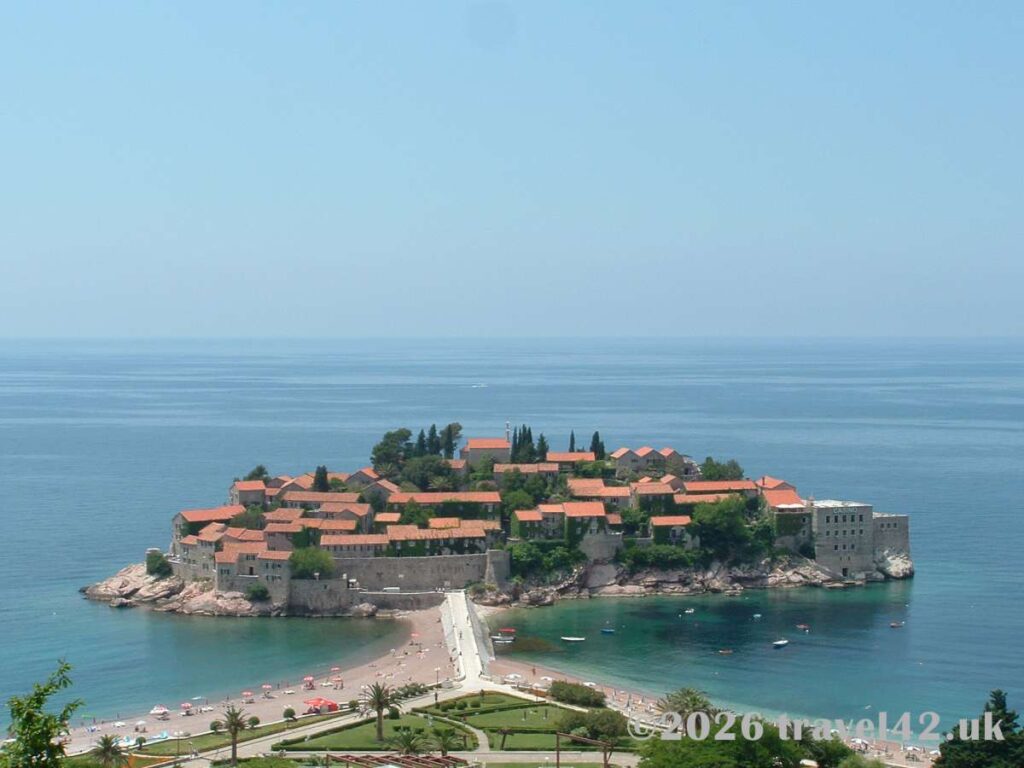
We spent at least half the day on the beach nearby, sunbathing and watching boats motor in to anchor offshore. There was talk, while we were there, that it was possible to pay an entrance fee to visit the island itself, though we didn’t test that out and simply admired it from the shore instead.
The beaches around the island are pebble rather than sand, but they’re lovely spots regardless. We spent our afternoon swimming, sunbathing and simply looking across at the unusual sight of an entire medieval-looking village sitting on its own little island.
Whatever the exact access arrangements on the day, the view from the coast road above is also a good enough reason to stop: a cluster of terracotta roofs on a tiny peninsula, joined to the mainland by a narrow strip of land, with the sea a shade of blue that photographs never quite capture.
In total, we spent a full day around the beaches near the island, alternating between swimming and simply admiring the view.
Skadar Lake: The Largest Lake in the Balkans
Our longest day trip was inland, to Skadar Lake, which sits in the far south-east of Montenegro and stretches across the border into Albania.
It’s the largest lake in the Balkan Peninsula, with its surface area changing considerably with the seasons and water levels. Its shoreline is a maze of bays, reed beds and small peninsulas rather than a single clean edge.
What the lake is best known for, though, is birdlife. More than 280 species have been recorded here, including the Dalmatian pelican, one of the lake’s most distinctive inhabitants.
Boat trips from villages such as Virpazar are the traditional way to explore the lake, taking you through channels lined with water lilies and into quieter areas where birds gather.
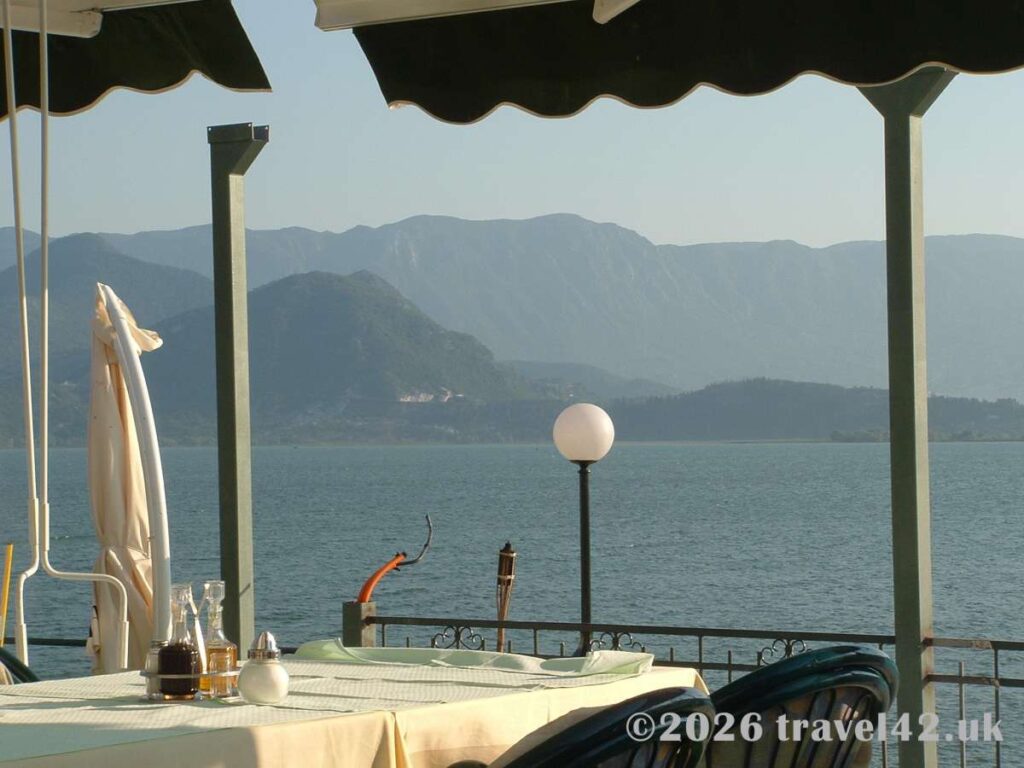
We took a different approach on our visit: rather than heading out on the water in search of pelicans, we settled in at a restaurant on the shore and let the food and the view do the work instead.
It was another change of pace from the rest of the trip. There was no need to rush anywhere, and watching the birds and boats moving across the lake while we ate made a surprisingly good end to a long day.
A Coast Built for Slowing Down
After the intensity of Durmitor – the lakes, the bridge, the unplanned detour through metres of snow – the Adriatic stretch of the trip had a completely different rhythm.
Beautiful, relaxing mornings on the terrace in Dobrota; afternoons wandering old stone streets or drifting across still water looking for pelicans. It’s the kind of pairing that makes Montenegro feel like two countries in one, and reason enough on its own to build a longer visit around both.
The contrast also worked particularly well for us as a couple. The mountain section had been about driving, exploring and dealing with whatever the road threw at us; the coast gave us time simply to slow down together.
Good to Know Before You Go
- Kotor’s old town gets genuinely crowded when cruise ships are in port – worth checking the day’s ship schedule if you’d rather see it quieter.
- The climb up Kotor’s city walls is demanding and involves a substantial number of steps towards San Giovanni Fortress; wear proper shoes and bring water.
- Boat trips to Our Lady of the Rocks typically run from Perast, a short drive north of Kotor along the bay.
- Skadar Lake boat tours are commonly arranged from Virpazar, and early morning or late afternoon can provide better conditions for photography and birdwatching.
- Don’t expect sandy beaches around the Bay of Kotor. Much of the shoreline is concrete, stone or pebbles, but the scenery more than compensates.
Where This Fits in Our Balkans Trip
The Adriatic coast was the natural second half of our Montenegro journey after Durmitor National Park. If you’re following a similar route, our Durmitor National Park: Black Lake, a Sky-High Bridge and Snow in June post covers the mountain section before the road drops towards Kotor and the coast.
From here, the trip becomes less about covering distance and more about slowing down – Kotor and the Bay of Kotor for history and scenery, Sveti Stefan for the classic Montenegro postcard view, and Skadar Lake for a completely different landscape and its remarkable birdlife.
Final Thoughts
Montenegro surprised us with how dramatically the character of the country changes over a relatively short distance. We started among mountains, glacial lakes and several metres of June snow and ended up swimming in the Adriatic, wandering medieval streets and eating beside a lake full of birds. For us, the combination is what makes Montenegro particularly good for a couples’ road trip: there is plenty to explore during the day, but just as many opportunities to slow down afterwards – whether that’s an evening walk along Dobrota’s waterfront, a quiet dinner overlooking Skadar Lake or simply sitting together and watching the light change across the Bay of Kotor.
Part of our Balkans Travel Guide – see also our Durmitor National Park guide and Montenegro Seafood Specialities post.
Travel42 UK is a couples travel journal dedicated to immersive road trips, slow travel, and destination storytelling.
Explore More of Balkans:

The long way round, as a couple
About the Author
The author, ainarsbl, is a Level 7 Google Local Guide, Master Reviewer and expert travel reviewer focused on scenic landscapes, UNESCO sites and meaningful couples travel experiences.