This post sits slightly apart from our Balkans Travel Guide: Montenegro, Bulgaria & North Macedonia – this particular trip predates our later 11-day road trip by some years. But the route through Belogradchik and Bachkovo still holds up as one of the more unusual corners of the country to explore.
Although we visited some of these places a while ago, we’re only writing this one up now because the mountains section belongs with it – and we couldn’t cover Bulgaria’s mountains without a mention of the Seven Rila Lakes, which we hiked more recently and wrote up in full.
How the Trip Came About
Some trips start with careful planning. This one started with a conversation on a plane. We were flying home from a business trip and ended up sitting next to a young non-Bulgarian woman who spent the flight talking up her visit to Bulgaria with such enthusiasm that a road trip was booked not long afterwards. That’s really the only origin story this trip needs.
What followed was a week – eight days, to be precise – covering more than 5,500 kilometres, averaging over 600 km a day. We normally plan our trips well in advance, but the pace this time wasn’t really a deliberate choice: we simply didn’t have enough annual leave to spread it over more days, so we packed an enormous amount of ground into a short window, from the Romanian border in the north-west to the Black Sea coast in the east. It’s not a pace we’d necessarily recommend repeating.
Crossing Into Bulgaria: Then and Now
We entered Bulgaria via the Danube, crossing from Calafat in Romania to Vidin – at the time, this meant a ferry and a border crossing thick with the bureaucracy typical of the region in the early 2000s. Alongside the standard passport and customs checks, we were stopped for phytosanitary control, veterinary control and a handful of insurance offices requesting payment for policies we’d already arranged. It set an odd tone for our first hour in the country.
That crossing looks completely different today. The ferry has been replaced by the New Europe Bridge (also known as Danube Bridge 2), a combined road-and-rail bridge between Vidin and Calafat that opened in June 2013. With Bulgaria and Romania both in the EU – and, since 1 January 2025, full members of the Schengen Area with checks on internal land borders lifted – the crossing that once ate up the best part of an afternoon is now a formality. We haven’t done it since it changed, but it must be far more convenient nowadays.
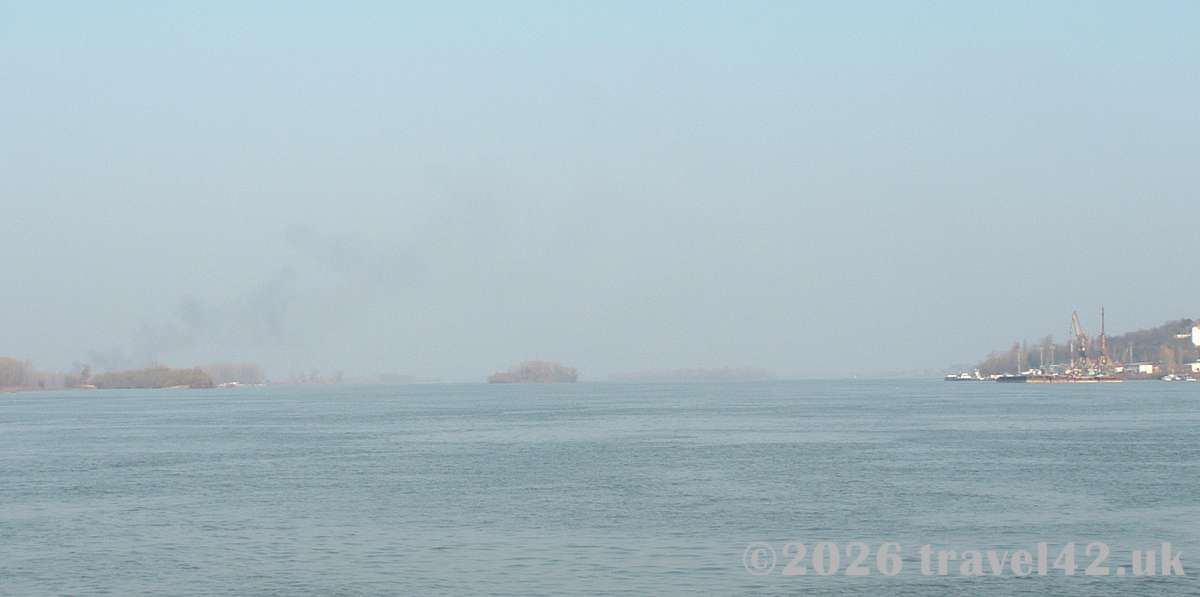
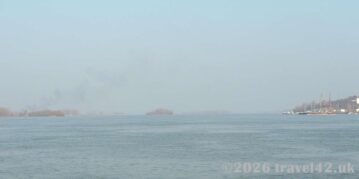
The Danube itself made an impression regardless of the border faff – wide enough at this point that the Romanian bank felt like a distant smudge rather than a riverside.
Belogradchik Rocks
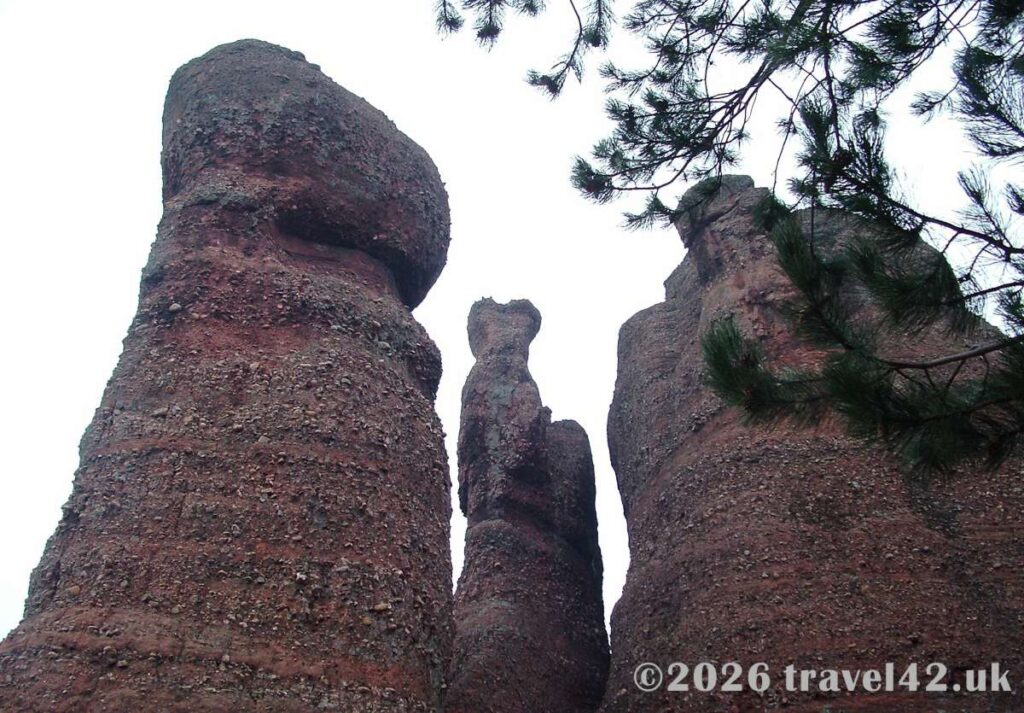
Our first proper stop, around 50 kilometres from Vidin, was Belogradchik – home to one of Bulgaria’s genuine natural wonders. The Belogradchik Rocks are sandstone and conglomerate formations that have eroded into shapes strange enough to have earned their own folklore: silhouettes read as monks, soldiers and various other figures depending on who’s telling the story and from which angle you’re looking.
The morning we visited was foggy, which gave the whole place a slightly mysterious, damp atmosphere – the kind where you can feel the humidity in the air the entire time.
We’d later see something similar in Italy’s Dolomites at the Piramidi di Segonzano, and the rocks bear a family resemblance to Serbia’s Devil’s Town (Đavolja Varoš) too – but Belogradchik’s formations are on a different scale entirely, and their integration into a working fortress makes them more than a geological curiosity.
The Belogradchik Fortress incorporates the rocks themselves into its defensive walls – a neat piece of medieval engineering that saved considerable effort. The fortress was built in three main phases: an initial structure around two thousand years ago, expansion between the 8th and 14th centuries, and further additions in the 19th century. Five gates lead into a site that’s genuinely worth wandering rather than simply reading about – this is one of those places where the description does far less work than being there in person.
🧭 T42 Vibe – Belogradchik Rocks & Fortress
| Category | Rating | Verdict |
| Scenery | ▰▰▰▰▰ | Excellent |
| Couple Factor | ▰▰▰▰▱ | Very Good |
| Accessibility | ▰▰▰▱▱ | Good |
| Crowds | ▰▰▰▰▰ | Excellent |
| Value for Money | ▰▰▰▰▱ | Very Good |
🧭 T42 Vibe – Overall: ▰▰▰▰▱ 4/5
Cold, humid and foggy when we visited, but impressive whichever direction you look. We had the place almost entirely to ourselves, which made wandering between the rocks and fortress walls particularly atmospheric. Sturdy footwear is recommended, and we’d allow a couple of hours to explore properly.
South to Melnik, and On to Bachkovo Monastery
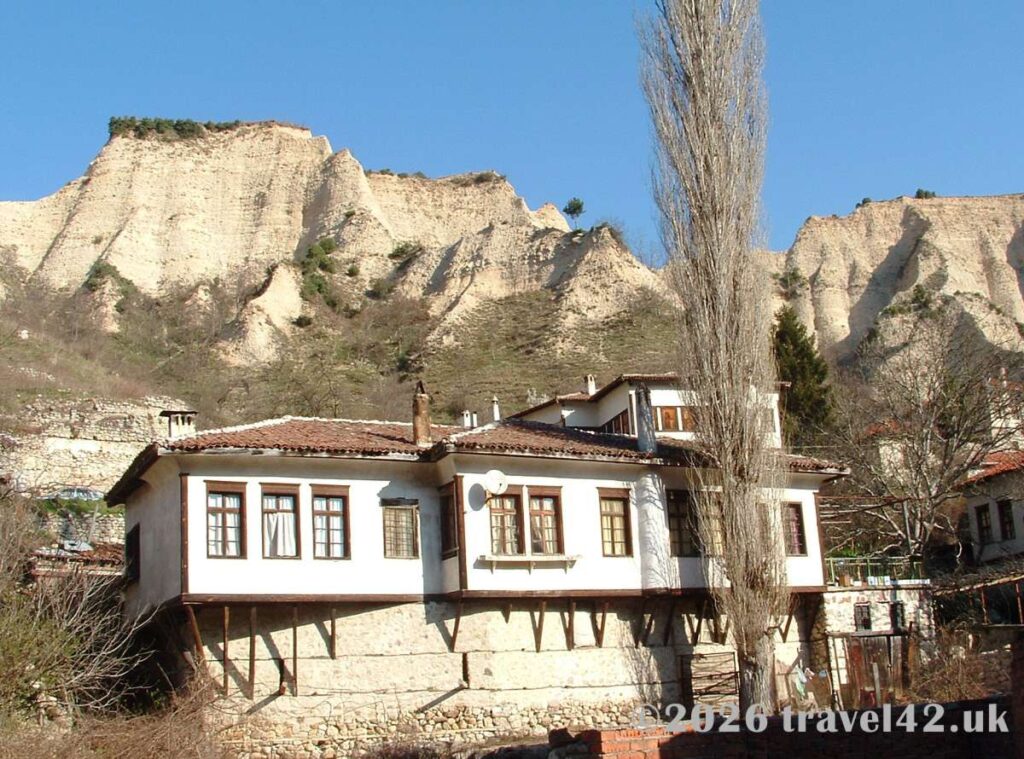
From Belogradchik we turned south, passing Sofia without stopping. We had a spot of wine tasting in Melnik and spent a night there – the most southerly point of the whole trip, and a town we’ve since written about in far more detail in our dedicated Melnik post.
Heading back north-east towards the Black Sea, we made a detour to Bachkovo Monastery, one of the oldest monasteries on the Balkan Peninsula and, at more than 900 years old, still very much a working religious site rather than a museum piece. Founded in 1083 by a Byzantine military commander of Georgian origin, it sits in the Rhodope Mountains close to the town of Asenovgrad, and has remained on UNESCO’s tentative World Heritage list since 1984 – tentative rather than inscribed, but recognised all the same.
We arrived with no particular plan and ended up with one of those chance encounters that turns into the best part of the day. An elderly man was circling the car park looking for someone willing to hire him as a guide. He looked worn but clearly educated, and after a short bit of haggling over the price, we took him up on it.
He knew his subject thoroughly – Bulgarian history as much as the monastery itself – and answered everything we threw at him over a good half hour, all of it delivered outside the monastery walls. When we asked why he didn’t simply walk us in, the explanation was the most interesting part of the whole encounter: he’d once been a monk there himself, before some past offence saw him evicted from the community, and he was no longer permitted inside.
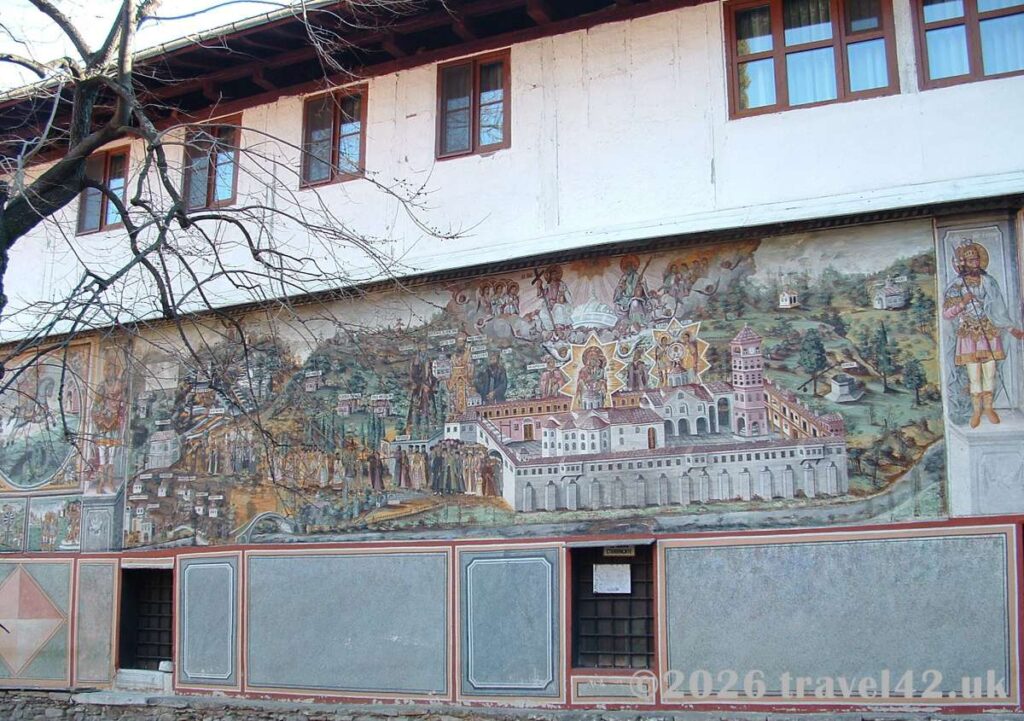
We paid him for his time and went in alone, glad we’d had the context beforehand. The wall paintings inside are the highlight — old, faded in places and considerably more atmospheric for it.
The Mountains of Bulgaria
Later, on a different leg of driving further east – along the A1 motorway that runs from Sofia to Burgas – it became clear just how much Bulgaria’s landscape is shaped by mountains. For long stretches, the road felt hemmed in by peaks on at least three sides, and it’s worth pausing here to explain why, since the mountains turn up again and again throughout this Balkans series.
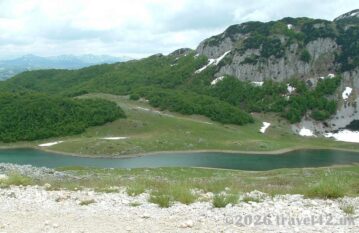
Bulgaria is often shorthanded as “the Balkan country”, but its mountain geography runs well beyond the Balkan range itself. Four major ranges account for most of the country’s high ground: the Balkan Mountains, the Rila Mountains, the Pirin Mountains and the Rhodope Mountains — the same Rhodopes that hold Bachkovo Monastery.
Balkan Mountains (Stara Planina)
Known locally as Stara Planina – the Old Mountain – this range runs the full width of the country, from the Serbian border in the west to the Black Sea coast in the east, effectively splitting Bulgaria into northern and southern halves. Its highest point, Mount Botev, reaches 2,376 metres, though it isn’t the tallest peak in the country overall.
Rila Mountains
South of the Balkan range sits Rila, home to Bulgaria’s actual highest peak: Musala, at 2,925 metres. Rila’s real draw for hikers is its cluster of high-altitude lakes, the best known being the Seven Rila Lakes, which we’ve covered separately as one of the best day hikes in the whole cluster. The range is also home to Rila Monastery, a UNESCO World Heritage Site in its own right.
Pirin Mountains
The Pirin range, in Bulgaria’s south-west, is known for sharper, more rugged terrain and granite peaks – Vihren, the highest, reaches 2,914 metres. Like Rila, Pirin is a UNESCO World Heritage Site, recognised for its biodiversity, and it’s the range most associated with skiing and serious mountaineering rather than casual hiking.
Rhodope Mountains
Finally, the Rhodopes span southern Bulgaria along the Greek border – the same range that shelters Bachkovo Monastery, as it happens, tying this whole post together rather neatly. The highest point, Golyam Perelik, tops out at 2,191 metres. Compared with Pirin’s alpine drama, the Rhodopes lean towards gentler hiking and rural tourism, dotted with small villages that reward slow exploration.
Practical Notes for Anyone Retracing This Route
- The Calafat-Vidin crossing is now a straightforward bridge crossing rather than a ferry – budget minutes, not hours, and expect no more than a standard EU internal-border experience.
- Bulgaria now uses the euro, having adopted it on 1 January 2026 – no need to budget in leva.
- If Belogradchik and Bachkovo both appeal, they pair well into a single loop with Sofia roughly in the middle, making this an easy add-on to a longer Bulgaria itinerary rather than a trip in its own right.
- At Bachkovo, a guide met on the spot can make the visit – ask around the car park rather than booking anything in advance. In general, a guide may not even be necessary here.
- If hiking is on the agenda, Rila and Pirin are the ranges to prioritise; the Rhodopes suit a gentler pace.
Where This Fits in Our Balkans Trip
This short road trip predates the rest of our Bulgarian coverage by some years, but Belogradchik, Bachkovo and the mountain backdrop it introduces run through nearly everything else we’ve written about the country – from the Seven Rila Lakes hike to Melnik’s wine and sand pyramids to our week on the Black Sea coast. If you’re building a longer itinerary, our 11-Day Bulgaria & North Macedonia route is the best starting point.
Final Thoughts
Looking back, this was one of those trips that was far too ambitious on paper but left us with an unusually rich collection of memories. The Belogradchik Rocks, the unexpected guide at Bachkovo, the mountain roads and the detour through Melnik all gave us something different – and the fact that the trip began with a conversation on a plane somehow makes the whole thing feel even more spontaneous. Bulgaria was one of the countries that first drew us deeper into the Balkans, and returning years later has shown us that there is still plenty more to discover together.
Travel42 UK is a couples travel journal dedicated to immersive road trips, slow travel, and destination storytelling.
Explore More of Balkans:

The long way round, as a couple
About the Author
The author, ainarsbl, is a Level 7 Google Local Guide, Master Reviewer and expert travel reviewer focused on scenic landscapes, UNESCO sites and meaningful couples travel experiences.