Part of our Bulgaria & North Macedonia Road Trip: 11-Day Itinerary. Read the previous leg: Tikvesh Lake and the Wineries of South Macedonia.
We left our lakeside villa at Tikvesh with sticky fingers and a car boot full of fruit within the hour – but more on that shortly. This leg of the trip took us from vineyard country to Matka Canyon, one of the most striking natural sites in the Balkans, and then into Skopje itself, a capital that seems to save its best self for after dark.
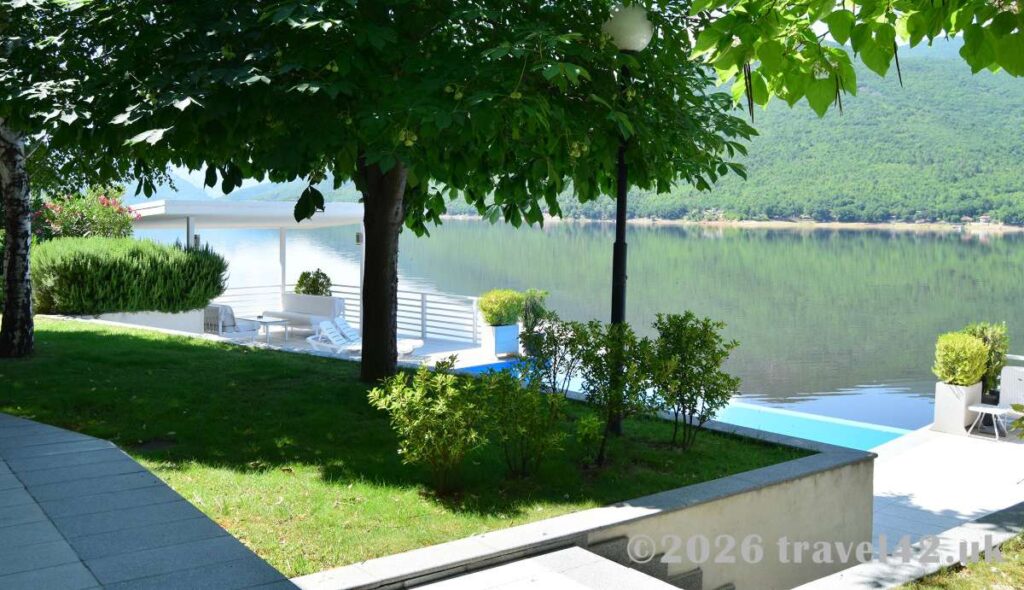
We were genuinely a little sad to leave Tikvesh. It’s not often you find accommodation and surroundings that so thoroughly exceed expectations: a pool with views over the lake, shade from the trees around the property on hot days, and a peaceful setting that made it a proper quiet retreat for two.
Cherries, Tolls and an Accidental Detour
Checking out of our villa on Tikvesh Lake, we pointed the car north. Before joining the A1/E-75 motorway towards Skopje, we stopped at a roadside market in Rosoman for watermelon, cherries and whatever else looked tasty and fresh that morning.
We’d already worked out on this trip that Macedonian cherries are worth pulling over for every single time – juicy, dark and startlingly sweet, nothing like the ones we buy at home. At just €2-3 a kilo, depending on where you buy them, there was no excuse not to stock up.
North Macedonia’s motorways operate on a toll system, and this stretch was no exception. We paid by bank card at each of the three booths we passed through – nothing that needs any special planning. For roughly 100 kilometres of driving, we paid 180 Macedonian denars in total, around £2.55.
Just before Skopje, we missed a junction and ended up looping through the city’s outer suburbs before finding our way back onto the E-65. It wasn’t scenic in any postcard sense, but it gave us an unplanned glimpse of everyday Skopje – tower blocks, small workshops and ordinary local life – that we wouldn’t otherwise have seen.
Matka Canyon: An Afternoon on the Water
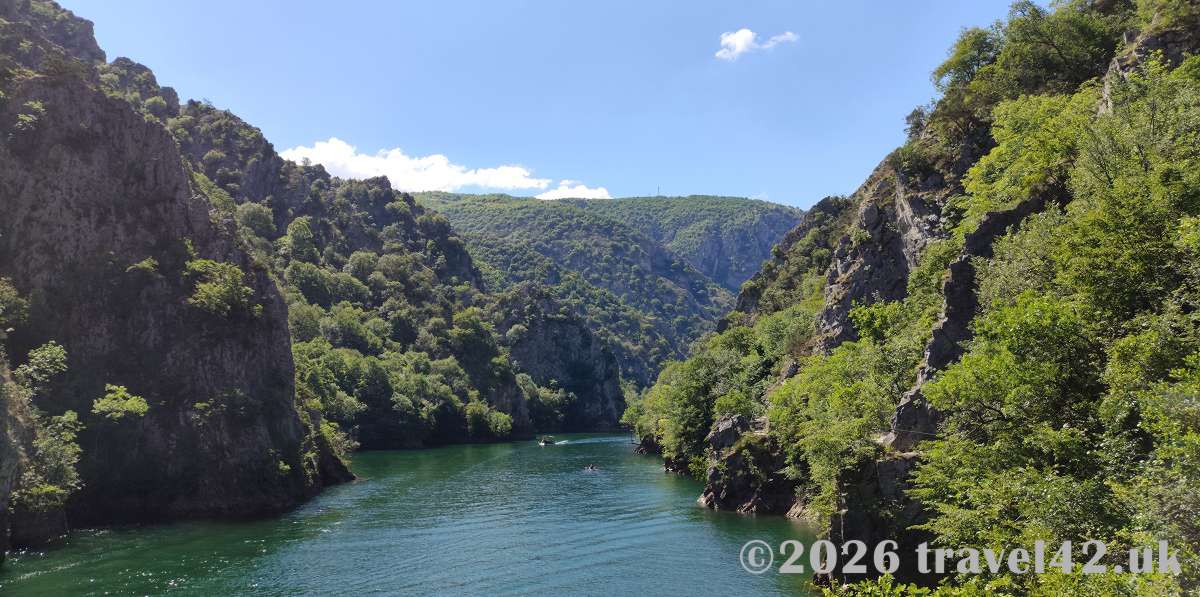
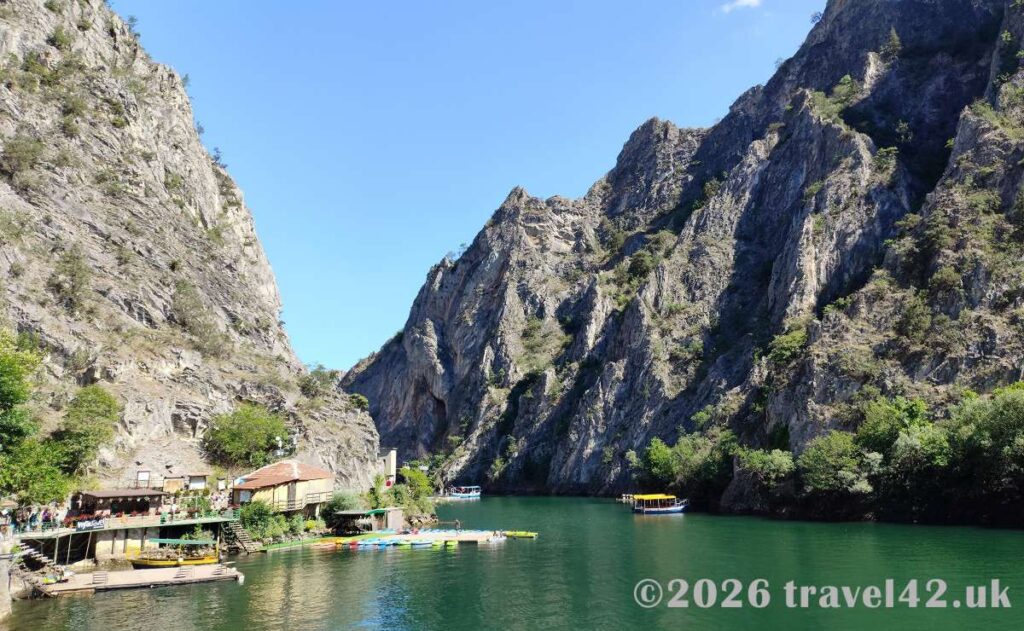
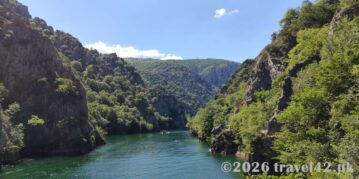
Matka Canyon lies around 15-17 kilometres south-west of Skopje, carved by the Treska River and dammed in 1938 to create the artificial Lake Matka. It’s often nicknamed a “small Mount Athos” for the string of medieval monasteries tucked into its cliffs, while the canyon itself is a designated natural monument, home to more than a hundred butterfly species and ten known caves.
Reaching it meant a short but slow spell on local roads after leaving the E-65. The area was busy with day-trippers, and parking near the canyon took a little patience. We found a spot as close as we could to Canyon Matka Hotel, then walked the last few hundred metres.
🧭 T42 Vibe – Canyon Matka Hotel
| Category | Rating | Verdict |
| Couple Factor | ▰▰▰▰▱ | Very Good |
| Location | ▰▰▰▰▰ | Excellent |
| Comfort | ▰▰▰▱▱ | Good |
| Value for Money | ▰▰▰▰▱ | Very Good |
| Food & Drink | ▰▰▰▰▱ | Very Good |
🧭 T42 Vibe – Overall: ▰▰▰▰▱ 4/5
The hotel itself is an older building, comfortable rather than stylish, but its position on the water is genuinely special – you’d struggle to get closer to the canyon without pitching a tent somewhere on the other side of the water. One night with breakfast cost €48.
The room was on the small side, although the bed was comfortable. The bathroom looked a little dated, but mosquito nets on the windows were a welcome touch.
We had a coffee on the restaurant terrace and booked a dinner table before heading out for the reason most people come here: a boat trip along the canyon, costing 600 MKD (around €10) per person.
It’s the way most visitors reach Vrelo Cave, one of the canyon’s ten caves and reportedly among the deepest underwater caves in Europe. Divers have surveyed it to depths beyond 200 metres without finding the bottom of its submerged passage. Inside, a large stalagmite shaped like a pine cone is one of the cave’s best-known features. We stopped there for a while before heading back to the starting point.
Dinner back at the restaurant was on the pricier side for the region – around £80 for a shared starter, main course and one dessert for two – and the portions were reasonable rather than generous, smaller than we’d grown used to at countryside restaurants earlier in the trip.
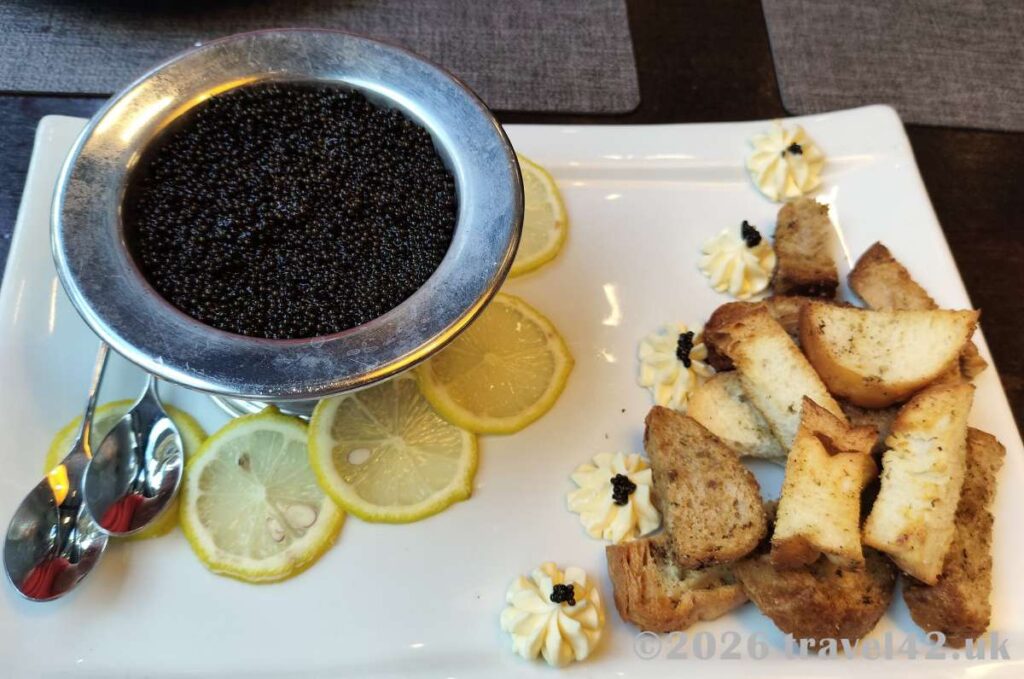
The enclosed terrace looks straight down the canyon to the water below, which more than made up for it. The restaurant runs from 08:00 to 20:00 daily, with the kitchen closing at 19:00, and sits in a separate building opposite the hotel – worth knowing if you’re planning to eat late after a full afternoon on the water.
The next morning, after a solid breakfast, we walked for about an hour deeper into the canyon before checking out and turning back towards Skopje.
Settling Into Skopje
We arrived at Alexandar Square Boutique Hotel on Nikola Vapcarov Street before official check-in, and the staff kindly held our luggage until the room was ready.
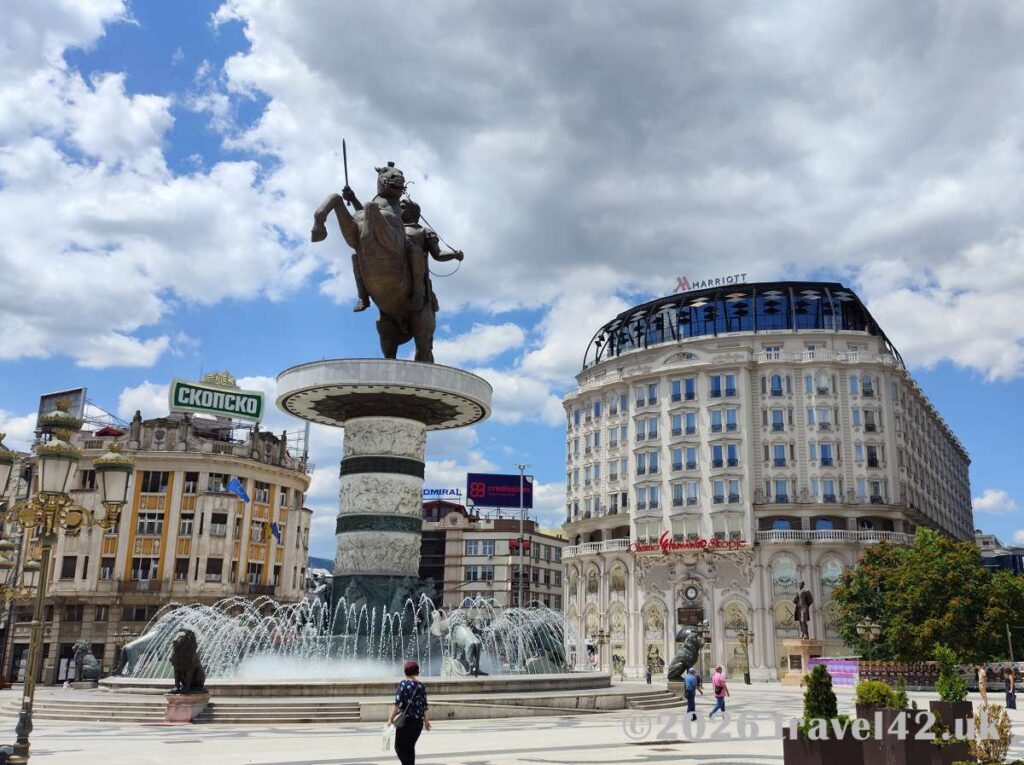
The hotel has decent paid public parking in its backyard – €15 for 24 hours, a genuine bonus in the city centre. The main square was only a few hundred metres from the hotel’s front door and easy to reach along the main road. The square itself is pedestrianised and closed to traffic of any kind.
With time to fill, we walked over to the Old Bazaar on the eastern bank of the river – the largest of its kind in the Balkans outside Istanbul, with roots documented back to the 12th century and its present character shaped firmly under Ottoman rule.
Skopje is where we felt North Macedonia’s Turkish heritage most strongly, more so than anywhere else on this trip. The market was busy, mostly selling souvenirs and jewellery rather than anything we needed, but atmospheric all the same.
On the way back, we found a run of street-food stalls serving very good food for very little money. Lunch for both of us came to around €15.
An Ethno Village and a Church with a View
In the late afternoon, we drove out to Makedonsko Selo, an ethno-village recreating traditional Macedonian architecture, for dinner.
On arrival, we first walked to the Church of St Panteleimon in Gorno Nerezi, on the slopes of Mount Vodno. It’s a small Byzantine church, built in 1164, and its frescoes are genuinely remarkable. Art historians rank them among the earliest examples of emotional realism in painting, predating similar developments in Western Renaissance art by well over a century.
From the terrace beside it, the view opens straight down over the Vardar Valley, with Skopje spread out below.
We had a generous Macedonian dinner in the village restaurant, accompanied by local drinks and live music. Visiting either the church or the village on its own probably wouldn’t justify the winding drive out, but combining the two with dinner made for a full evening that we enjoyed thoroughly.
Skopje After Dark
We were back in the city before midnight for a walk we hadn’t quite planned: zigzagging across the river’s many bridges near the central square, each one lit differently and built around its own theme.

It’s an appealing idea slightly let down in execution. Several information plates were missing, presumably lifted by metal scavengers over the years, which took a little shine off the concept. We liked the Stone Bridge, which we’d already crossed on arrival, but the Bridge of Civilisations really stood out.
Skopje’s central square is a completely different place after dark from during the heat of the day. By afternoon, most people are hunting for shade; by night, the square fills with families, couples and groups simply wandering, and the whole space feels far more relaxed and alive.
For us, it made for a genuinely romantic evening walk, with the illuminated bridges, riverside views and lively atmosphere providing a surprisingly atmospheric end to the day.
That was our last full day in North Macedonia. The next morning, after a short walk around the hotel’s surroundings, we packed up and began the drive back towards Bulgaria.
We managed to find one grocery shop open and picked up some local delicacies before leaving. Worth knowing: on Sundays, which is when we happened to be travelling, almost everything is closed, including most grocery shops. If you want a proper choice of food and local produce, plan your shopping for another day of the week.
Practical Notes
- Matka Canyon to Skopje: Around 15–17 km, roughly 20–30 minutes by car.
- Canyon Matka Hotel: Street 1, Village Matka. €48 per night with breakfast.
- Boat trip on the canyon: 600 MKD (around €10) per person.
- Alexandar Square Boutique Hotel, Skopje: Nikola Vapcarov 13A. Paid parking, €15 per 24 hours.
- Old Bazaar: Free to explore and best combined with lunch from the nearby street-food stalls.
- Church of St Panteleimon, Nerezi: Roughly 20–30 minutes’ drive from central Skopje. There is no public transport, so you’ll need a car or taxi.
Final Thoughts
Matka Canyon and Skopje made a fitting final chapter to our North Macedonia road trip. Matka gave us dramatic cliffs, caves and a peaceful afternoon on the water, while Skopje brought a completely different energy – Ottoman heritage, street food, traditional architecture and a city centre that really comes alive after sunset. For couples, the combination works particularly well: an active day exploring the canyon followed by an evening wandering across Skopje’s illuminated bridges. After the quiet of Tikvesh Lake, it was exactly the change of pace we needed before turning the car back towards Bulgaria.
Read next in this series: see the full Balkans Travel Guide for Montenegro, Bulgaria and North Macedonia, or continue the road trip with our post on the Seven Rila Lakes hike.
Travel42 UK is a couples travel journal dedicated to immersive road trips, slow travel, and destination storytelling.
Explore More of Balkans:

The long way round, as a couple
About the Author
The author, ainarsbl, is a Level 7 Google Local Guide, Master Reviewer and expert travel reviewer focused on scenic landscapes, UNESCO sites and meaningful couples travel experiences.