
Before we went to China, we thought the trains would be impressive. We had no idea they would become one of the highlights of the trip itself.
Travelling by high-speed rail across China as a couple is not merely a way to get from one place to another. It is part of the experience – clean, quiet and punctual carriages gliding between cities at speeds that feel more like flying than anything ordinarily associated with a train. By the time we had completed our route from Shanghai through Zhangjiajie, Fenghuang, Guilin and Yangshuo, Guangzhou and back to Shanghai, we had covered thousands of kilometres by rail – and loved almost every minute of it. Only two legs of the trip required flights: Shanghai to Zhangjiajie, and Guangzhou back to Shanghai.
This guide covers everything you need to know before booking China’s high-speed trains: how to get tickets, what the different classes are actually like, how to navigate stations as a foreign couple, what to do with your luggage, and how to make the journeys genuinely enjoyable rather than merely functional.
the first time we used China High-Speed Rail was after visiting the Grand Canyon & Glass Bridge.
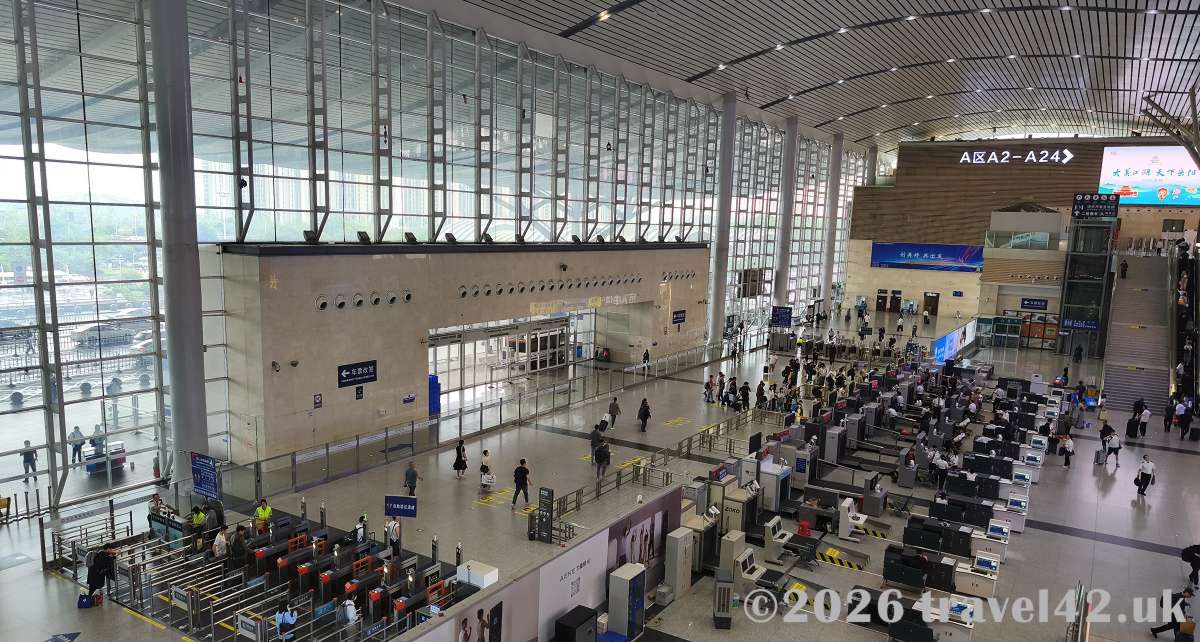
What surprised us most was how consistently the experience exceeded expectations – vast and comfortable station buildings, efficient security checks, swift boarding, impressive punctuality, hushed carriages, and the sheer simplicity of changing trains when needed. And none of that even touches on the remarkable speed of reaching a destination hundreds of kilometres away in just a few hours.
The Scale of It: What China’s Rail Network Actually Looks Like
China’s high-speed rail network is something that does not fully register until you begin planning your route and realise that almost everywhere you want to go is connected – quickly and affordably – by rail. You may occasionally need to change trains to reach a particular destination, but new direct lines continue to appear at an impressive pace.
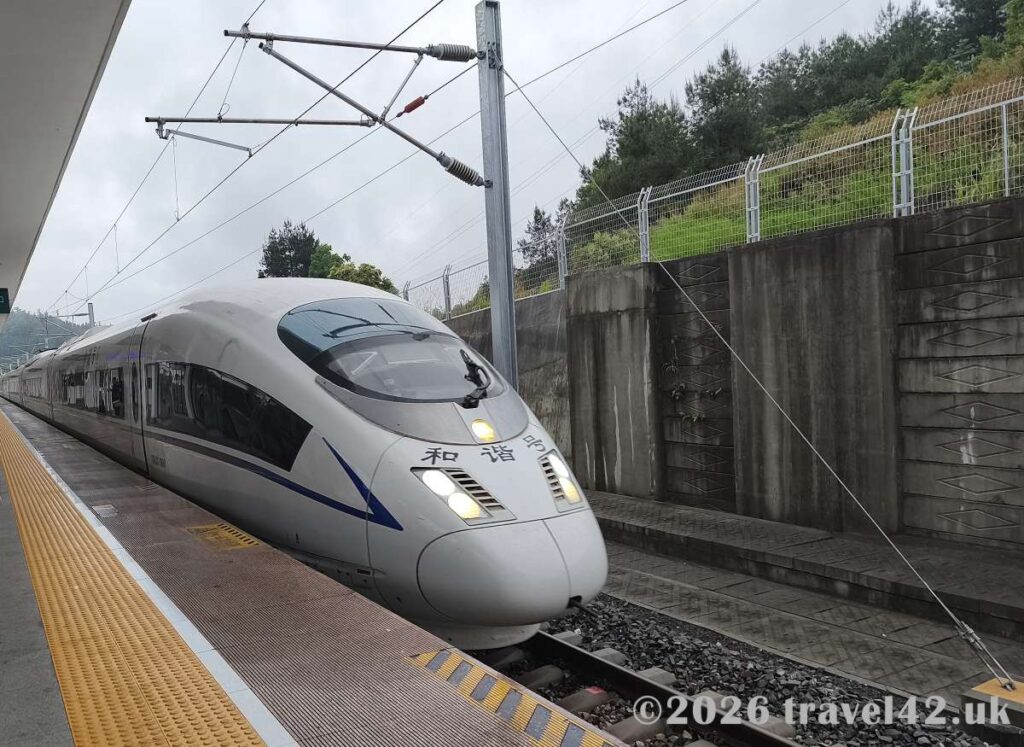
As of the end of 2025, China’s network had surpassed 50,000 kilometres of high-speed track — more than the rest of the world combined. To put that into perspective, Japan’s famous Shinkansen network covers around 3,000 kilometres, while France’s TGV spans roughly 2,700 kilometres. China’s high-speed rail system exceeds both many times over.
The trains themselves operate at speeds of up to 350 km/h in regular commercial service. Cities separated by what would once have been an overnight journey are now connected in a matter of hours. Journeys of 1,000 kilometres can comfortably be completed in under four hours, and same-day return trips of up to 2,000 kilometres are increasingly realistic. A slower and cheaper conventional rail network also exists in parallel, though we did not use it during our trip.
For couples travelling independently through China, this changes everything. Our route – Zhangjiajie to Fenghuang, onwards to Guilin and Guangzhou – would once have required exhausting logistics. In spring 2025, it felt almost effortless.
One small planning note: when mapping our route, we discovered there was a direct service from Guilin to Fenghuang, but not in the opposite direction, meaning we had to change at Changsha. It added some time to that leg, though it appeared more related to timetable development than any practical limitation.
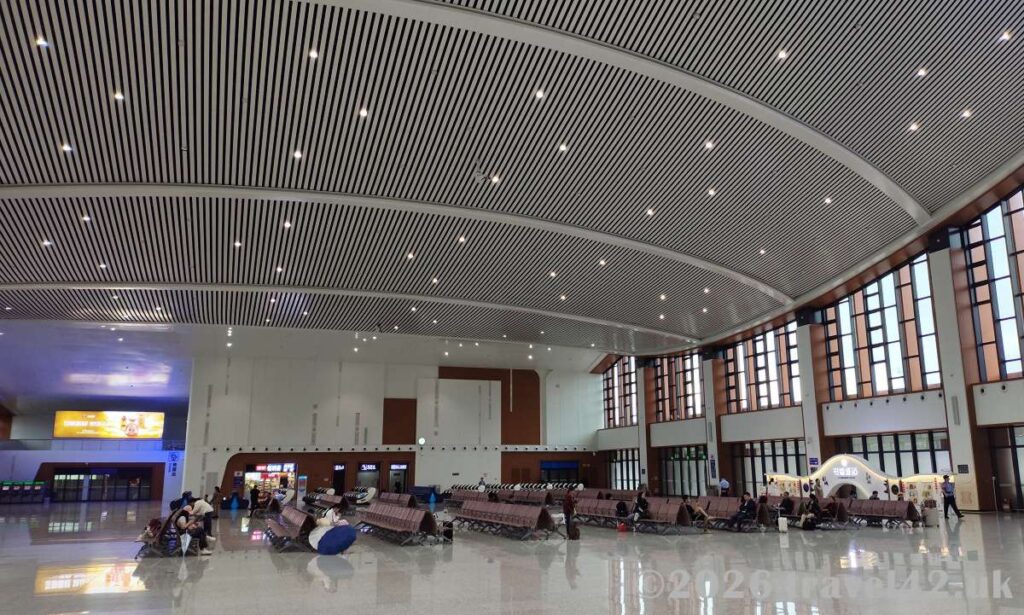
On an earlier visit to Tianmen Mountain, we passed a railway station from above and were puzzled to see no passengers waiting on the platforms. Our first train journey quickly explained why: passengers are only released through the gates around ten minutes before departure. Until then, everyone waits comfortably in the departure hall until boarding is called. It felt unusual at first, but made perfect sense once experienced. Even long-looking queues moved within minutes, requiring nothing more than a scanned Chinese ID or foreign passport.
How to Book Tickets as a Foreign Couple
Tickets Are Released Later Than You Expect
One of the first things to understand about booking trains in China is that tickets are only released around 15 to 20 days before departure. You cannot reserve seats months in advance in the way you might with European rail services.
This is not a problem, but it does require some planning. Book your accommodation first, map out your route, then wait for the booking window to open. If you are using a third-party platform or travel agent, they will typically purchase the tickets automatically the moment they become available.
Practical tip: During major travel periods such as Chinese New Year, Golden Week in October, or the Dragon Boat Festival, popular routes can sell out extremely quickly. If travelling during these periods, keep alternative trains in mind or consider adjusting your itinerary entirely.
How We Booked: China Highlights
We booked all of our train tickets through China Highlights and had a very positive experience overall.
The process is straightforward: you submit your journey details and passport information, they confirm availability and pricing, you pay, and once China Railway releases the tickets they secure them on your behalf. E-tickets are then sent once confirmed.
There is a service fee above the ticket price, but for a first trip to China the simplicity and peace of mind felt worth it. Chinese rail fares are generally affordable enough that even a moderate booking fee does not dramatically affect your budget.
Alternatives: Trip.com and 12306
Trip.com is probably the easiest platform for international travellers. It operates in English, accepts foreign bank cards and allows passport details to be entered during booking. Customer support is also reassuringly straightforward.
12306 is the official China Railway platform. It now includes an English-language version and accepts foreign passport registration, though the process can still feel more complicated for first-time visitors unfamiliar with Chinese payment systems and verification procedures.
Our recommendation for first-time visitors: use Trip.com or a specialist platform such as China Highlights. Once you understand how the system works, 12306 becomes much less intimidating.
Your Passport Is Your Ticket
One of the most pleasantly surprising aspects of travelling by train in China is that you do not need paper tickets.
Your passport effectively becomes your ticket.
When booking, your passport number is linked directly to your train and seat reservation. At the station, you simply scan or present your passport at the entrance and boarding gates.
It feels remarkably efficient once you experience it.
One thing worth remembering: foreign passport holders sometimes need to use staffed lanes rather than automated gates. Outside the largest stations, staff may not speak much English, so having a translation app ready is still worthwhile.
Navigating Chinese Train Stations
Arrive Earlier Than You Think
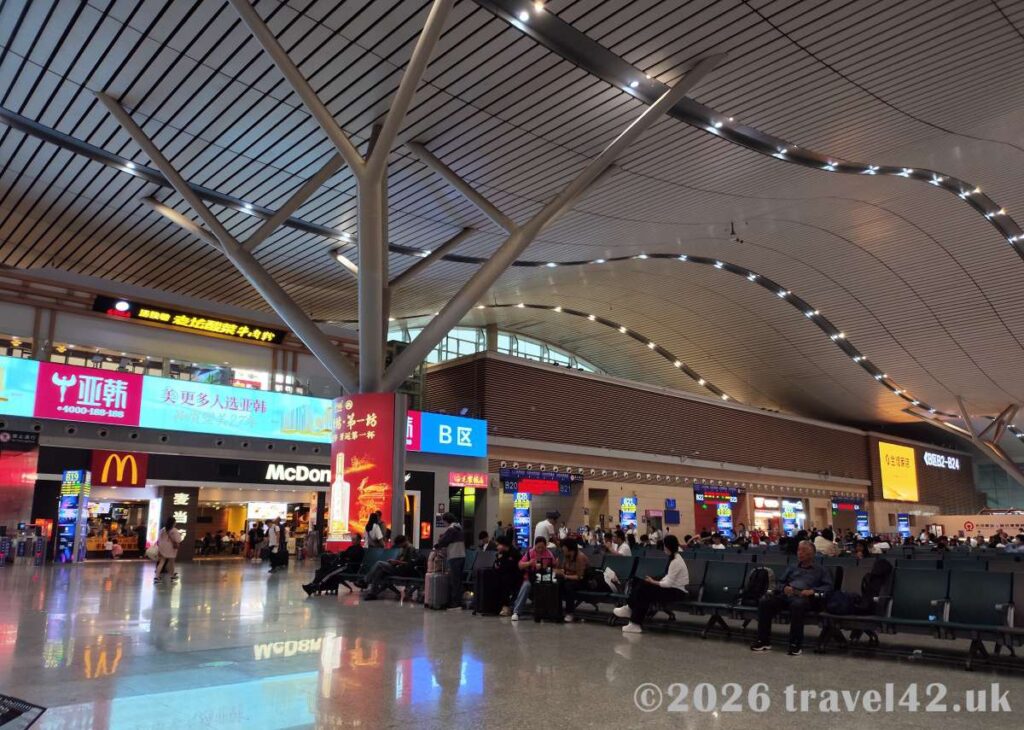
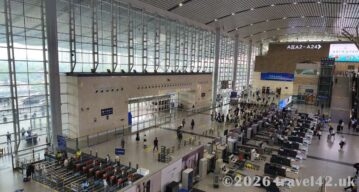
Chinese railway stations are enormous.
Shanghai Hongqiao, for example, feels closer to an international airport than a conventional train station. Even smaller stations often operate on a huge scale compared with most European rail terminals.
As a general rule, we would recommend:
- arriving 45 minutes early at major stations
- arriving 30 minutes early at smaller stations
Boarding gates usually close five minutes before departure, and this is enforced properly rather than treated as a suggestion.
Most departure boards display information primarily in Chinese, though train numbers and times are easy to recognise. When boarding begins, your train information usually changes colour on the screen, making it surprisingly intuitive even without understanding the language.
Security: Airport-Style but Faster
Every major station uses airport-style security.
Bags pass through X-ray scanners and passengers walk through security screening before entering the waiting hall. Larger stations may occasionally repeat checks closer to boarding gates.
A few practical points:
- keep passports easily accessible
- have liquids ready if requested for inspection
- pack luggage neatly for scanners
We were occasionally asked to drink from water bottles to confirm the contents.
Couple Tip
Divide responsibilities before entering security. One person manages the luggage while the other keeps passports and booking information ready. It makes the process smoother and avoids unnecessary stress.
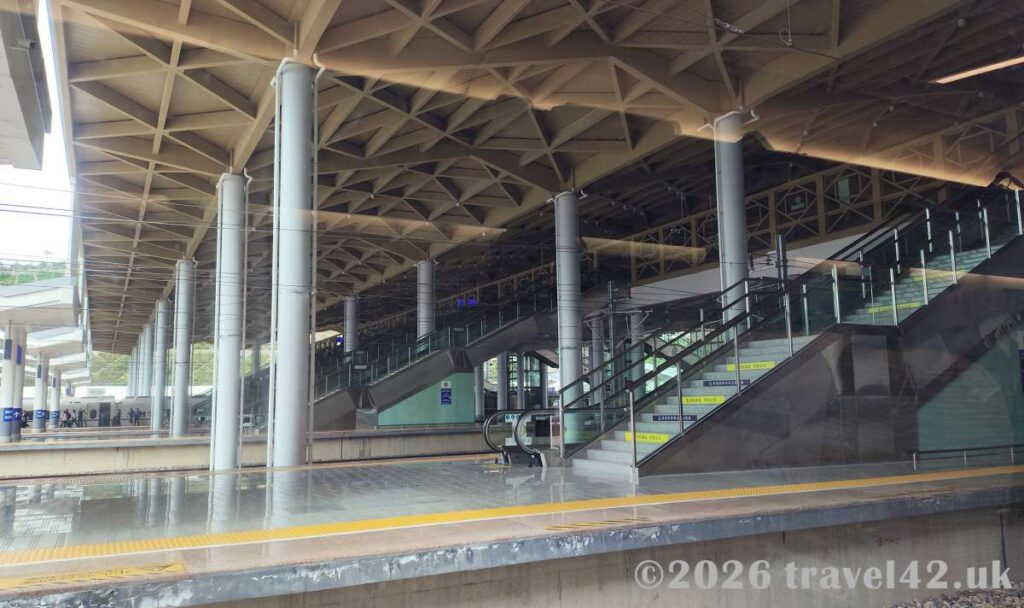
Finding Your Platform
Inside the waiting hall, large electronic boards display:
- train numbers
- departure times
- gate numbers
- platform information
In smaller stations, English signage becomes less reliable, making your train number the single most important piece of information you have.
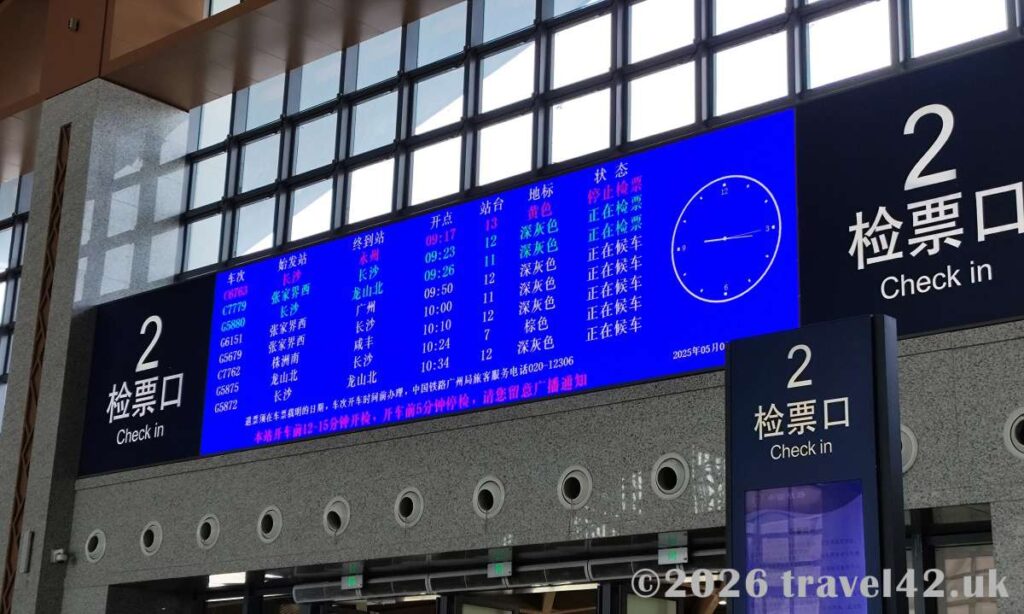
Platform assignments may only appear 10 to 15 minutes before departure, which often triggers a sudden movement of passengers towards the gates. Do not panic — there is always enough time.
First Class vs Second Class: What Couples Should Choose
We travelled mostly in second class and tried first class partly out of curiosity. After experiencing both, here is our honest assessment.
Second Class: Excellent for Shorter Journeys
Second class in China is already extremely good by international standards.
Seats are arranged in a 3+2 layout and are noticeably more comfortable than airline economy seating. The trains are quiet, clean and efficient.
For journeys under around four hours, second class is perfectly adequate.
The main drawback comes on longer journeys if you end up seated in the middle seat of the three-seat section. The carriages are also busier and naturally less peaceful than first class.
Practical Couple Tip
When booking second class seats, aim for the two-seat side of the carriage where possible. This avoids sitting beside a third passenger.
First Class: Worth It for Longer Routes
First class uses a 2+2 seat layout with wider seats, more generous legroom and noticeably quieter carriages.
On longer routes, particularly journeys over three or four hours, we genuinely felt the upgrade was worthwhile.
The additional cost is often surprisingly reasonable, especially compared with upgrading flights.
For couples, first class also makes it much easier to guarantee adjacent seats without worrying about middle seats or crowded carriages.
Business Class: A Luxury Experience
Business class exists on many high-speed routes and feels closer to flying business class than ordinary rail travel. Seats recline almost fully flat and the atmosphere is exceptionally calm.
It is expensive compared with second class, but for a honeymoon, anniversary or particularly long journey, it would absolutely be memorable.
At one point, while accidentally wandering into Premium First Class on the wrong carriage, we briefly experienced a level of comfort that felt genuinely luxurious.
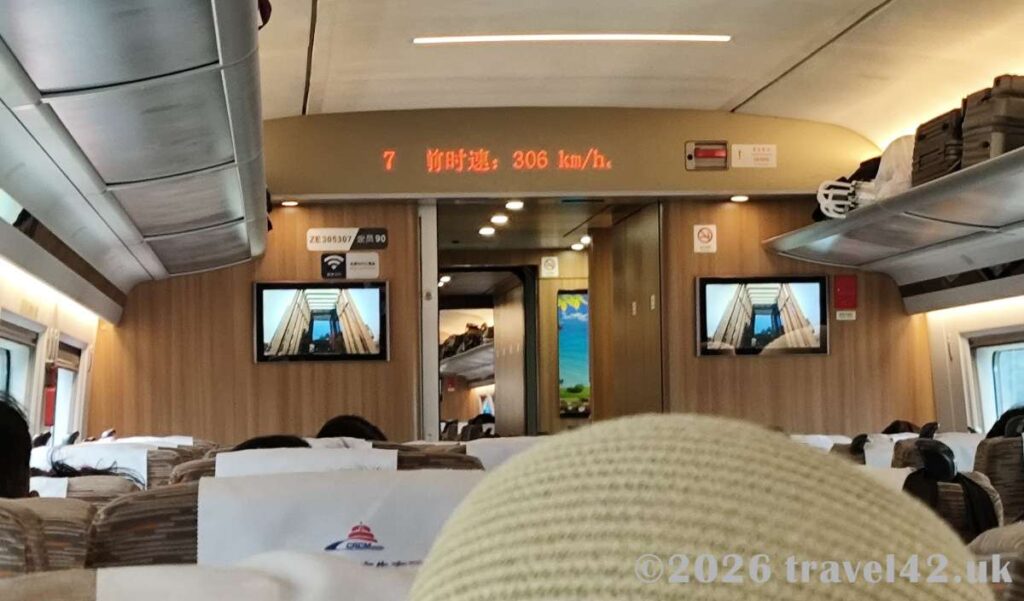
The Fuxing Trains
China’s newest generation of high-speed trains – known as Fuxing trains – represent a noticeable step up in comfort.
These trains typically include:
- USB charging at every seat
- improved seat padding
- quieter cabins
- Wi-Fi on some routes
Many of our own journeys appeared to use Fuxing trains, even without specifically selecting them.
Luggage on China’s High-Speed Trains
What Fits Where
China’s high-speed trains do not use checked luggage in the airline sense. Everything travels with you on board.
Smaller suitcases fit comfortably in overhead racks, while larger cases are stored:
- at carriage ends
- behind final seat rows
- in dedicated luggage spaces
The official allowance is generous enough for most travellers and, in practice, size matters more than exact weight.
We travelled fairly lightly and never had any difficulty storing luggage.
Couple Tip
If travelling with larger suitcases, consider booking seats in the first or final row of a carriage for easier luggage access.
Keep Valuables With You
Passports, phones, wallets and cash should remain on your person throughout the journey rather than stored in larger suitcases.
A compact crossbody bag works particularly well for train travel days.
Left-Luggage Facilities
Most major stations offer lockers or left-luggage facilities if you arrive before hotel check-in or want to explore a city without carrying bags.
You will normally need your passport to use them.
Language and Communication
Easier Than Expected
One of our biggest concerns before visiting China was the language barrier.
In reality, train travel proved far easier than expected.
Major stations include:
- English signage
- bilingual announcements
- clearly numbered gates and platforms
- digital departure boards
Even when staff spoke limited English, they were usually very experienced at helping travellers navigate the system.
Translation Apps Help Massively
In smaller cities especially, translation apps are invaluable.
Google Translate camera mode can be extremely helpful for reading signs and menus, though you will need a functioning VPN to use Google services in mainland China.
Installing an eSIM with VPN support before departure is strongly recommended.
Learn a Few Simple Phrases
Even basic Mandarin phrases make interactions warmer and more enjoyable.
Simple expressions like:
- nǐ hǎo (hello)
- xièxiè (thank you)
- duìbuqǐ (sorry/excuse me)
Making the Journey Enjoyable as a Couple
Embrace the Journey Itself
One of the greatest surprises of travelling around China by rail is just how scenic many routes are.
The railways cut through:
- karst mountains
- rice fields
- river valleys
- deep gorges
- sprawling futuristic cities
Between Fenghuang and Guilin especially, we found ourselves glued to the window for much of the journey.
Food and Drinks on Board
Most trains have trolley services and dining cars offering:
- snacks
- drinks
- instant noodles
- simple hot meals
The food is functional rather than exceptional, but perfectly fine.
Personally, we preferred buying snacks before departure and treating the train ride as a relaxed travel picnic together.
Charging and Connectivity
Power sockets are widely available, even in second class on modern trains.
USB charging ports are increasingly standard, especially on Fuxing services.
Wi-Fi exists on some routes, though we mostly relied on mobile data and never had connectivity concerns.
Overnight Trains
For very long routes, overnight high-speed services are available on selected lines.
We hoped to try one ourselves between Guangzhou and Shanghai but could not secure tickets on our chosen date.
It remains firmly on our list for a future China trip.
Key Routes on Our Itinerary
Zhangjiajie to Fenghuang
This shorter high-speed route connected Zhangjiajie West with Fenghuanggucheng Station near Fenghuang Ancient Town.
What stood out most was the sheer efficiency of the boarding process. Passports scanned, gates opened, platform reached – all within minutes.
Fenghuang to Guilin
This route involved changing trains at Changsha and passed through beautiful countryside.
By this stage of the trip, navigating stations and transfers already felt natural rather than intimidating.
Yangshuo to Guangzhou
This journey marked a dramatic transition from Guangxi’s karst landscapes to Guangzhou’s endless urban skyline.
One particularly pleasant surprise was how seamless the transfer from Guangzhou South Railway Station to the metro system turned out to be.
Quick Reference: China High-Speed Rail Essentials
Before You Travel
- Book tickets 15–20 days before departure
- Use Trip.com, China Highlights or 12306
- Ensure booking names exactly match passports
- Install an eSIM and VPN before arrival
- Avoid major Chinese holiday periods where possible
At the Station
- Arrive 30-45 minutes early
- Keep passports accessible
- Use staffed lanes for foreign passports
- Know your train number
- Check departure boards regularly
On the Train
- Second class works well for shorter journeys
- First class is worth considering for longer routes
- Large luggage goes at carriage ends
- Keep valuables with you
- Use charging ports freely on modern trains
Final Thoughts
China’s high-speed rail network is one of those travel experiences that genuinely changes your sense of what modern travel can feel like.
We arrived expecting efficiency and left genuinely impressed by how calm, seamless and enjoyable the journeys became. Quiet carriages gliding through spectacular landscapes, effortless transfers, stations operating with remarkable precision – the entire system removed almost every source of travel stress from our trip.
For couples travelling independently through China, the railway network is not simply transport. It becomes part of the adventure itself.
Book your tickets, know your train number, pack reasonably light, and let China’s railways do the rest. You are in for a remarkable experience.
Planning your own China trip? Explore our China Travel Guide for Couples resource hub for destination guides, itinerary ideas and practical advice from our journey across China.
Frequently Asked Questions About China High-Speed Rail
Yes – much easier than we expected. Large stations have English signage, train numbers are easy to follow, and passports act as tickets, making the process surprisingly straightforward for international travellers.
We would recommend arriving around 45 minutes early for major stations and at least 30 minutes early for smaller stations. Chinese stations are huge, and boarding gates close several minutes before departure.
Is first class worth it on China high-speed rail?
For shorter journeys, second class is absolutely fine. For journeys over three or four hours, we felt first class was worth the extra cost thanks to quieter carriages, wider seats and more space as a couple.
Yes. Larger suitcases can be stored at carriage ends or behind final seat rows, while smaller bags fit overhead. We found luggage rules far more relaxed than airline travel.
Not necessarily. Knowing a few simple phrases helps, but train numbers, signs and bilingual announcements make the system manageable even for non-Mandarin speakers.
For many routes, absolutely. Once airport transfers and security are considered, trains often feel faster, more comfortable and significantly less stressful – especially for couples travelling independently.
Travel for Two is a couples travel journal dedicated to immersive road trips, slow travel, and destination storytelling.
Explore More of China:
–






The long way round, as a couple
About the Author
The author, ainarsbl, is a Level 7 Google Local Guide, Master Reviewer and expert travel reviewer focused on scenic landscapes, UNESCO sites and meaningful couples travel experiences.