

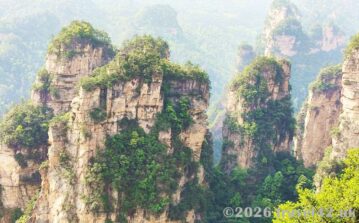
There are places in China that you expect to be beautiful, and places that quietly stop you in your tracks. Fenghuang Ancient Town – also known in English as Phoenix Ancient Town – was the latter. We had just come from Zhangjiajie Grand Canyon.
We had read about it before arriving, but nothing quite prepares you for the reality of stepping into a riverside settlement that has existed in this form for centuries. For couples travelling through China, Fenghuang is one of those destinations that earns its place on the itinerary not through famous landmarks or bucket-list attractions, but through atmosphere. Pure, unhurried, lantern-lit atmosphere – and an intimacy that is increasingly rare to find.
Getting to Fenghuang: High-Speed Rail from Zhangjiajie
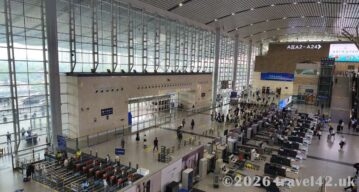
We took a taxi from our accommodation in Wulingyuan to Zhangjiajie West Railway Station, which sits around 8 kilometres north of Zhangjiajie city itself. From there, we boarded a high-speed train to Fenghuanggucheng Railway Station – the station serving Fenghuang Ancient Town. You can read more about how to book China high-speed rail tickets as a foreign couple.
How to Get from Zhangjiajie to Fenghuang
One thing that caught us completely off guard – though by this point in the trip it was a welcome surprise – was that we did not need to collect paper tickets. Our passports were used directly at the entrance gates, linked to the booking details we had provided when purchasing online.
Everything we had studied in advance about navigating Chinese train ticket systems – the advice from travel blogs, the step-by-step guides – turned out to be unnecessary for foreign passport holders. The same applies to locals, who use their national ID cards directly at the gates. The system was far simpler than expected.
As I mentioned in our Guilin & Yangshuo Travel Guide for Couples, we bought all our train tickets through chinahighlights.com. As is common in China, you are assigned a dedicated agent who keeps you updated on any changes. The agent sends your e-ticket once China Rail confirms the booking — though you will need to wait patiently, as tickets are typically only confirmed within two weeks of departure.
The cost of this journey was around £35 for both of us.
From the Station to the Old Town: A Very Chinese Taxi Ride
Outside Fenghuanggucheng Railway Station, a taxi – booked by the hotel – was waiting to take us directly to our accommodation in the ancient town. The journey covered around 10 kilometres and took approximately 20 minutes. The fare came to roughly £3.
Let that sink in for a moment.
It is a small detail, but it captures something true about travelling in this part of China: transport is efficient, often charming, and remarkably affordable.
Our driver appeared to be in something of a hurry – possibly because we had been slow leaving the station, distracted by brochure stands for arriving tourists and performers in traditional costume drawing attention with music and dance.
The journey itself held few dramatic views – much of the route was relatively flat – but saved its best reveal for last. Just before arriving, sheer vertical cliffs appeared alongside the road, then we entered a tunnel. On the other side was Fenghuang.
One practical note: you cannot drive into the central part of Fenghuang Ancient Town. The taxi dropped us on the far bank of the river and let us know we had arrived. From there, we continued on foot.

Dream in Fenghuang: Our Riverside Guesthouse
We had booked Dream in Fenghuang guesthouse and, as the name suggests, it turned out to be one of the most memorable places we stayed during the entire trip.
The hotel’s representative met us at the riverbank – a detail that immediately set the tone. No lobby check-in, no forms to fill in. A person waiting by the water to welcome us, take our luggage and guide us through the narrow lanes to the door.
The hotel itself was less than two minutes’ walk from the river, tucked inside the ancient town. To be perfectly honest, we would have struggled to find it alone given the labyrinthine layout of the old streets – arranging a pick-up from the river is strongly recommended.
Practical details
The price was just over £30 per night including breakfast – exceptional value for what was, genuinely, one of the cosiest places we have ever stayed.
We were given an upgrade on arrival, so the room exceeded what we had paid for. We later discovered that the guesthouse caters primarily to foreign visitors – a deliberate niche that explained the handful of European families we encountered during our stay.
Our room was spacious, with a view over the hotel’s garden courtyard. The bathroom was generously sized and well appointed, with a Japanese-style toilet and – to our quiet delight – a hands-free waste bin that sensed your approach and opened itself obligingly.
Living in the hotel
But the real treasure was in the communal area on the ground floor: a proper Chinese tea table with full tea ceremony equipment.
One evening, the owner invited me to join him for tea. We spent the best part of an hour drinking together and communicating entirely through the automated translation function built into WeChat – neither of us spoke a word of the other’s language.
It was there that I properly learned how to use WeChat for communication in China. Yes, it was slightly absurd – two people sitting at the same table typing messages back and forth rather than speaking – but there is something oddly fitting about that when it comes to tea. There is no reason to rush. You simply drink until the host finishes the final cup, quietly signalling that the evening is drawing to a close.
Fenghuang Ancient Town: What It Actually Feels Like
Fenghuang Ancient Town – also called Phoenix Ancient City – sits on the banks of the Tuo River in Hunan Province. While the settlement has roots stretching back more than 1,300 years, the distinctive Qing Dynasty architecture that defines the town today dates largely to around 1704.
This is a living settlement, not a theme-park reconstruction, and that distinction matters enormously.
The wooden stilt houses (Diaojiaolou) extend over the water on both banks, their dark timber frames reflected in the river below. Stone bridges connect the two sides. Lanterns and flags hang between buildings. Narrow cobbled lanes disappear in unexpected directions, and the entire town carries the unhurried rhythm of somewhere that has never felt the need to explain itself.
Two things surprised us most: the variety of river crossings, and the extraordinary culture of costume photography.
There are several bridges spanning the Tuo River -some pedestrian, some designed for vehicles further from the old town, and at least one with buildings built directly onto it, most notably Hongqiao Bridge.
But the crossing we enjoyed most involved stepping stones and low wooden walkways laid just above the waterline – enough to keep your feet dry, but barely. We could not remember seeing anything quite like it anywhere else.
As for the photography: along one riverbank, numerous shops rent traditional Chinese costumes alongside the services of professional photographers, for around £20.
What you receive is a beautifully styled portrait session against the backdrop of the Tuo River and the ancient townscape. The sight of elegantly dressed people wandering the riverbanks during the day gave Fenghuang a gentle, slightly theatrical atmosphere.
After dusk, it became something else entirely.
Photographers create drifting artificial mist over the river while costumed subjects pose with antique lanterns against the coloured lights and fog. The results are genuinely magical, and the creativity involved is obvious.

Two Days in Fenghuang: How We Spent Our Time
We gave ourselves two and a half days in Fenghuang, and it was exactly the right amount of time — enough to move slowly, explore without rushing and properly absorb the town rather than simply pass through it.
Walking the Riverbanks
Much of our time in Fenghuang was spent simply walking.
The riverside path runs along both banks of the Tuo River and rewards slow exploration – the light changes dramatically throughout the day, and the various crossings offer entirely different perspectives each time.
We quickly fell into a pleasant routine: walk one bank, cross by bridge or stepping stones, then return along the opposite side – choosing a different crossing each time depending on how far we wanted to wander.
One bank, facing south-west, felt more residential, with food shops, cafés and massage salons. The opposite side was more commercial, lined with costume rental shops and street food stalls aimed at visitors.
Amongst the street food, we encountered fried scorpions and an impressive range of other arthropods. Our strong suspicion was that these are largely for show – the locals around us were unanimously gravitating towards proper restaurants and diners rather than the insect stalls.
The Night River Cruise
After dark, Fenghuang transforms completely.
Lanterns illuminate the stilt houses, reflections shimmer in the water, and the riverfront takes on an atmosphere entirely removed from the daytime. Seeing Fenghuang from the water at night is the version that stays with you.
On one of our evenings, we took the Fenghuang night river cruise. Boats depart from a small bay near Hongqiao Bridge – medium-sized river vessels holding around a dozen passengers each. The trip lasts approximately one hour, though it feels far shorter.
Along the route, multimedia projections light up the steep cliffs where the river narrows. At the eastern end of the journey, performers appear on a stage built over the water, accompanied by music and dramatic lighting. Water fountains arc from several bridges, and the whole experience feels closer to a live theatrical performance than a standard sightseeing cruise.
We briefly debated whether the price would be worth it.
It absolutely was.
For couples visiting Fenghuang Ancient Town, we would recommend the night river cruise without hesitation.

Cafés, Tea Tasting and Slowing Down
One of the things we loved most about Fenghuang was the quality of doing very little.
The town has a gentle culture of tea houses, riverside cafés and places designed simply for sitting and watching the world pass by. We even discovered a European-style café serving an excellent cappuccino alongside exotic tropical fruits – an unexpected but welcome surprise in the middle of an ancient Chinese town.
But the most memorable experience involved tea.
One morning, we spotted a tea shop offering tastings of premium local teas. We know our way around wine and spirits reasonably well, and we can usually distinguish excellent tea from average tea. We arrived prepared to spend around £100 on something special and settled in for the tasting.
The experience was generous and beautifully conducted – teas presented from the premium range upwards, each one exceptional. Naturally, we wanted the best.
Then came the price for our final selection: approximately £800.
The situation became delicate rather quickly.
I apologised, explained we had reconsidered, and we settled on a couple of the teas we had originally intended to buy – enough, we hoped, to leave with at least a little dignity intact.
The lesson is simple: do not assume that only Louis XIII cognac commands extraordinary prices. An exclusive tea from one of Fenghuang’s finest tea houses can cost just as much.
If you are planning to buy premium tea in China, arrive with an open mind – and perhaps a flexible budget.
Why Fenghuang Works So Well for Couples
Fenghuang makes no great demands of you.
There are no queues for cable cars, no complicated ticketing systems and no timed-entry windows. The town simply exists, and invites you to exist within it.
For couples, that quality is rare and genuinely valuable.
After the intensity of Zhangjiajie – the crowds, the hiking and the physically demanding landscapes – Fenghuang felt like exhaling. Two people, a riverside town, good tea, a welcoming guesthouse and nowhere particular to be.
It is also extraordinarily photogenic at almost every hour. Sunrise on the river, afternoon light on the wooden buildings and lantern-lit reflections after dark – you will not run short of moments worth capturing together.
Our own favourite moments were wandering the riverbanks and ancient lanes, taking the night cruise, and simply existing within the atmosphere of the town without any pressure to rush onwards.
Practical Tips for Couples Visiting Fenghuang
- Getting there: High-speed train to Fenghuanggucheng Railway Station – see our China High-Speed Rail Guide for booking advice
- From the station: Taxi to the old town costs approximately £3 and takes around 20 minutes. We strongly recommend arranging a hotel pick-up in advance, as Google Maps is not always reliable in smaller Chinese towns
- How long to stay: Two full days minimum – Fenghuang rewards a slower pace
- Accommodation: Stay inside the ancient town for the full atmosphere, ideally close to the river
- Night cruise: Do not skip it – the atmosphere after dark is entirely different
- Best times of day: Early mornings and evenings are the most atmospheric, with extraordinary light at both ends of the day
- Tea houses and cafés: Leave time to sit, not just sightsee
- Buying premium tea: Prices can be surprisingly high, even by European luxury standards
Suggested Two-Day Fenghuang Itinerary for Couples
Arrival Day
Arrive by high-speed rail, take a taxi to the ancient town, check in and settle into the slower pace of Fenghuang. Spend the afternoon walking the riverbanks and getting your bearings before dinner beside the Tuo River.

Day One: Bridges, Riverbanks and Night Cruise
Continue exploring both sides of the river. Cross via the stepping-stone walkways, explore Hongqiao Bridge and wander through the surrounding lanes and courtyards.
In the evening, take the Fenghuang night river cruise.
Day Two: Tea Houses and Slow Travel
Wake early before the town fully comes to life and enjoy a quiet riverside walk. Spend time in tea houses and cafés, then continue exploring the quieter interior lanes of the old town.
In the evening, browse the north-western part of Fenghuang where local artists sell original paintings and crafts before enjoying final drinks beside the river.
Getting from Fenghuang to Guilin
We took a taxi back to Fenghuanggucheng Railway Station and travelled onwards by high-speed rail, changing at Changsha before continuing to Guilin.
The journey itself was smooth, though there is currently no direct connection – worth factoring into your planning when booking.
Our Guilin & Yangshuo Travel Guide for Couples covers everything that came next: the Li River cruise, the Longji Rice Terraces and one of the most spectacular live performances we have ever seen.
Final Thoughts
Fenghuang is not the most dramatic destination on a China itinerary. It will not leave you breathless in the way that Zhangjiajie does.
What it offers instead is something rarer: the feeling of having genuinely arrived somewhere, rather than simply passed through.
Two and a half days beside the Tuo River – good tea, quiet evenings and wooden houses reflected in lantern-lit water – became one of the most quietly memorable stretches of our entire China trip.
For couples, that kind of calm is not a lesser form of travel.
Sometimes it is exactly what the journey needs.
This guide is part of our China Travel Guide for Couples series.
Travel for Two is a couples travel journal dedicated to immersive road trips, slow travel, and destination storytelling.
Explore More of China:
–



Travel for Two – from wild roads to romantic evenings
About the Author
The author, ainarsbl, is a Level 7 Google Local Guide, Master Reviewer and expert travel reviewer focused on scenic landscapes, UNESCO sites and meaningful couples travel experiences.