We crossed into Switzerland from France in a car picked up at Baden-Baden airport, with spring already in full swing across Germany and France – the kind of stretch where the flowering seems to carry on for months rather than weeks, working its way up through the mountains as the season goes.
Lake Geneva: One Lake, Two Names, Two Countries
Lake Geneva is what English speakers call it; in French it’s Lac Léman and, because one name was never going to be enough, Genfersee in German.
It’s one of Europe’s larger lakes, split roughly 60/40 between Switzerland and France, with about 345 km² belonging to Switzerland and 234 km² to France. An interesting detail: the international border generally runs through the lake itself rather than following one particular shoreline.
One thing that genuinely surprised us: the Rhône, one of France’s major rivers, actually begins high in the Alps, flows into the eastern end of Lake Geneva and flows back out near Geneva itself to continue towards the Mediterranean. So a river most people associate with France effectively passes through Switzerland first.
The lake’s level is regulated at Geneva by the Seujet Dam, which also includes a fish passage allowing fish to move between the Rhône and Lake Geneva. The dam was inaugurated in 1995.
Montreux: Villas, Castles and a Very Particular Flower
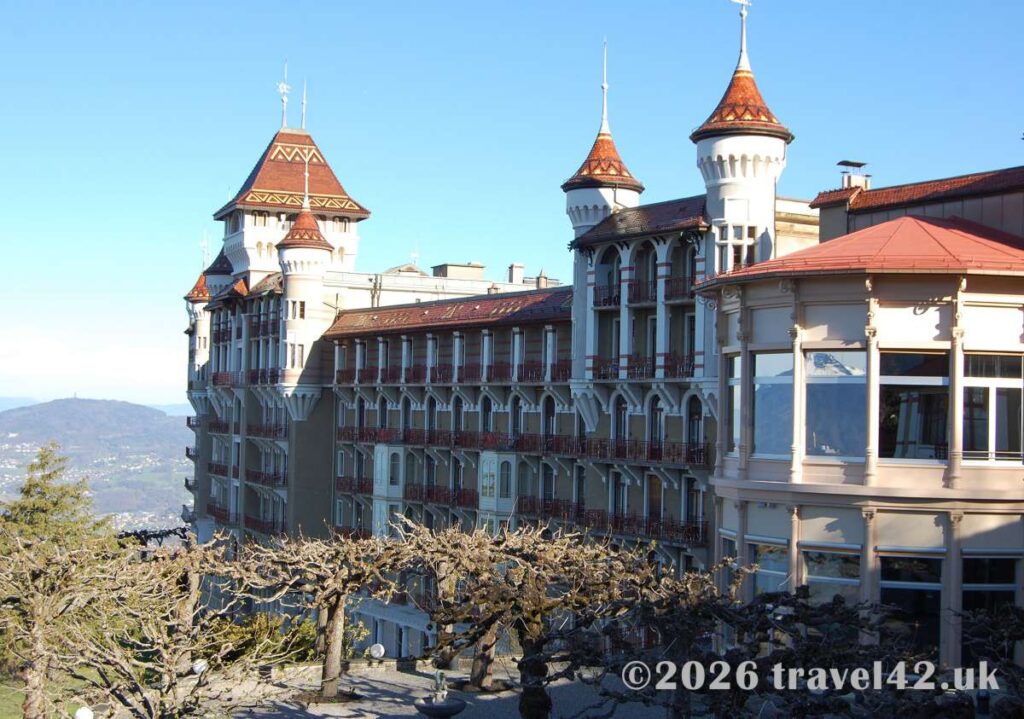
Montreux, which we’ve already mentioned in our Switzerland road trip post, is Lake Geneva’s best-known resort – sitting on the lake’s shore and naturally sheltered from some of the surrounding winds, which goes some way to explaining its long-standing reputation as one of the more comfortable spots on the lake.
Villas and former castles here have been converted into high-end hotels, restaurants and shops, all pitched at the same “make yourself entirely comfortable” register.
For couples: in winter, this stretch of Lake Geneva becomes especially striking, with the nearby mountains adding proper active-holiday options alongside the food – Swiss cuisine here draws heavily on its neighbours, particularly France, dressed up with typically Swiss precision. It’s something we’re planning to experience for ourselves very soon.
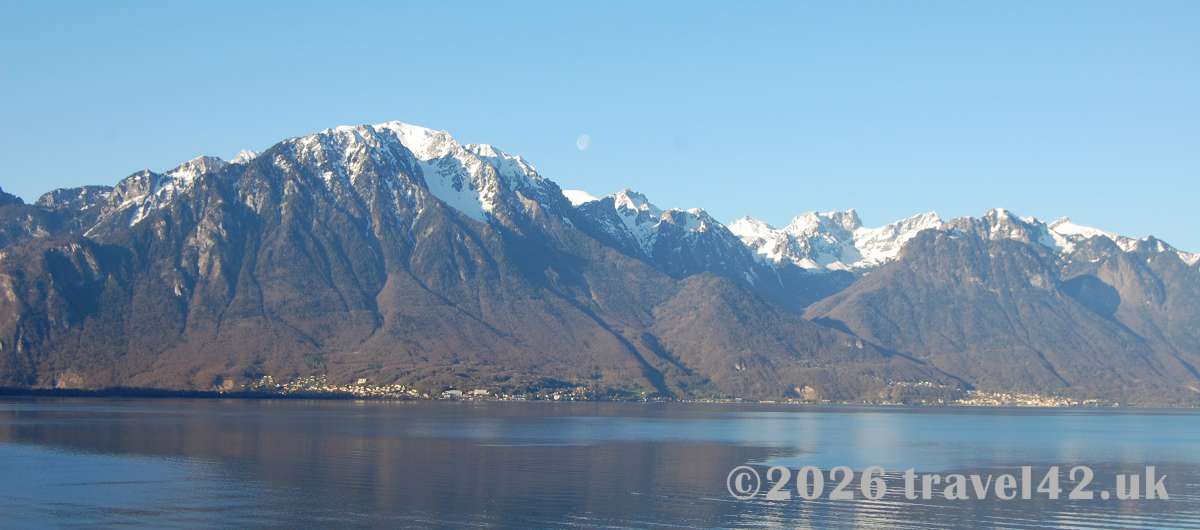
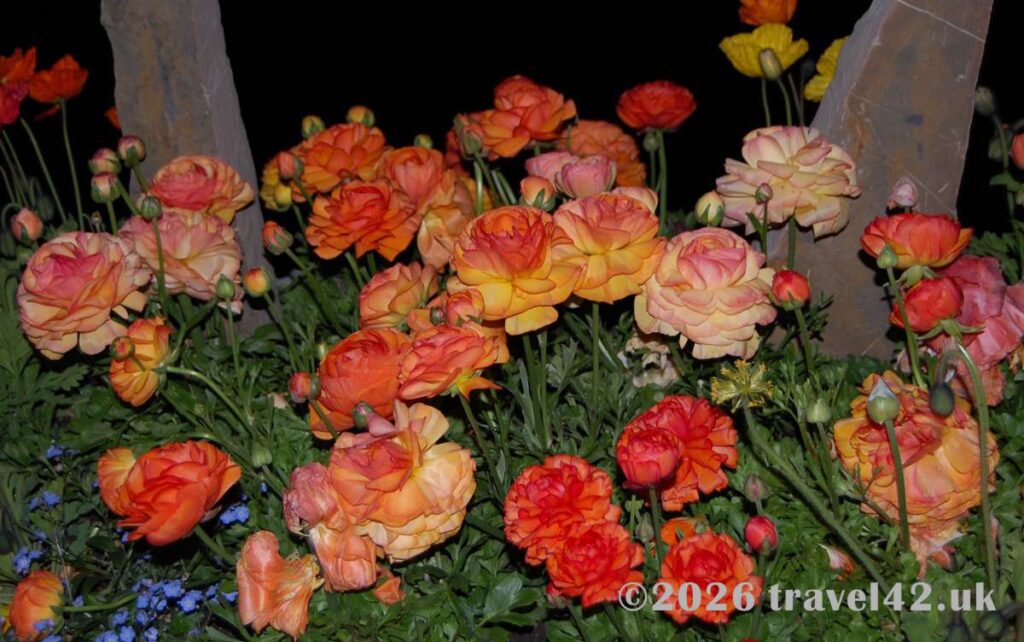
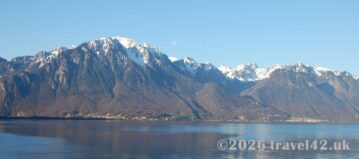
Spring is really where Montreux shows off, though – flowers everywhere, some familiar, some not. The lakeshore stands out with a fantastic view towards the mountains, so clear it seemed to pick out every colour, with snowy peaks reflecting into the water.
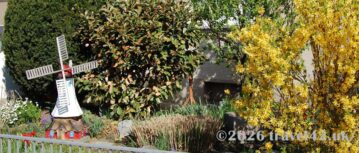
One evening, walking along the water, we spotted something we couldn’t quite place – a stalk like a poppy, but a flower shaped more like a rose. It was exciting enough that we ended up taking far more photos than the fading light really allowed.
As we found out later, the mystery flower was a ranunculus.
Neuchâtel: Forests, Watches and a Very French Corner of Switzerland
North of Lake Geneva sits Lac de Neuchâtel, named after the city beside it – or perhaps the other way around. Either way, Neuchâtel roughly translates as “new castle”.
It is a compact city, but the surroundings do a lot of the talking: forests, houses, roads, parks and orchards make up much of the landscape, with relatively little space given over to industry. The result is a setting that feels more countryside than city.
Neuchâtel has long been associated with watchmaking and is now also an important centre for microtechnology and precision engineering. The city’s industrial history includes some remarkable developments in watchmaking and electronics, including the development of the Beta 21 quartz watch in Neuchâtel in the 1960s.
One practical note for English-speaking visitors: this is a firmly French-speaking part of Switzerland, and it shows.
With its historic buildings, churches, museums and other sites of national significance, Neuchâtel rewards a proper wander rather than a quick stop.
For couples: this is a good candidate for a slow, unhurried afternoon – small enough to cover on foot, with enough historic detail to make stopping for coffee somewhere feel entirely earned.
Lucerne: A Last Stop Before Germany
Before heading back towards Germany, we broke the journey near Lucerne to visit friends, staying overnight in the city and taking the chance to see it properly for the first time.
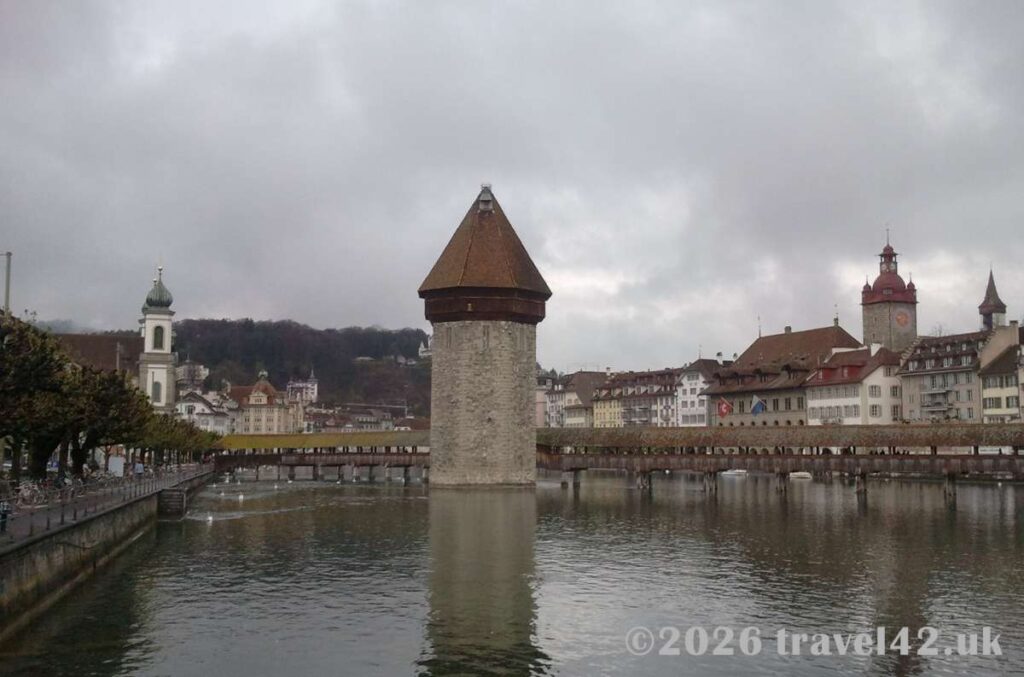
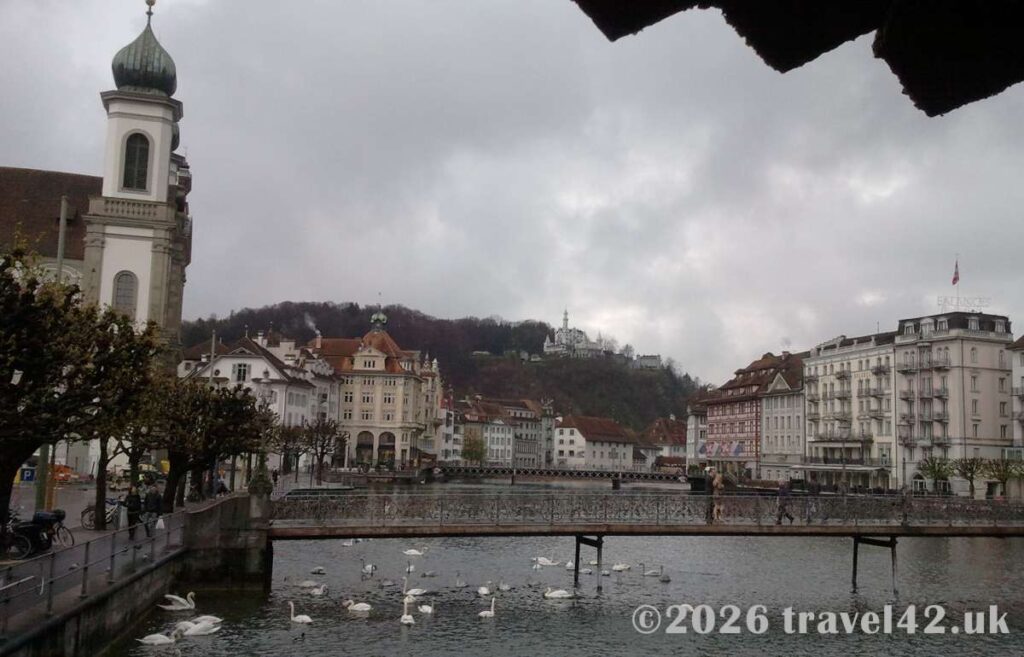
Lucerne’s old town is famously linked by a pedestrian bridge across the river, with a water tower built into one side. This is the Chapel Bridge (Kapellbrücke), a 204-metre-long wooden bridge and one of the city’s most photographed sights.
The bridge was badly damaged by fire in 1993 and largely rebuilt. Unlike a lot of well-known attractions, there’s no charge to walk across it, which we really appreciated.
Lucerne itself is one of Central Switzerland’s main cities, with the wider urban area extending beyond the city into neighbouring municipalities.
It rained for most of our visit, but the old town held up well regardless – bridges, shopfronts and a public transport system that residents were genuinely happy to explain to visitors who looked lost.
For couples: an overnight stop like this is exactly the sort of low-pressure city break that works well slotted between longer driving days – nothing to plan around, just an evening to wander and a good dinner to end on. We chose a simple Etap hotel for our stay, which was both budget-friendly and comfortable enough for an overnight stop.
Where the Trip Went Next
We came to Lucerne after seeing how Swiss chocolate and Emmental cheese are actually made – a very different kind of day that now has its own write-up: Swiss Chocolate & Cheese: A Taste of Switzerland.
If lakes and old towns are more your pace, though, this stretch – Geneva, Montreux, Neuchâtel and Lucerne – makes a satisfying loop on its own, and pairs naturally with our longer Switzerland road trip or the wider Western Europe Travel Guide for Couples if you’re building out a bigger trip.
Before returning home, our next stop after visiting Switzerland was Mainau Island in Germany.
Travel42 UK is a couples travel journal dedicated to immersive road trips, slow travel, and destination storytelling.
Explore More of Western Europe:
The long way round, as a couple
About the Author
The author, ainarsbl, is a Level 7 Google Local Guide, Master Reviewer and expert travel reviewer focused on scenic landscapes, UNESCO sites and meaningful couples travel experiences.