For us, this was our very first trip to the African continent. The difference was palpable the moment we stepped off the plane – the light, the heat, the rhythm of the streets. Yet after a few days in Marrakech, we began to notice something unexpected: Morocco, while undeniably African, is not quite “Africa” in the way many travellers picture it. It sits far more naturally in the Arab world, with a pronounced European overlay – particularly visible in the cities, in the architecture, and in the pace of daily life. The Africa we had imagined came later, in early 2026, when we finally reached Zanzibar and Tanzania – but that is a story of another series of posts you can read on our blog.
A couple of days after arriving in Marrakech, we set off on what turned out to be one of the most memorable experiences of our travels together: a three-day Sahara desert tour from Marrakech, crossing the High Atlas Mountains and descending deep into the south to see the towering sand dunes of Erg Chebbi.
Although this is only a small corner of the Sahara, if you are planning a trip to Morocco as a couple and can do just one excursion, this is the one.
Planning and Booking the Tour
We booked our trip – marketed by the operator as “The Authentic Morocco” tour – well in advance through a local Marrakech travel company. The itinerary covered three days with two overnight stays, fully inclusive, at a total cost of €120 per person. We paid a deposit of €70 per person at the time of booking.
This was before the pandemic, so prices will almost certainly have risen since. Current quotes from comparable operators tend to fall somewhere between €150 and €200 per person, depending on group size and the level of accommodation included.
Our advice: if your budget allows, opt for a smaller group. You will pay a little more, but the flexibility is worth it – the ability to linger somewhere that captivates you, or move on more quickly from somewhere that does not, makes a real difference over three days. In a larger group, you are tied to the collective schedule.
To cut straight to it: this tour was exceptional value for money, and we came home completely satisfied.
Here is how those three days unfolded.
Day One: Crossing the High Atlas via Tizi n’Tichka
Towards Tizi n’Tichka Pass
Our driver-guide collected us near the hotel at 8 am and we boarded a Toyota Land Cruiser where the rest of the group were already waiting – six passengers in total, plus the driver. It was just the right number for a journey of this length: spacious enough to be comfortable, intimate enough to feel like a shared adventure rather than a bus tour.
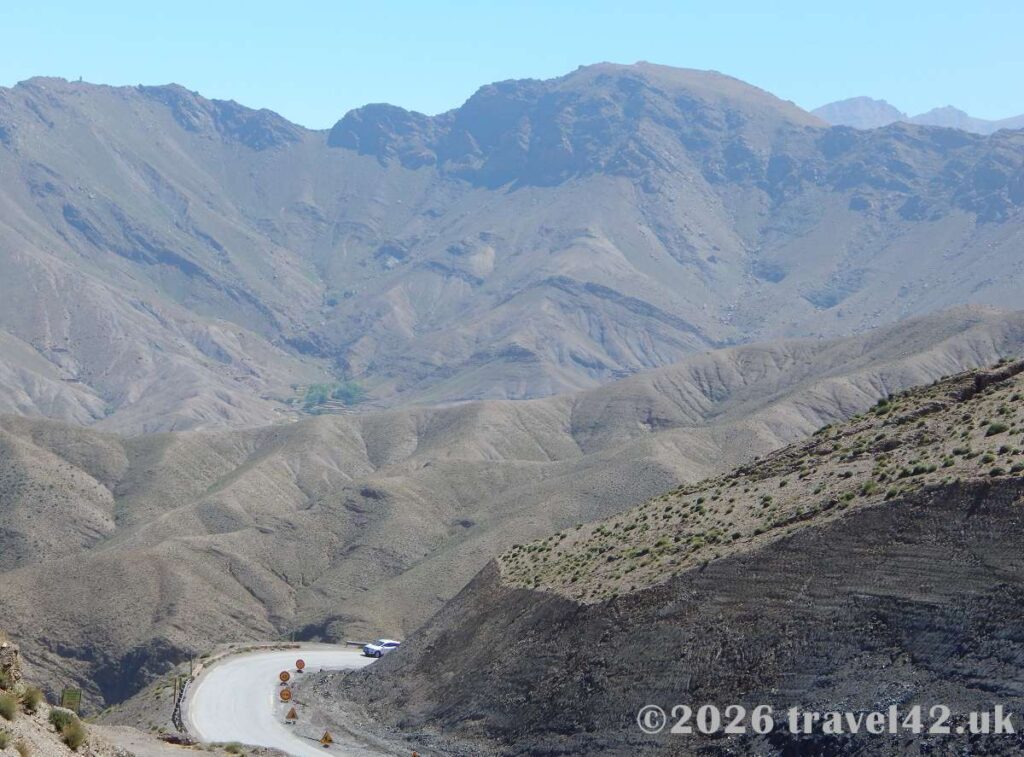
The centrepiece of the first day was the crossing of the Tizi n’Tichka Pass, the highest major mountain pass in North Africa. The roadside sign marks the summit at 2,260 metres, though a GPS survey carried out in 2022 confirmed it sits slightly lower, at around 2,205 metres – a small discrepancy that has apparently stood for years.
The road itself was built by the French military in 1936 along an ancient caravan trail and now forms part of National Route 9. Even by today’s standards, it is a remarkable drive: the tarmac winds steeply through bare, craggy peaks, past Berber villages clinging to the hillsides, with sweeping panoramas opening up across deep valleys far below.
We stopped on the pass to stretch our legs and take photographs. The views were already extraordinary – and already confirmed that joining this tour had been the right decision.
Aït Benhaddou
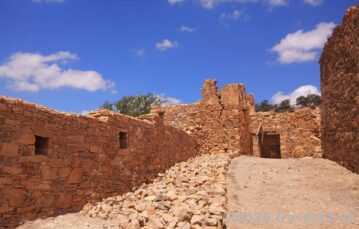
Our next stop was lunch and sightseeing at Aït Benhaddou, a UNESCO World Heritage Site and one of Morocco’s most visually arresting places. The ksar – a fortified earthen village – has stood on a former trans-Saharan caravan route since at least the 11th century, its towers and walls built from adobe, rammed earth and clay bricks.
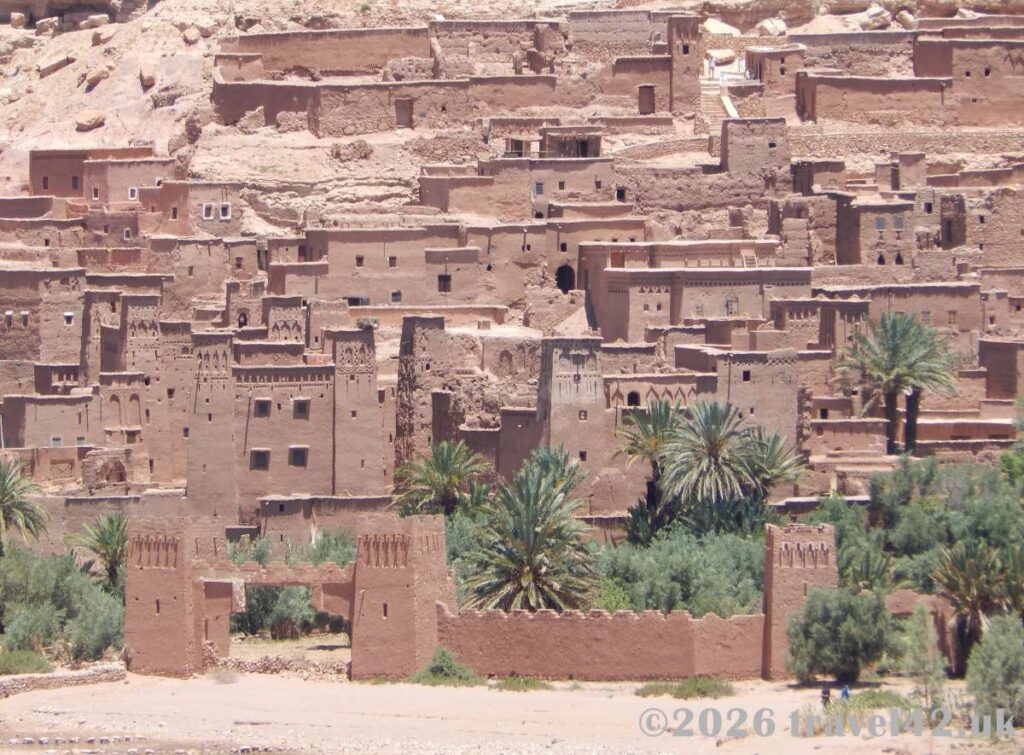
It is also, famously, one of cinema’s most-used filming locations. Productions have been shot here since 1963, and the list reads like an awards-season roll call: Lawrence of Arabia, Jesus of Nazareth, The Mummy, Gladiator, Kingdom of Heaven, Prince of Persia and the Yunkai scenes from Game of Thrones, among many others. A handful of families still live inside the old walls.
We had enough time to enjoy lunch, wander the labyrinthine alleys and climb to the top for views across the surrounding plains. It is genuinely breathtaking.
It was also here that we bought our scarves – draped over the head and face, they turned out to be invaluable later when we were swaying across the dunes on camelback.
Route through many valleys
After Aït Benhaddou, we passed through Ouarzazate – often called “the gateway to the desert” and home to the famous Atlas Film Studios, which you can glimpse from the road. Our group voted to press on rather than stop for the studio tour, though we did pull over briefly for a look from a distance before continuing east through the Valley of Roses, the Dadès Valley, the Skoura palm oasis and the Valley of a Thousand Kasbahs – a long, cinematic stretch of road lined with crumbling fortified villages that needs no Hollywood backdrop whatsoever.
Because we had saved some time by skipping the studios, we arrived at our hotel in the Dadès Gorge area with daylight still to spare. Our driver took us a short distance out of the village to the edge of the cliffs, where the road below coils like a ribbon through the gorge – perfect light for photographs and a genuinely dramatic spot.
Then we returned to the village, to a peaceful, quiet hotel where the hosts prepared a simple but very good dinner. After a day on the road, it was exactly what we needed.
Day Two: The Todra Gorge and the Dunes of Erg Chebbi
The Todra Gorge
After breakfast, we continued eastwards and stopped at the Todra Gorge – without question one of the most astonishing natural spectacles either of us had ever encountered.
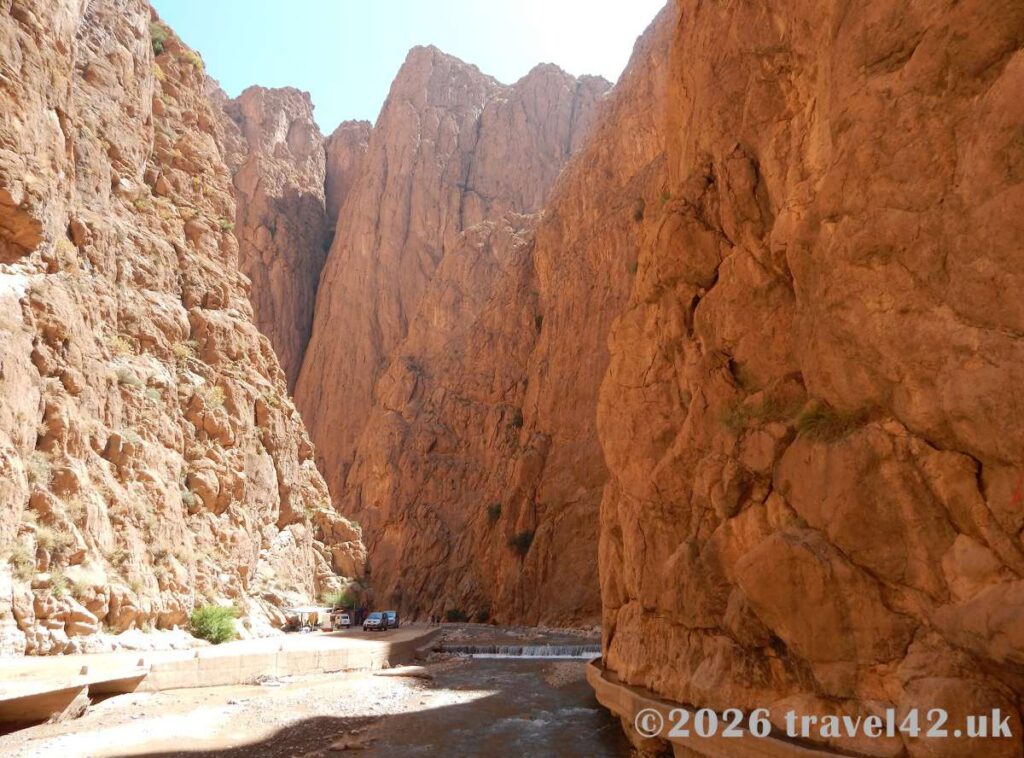
Carved by the Todra River through the eastern High Atlas, the gorge reaches around 300 metres high at its most dramatic point (some sources record peaks of up to 400 metres elsewhere along its length), while narrowing to as little as 10 metres wide at the base.
Standing between those rust-red limestone cliffs, craning your neck back to find a thin strip of sky impossibly high above, is one of those moments that makes you feel pleasantly small.
The gorge is also a well-established destination for rock climbers, and local vendors have set up stalls along the valley floor, adding a little life to the scene.
A man with a small monkey offered rides; one of us – not naming names – climbed on, despite being roughly the same size as the animal. It was, as these things go, good fun.
After lunch, we turned our backs on the mountains and headed for the desert.
Our destination was Erg Chebbi, the great sea of sand dunes near the town of Merzouga in Morocco’s far east. The dunes rise to roughly 150 metres at their highest, stretching some 28 kilometres from north to south and up to seven kilometres wide – running almost to the Algerian border, which lies around 50 kilometres further east.
We arrived at the hotel near Merzouga, left our luggage (this was purely a bag-drop – we would not be returning until the following morning), and were matched with our camels just in time to set off before sunset.
The Camel Ride and a Night Under the Stars
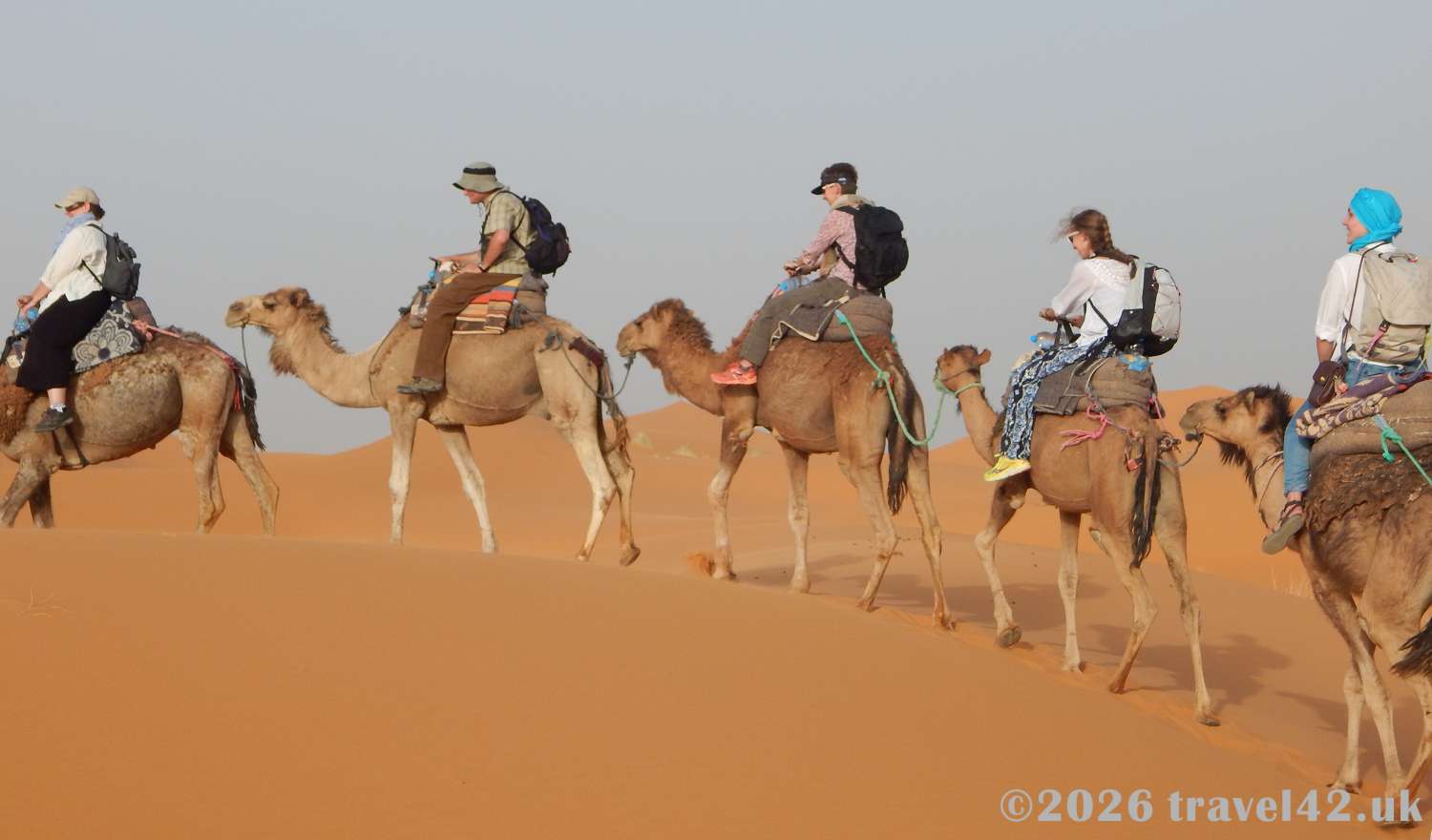
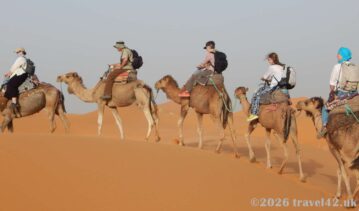
The two-hour ride to the nomadic Berber camp – with a brief rest stop halfway – was one of those experiences that is considerably more demanding than it appears.
Camels move with a peculiar rolling gait, and after an hour or so your hips and back begin to make their feelings known.
For one of us, it was a first time on a camel entirely; the main advantage, it turned out, was the height – you see the dunes and the surrounding desert in a way that walking simply cannot offer.
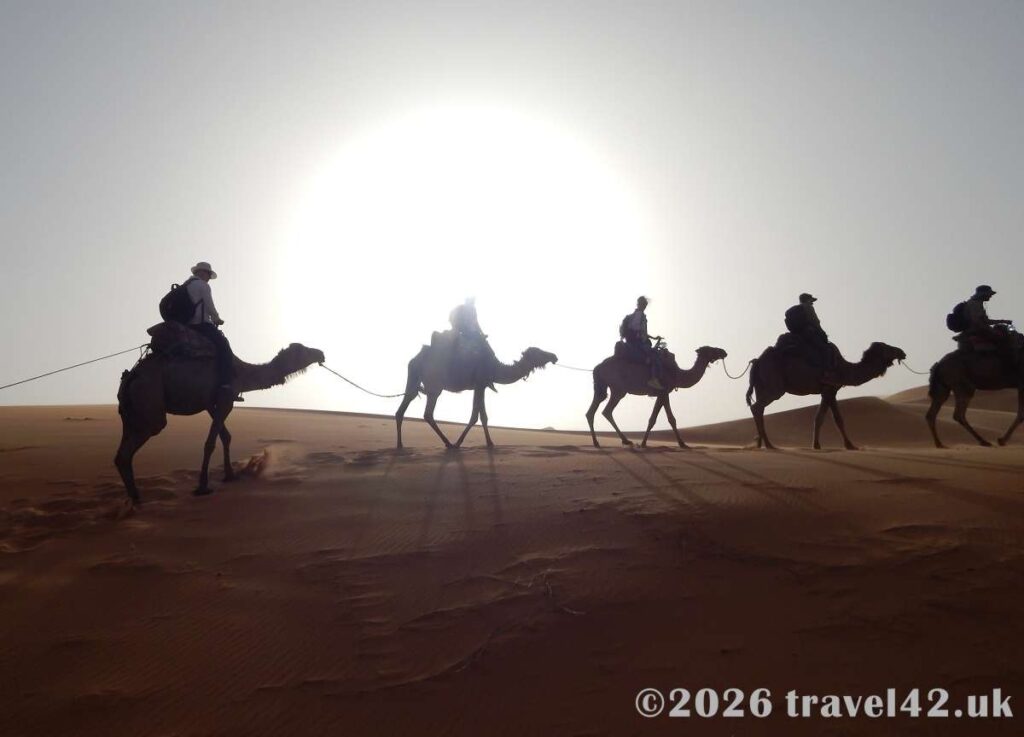
We rode in single file, led by guides, with the wind barely a whisper, and frequently turned to wave at each other between the swaying humps – small, happy moments that belong specifically to this kind of travel.
As the dunes shifted from burnished gold to deep amber in the fading afternoon light, every creak and lurch of the saddle became entirely worthwhile.
The Berber camp
The Berber camp, when we reached it, was set up with traditional tents, and the evening that followed was genuinely magical.
We were welcomed with mint tea, and dinner – tagine, fresh bread and salads – was outstanding.
After the meal came the highlight: a fireside drumming session. Our hosts handed out drums and encouraged everyone to join in. It turns out that Berber rhythms are considerably more complicated than they look, and our attempts to keep time were met with generous, good-natured laughter from all sides.
Later, we slipped back to our tent and fell asleep almost immediately. The day had been long and wonderfully exhausting, and the silence of the desert – broken only by the faintest breeze – wrapped around us like a second blanket.
The sky above, completely free from light pollution, was extraordinary: a dense, unbroken scatter of stars that felt close enough to touch.
Day Three: Dawn in the Dunes and the Road Back
The journey back to the hotel
With our guides’ help, we rose before dawn and headed back across the sand – this time, for one of us, on foot.
After two hours in the saddle the previous evening, there was no great temptation to repeat the camel experiment; walking beside the caravan at exactly the same pace turned out to be a perfectly comfortable alternative and offered its own quiet pleasure in the early-morning stillness.
Watching the sun rise over Erg Chebbi – the light catching the ridge of each dune in sequence, gold spreading slowly across the sand – is one of those rare travel experiences that genuinely lives up to expectations.
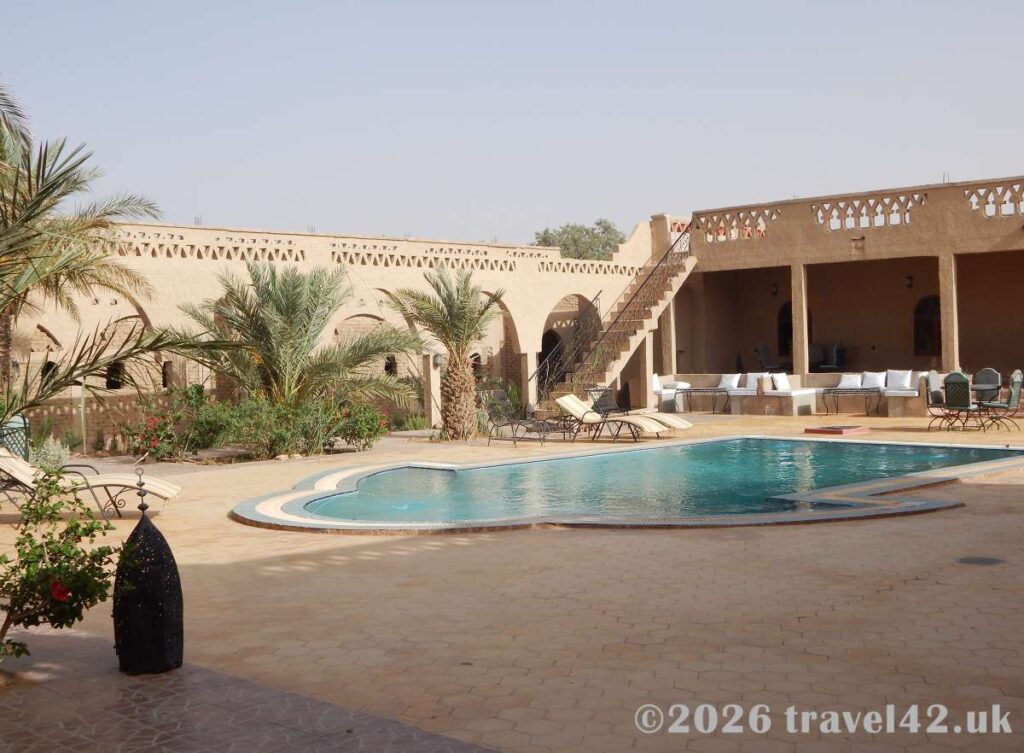
Back at the hotel, we freshened up, had breakfast and were pleasantly surprised to find we still had time for a swim in the hotel pool before departure – a small luxury that felt like a fitting end to the desert chapter.
Back to Marrakech
The drive back to Marrakech was long, with a lunch stop in Ouarzazate. As far as we can remember, that lunch was the only meal we paid for separately during the entire three days; everything else was included in the tour price.
On the way, we asked our driver to pull over at a local cooperative shop so we could pick up some Moroccan argan oil and spices to take home. He agreed without hesitation.
It is worth saying: the tour operators had promised at the outset to steer clear of souvenir shops and pushy vendors, and they kept that promise throughout. Not once were we manoeuvred into a shop we had not chosen ourselves – which, for a route that passes through so many tourist hotspots, was genuinely refreshing.
The cooperative was simply the right kind of stop: fixed prices, good quality and the quiet satisfaction of buying directly from the people producing what you are purchasing.
We arrived back in Marrakech that evening tired, dusty and deeply contented.
Practical Tips for Couples
When to Go
The best seasons are spring (March to May) and autumn (September to November).
Summer temperatures in the desert can be brutal – well above 40°C. We were there in early June and experienced 44°C at one point, which we are quietly proud of surviving.
Winter nights in the desert can drop below freezing, so if you are visiting between December and February, pack a proper warm layer for the overnight stay.
What to Wear
Loose, light layers work best. Buy a scarf early – we found ours in Aït Benhaddou, and it earned its keep many times over.
You will want something warm for the desert night regardless of the season.
The Camel Ride
Two hours each way is a genuine physical commitment. If you have back or joint problems, ask your operator about a 4WD transfer to the camp as an alternative – several offer this.
The Evening in Camp
The drumming session is communal and joyful rather than quietly romantic – but the desert at night, once the fire dies down and the group disperses to their tents, is entirely your own.
That part is deeply peaceful.
Booking
Choose a reputable operator with verifiable reviews and ask exactly what is included – meals, accommodation, the camel ride and transfers.
Paying a deposit at the time of booking is standard practice.
More from Our Morocco Series
This was our first journey into Morocco together, and it set the tone for everything that followed.
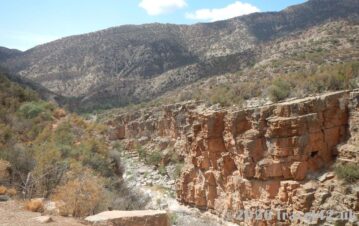
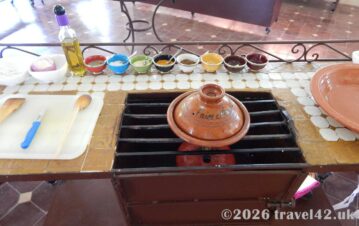
You can also read our Marrakech Travel Guide for Couples, and a post on cooking classes near Marrakech, the coastal city of Agadir, Paradise Valley, Taroudant and itinerary of finding hidden corners of Morocco.
Travel for Two is a couples travel journal dedicated to immersive road trips, slow travel, and destination storytelling.
Explore More of Morocco:
–



The long way round, as a couple
About the Author
The author, ainarsbl, is a Level 7 Google Local Guide, Master Reviewer and expert travel reviewer focused on scenic landscapes, UNESCO sites and meaningful couples travel experiences.