
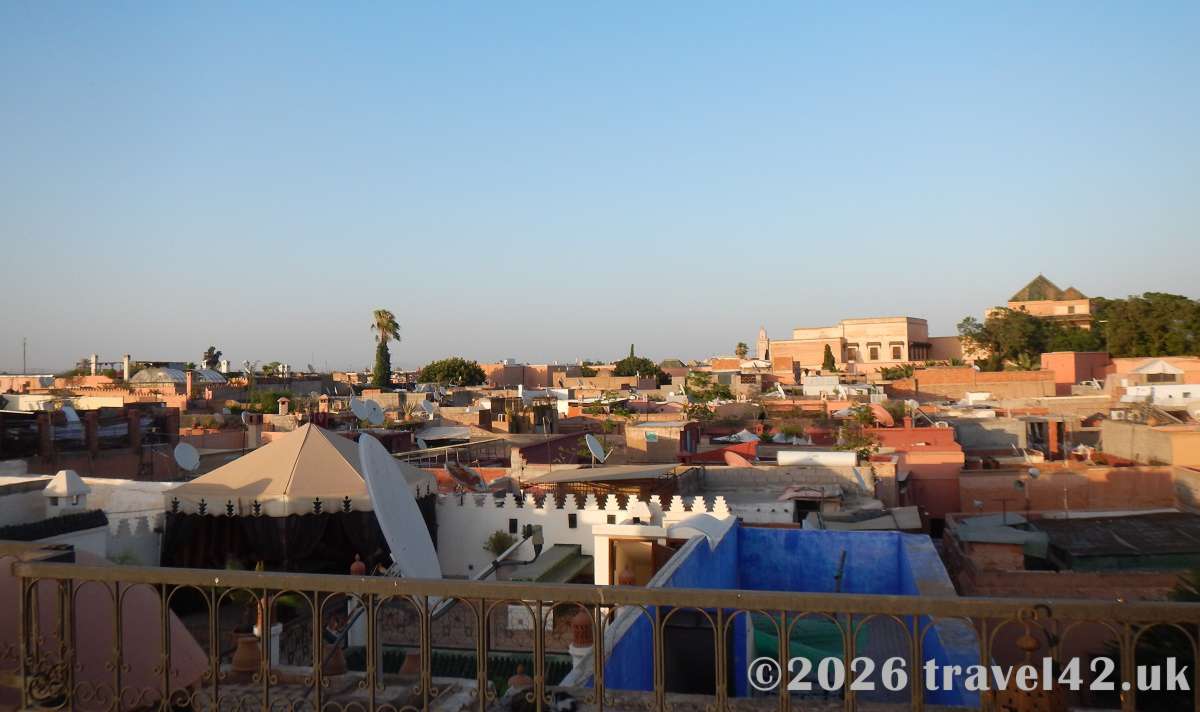
Marrakech was our introduction to Morocco – and, in many ways, it still feels like the place that defines the country for us most vividly.
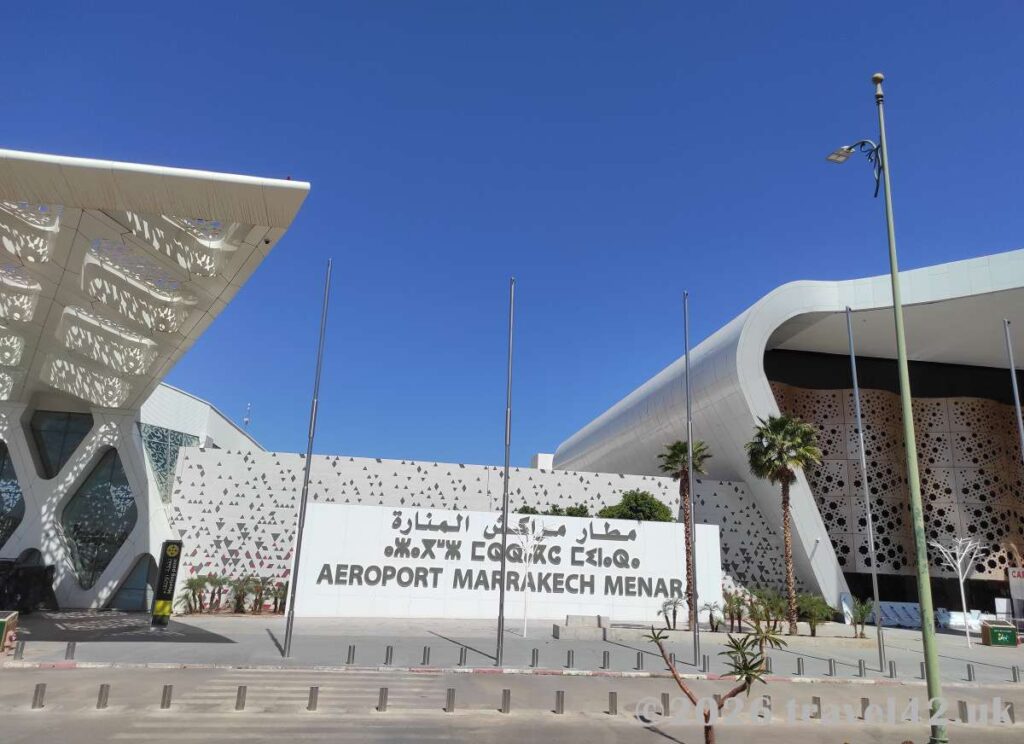
We first visited several years ago after flying from Glasgow to Marrakech Menara Airport with EasyJet. Then, after some time away, we returned again from London Gatwick, this time planning a slower and more relaxed trip centred around food, hammams, markets and long evenings wandering through the Medina.
Both visits felt completely different.
The first time, Marrakech overwhelmed us a little. The city was louder, busier and far more chaotic than we had expected. The second time, we already understood its rhythm better – and that changed everything. Instead of trying to “see” Marrakech, we simply allowed ourselves to experience it.
That is probably the best advice we can give any couple visiting the city for the first time.
After arriving, we were excited and occasionally slightly shocked. The noise, the chaotic traffic and the constant movement of people can feel intense at first. Inside the Medina, food is cooked and sold directly on the streets, adding another layer to the sensory overload – sometimes delicious, sometimes rather less so.
Marrakech is not really a destination to rush through. It is a place to absorb slowly: one mint tea, one spice stall and one Historic site at a time.
Why Visit Marrakech as a Couple?
Marrakech is one of Morocco’s most visited destinations and, despite becoming heavily touristic over the years, it still manages to feel excitingly unfamiliar.
The city was founded around 1070 by the Almoravid dynasty and became one of Morocco’s great imperial cities. Today, its Medina is a UNESCO World Heritage Site, famous for its maze-like streets, riads, colourful souks and historic palaces.
At the same time, Marrakech has long attracted artists, musicians and designers from around the world. During the 1960s and 70s, figures such as Yves Saint Laurent, The Beatles and The Rolling Stones all spent time here, helping establish Marrakech as an international cultural destination.
For couples, the city works surprisingly well because it offers a mixture of:
- romantic riads,
- hammams and spa experiences,
- colourful markets,
- hidden courtyards,
- and easy access to day trips beyond the city.
It can occasionally feel intense, especially inside the Medina, but that intensity is also part of its charm.
Arriving in Marrakech
Marrakech Menara Airport sits only a few kilometres from the city centre, making arrivals relatively straightforward compared with many larger international cities.
On our first visit, we pre-arranged an airport transfer through our riad, which turned out to be one of the smartest decisions of the trip. The Medina can be extremely confusing when arriving for the first time, particularly in the evening.
Google Maps helps – but only to a point.
Many riads are hidden deep inside narrow alleyways where taxis simply cannot enter. Even local drivers may struggle to locate smaller guesthouses precisely. Asking your accommodation host to meet you near a recognisable landmark, gate or mosque can save considerable stress after landing.
On our later visit, things already felt much easier because we roughly understood the geography of the old town.
That familiarity changes Marrakech completely.
Staying in a Riad in Marrakech
One of the best parts of visiting Marrakech as a couple is staying in a traditional riad rather than a standard hotel.
A riad is a traditional Moroccan house built around an internal courtyard, often featuring tiled walls, carved wooden details, fountains or small pools. From the outside, many look surprisingly plain. Then the doors open and reveal peaceful hidden interiors completely removed from the noise outside.
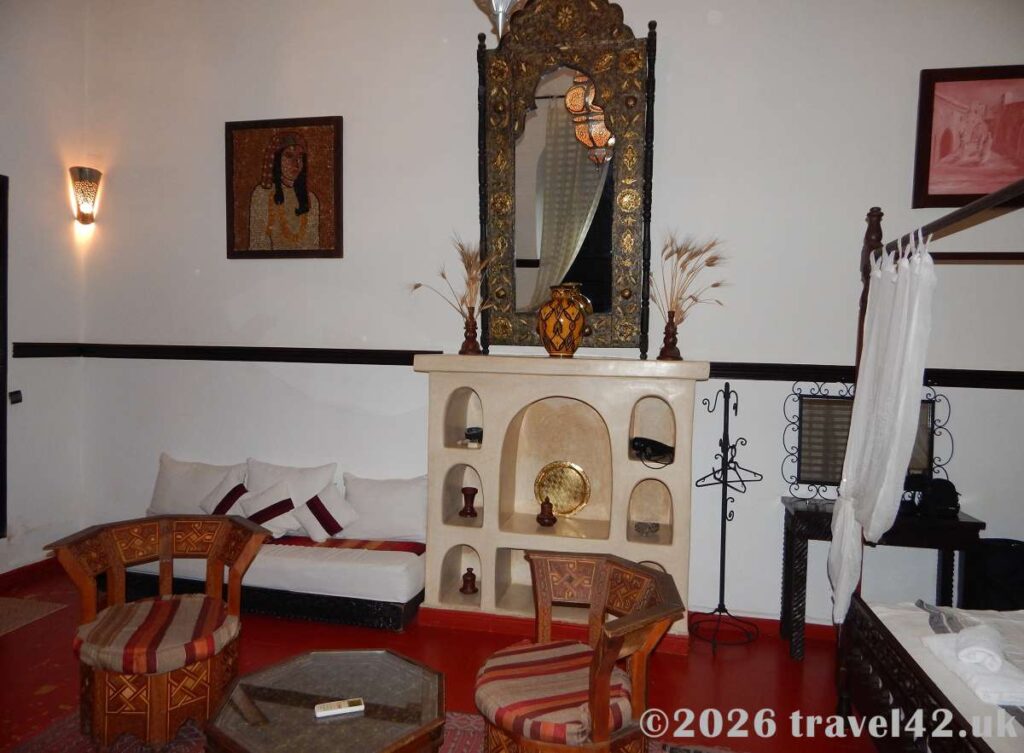
During our visits, we tried both:
- smaller budget-friendly riads,
- and larger, more luxurious options with private pools and elaborate decoration.
Both experiences had their own charm.
If you stay inside the Medina, expect:
- atmospheric surroundings,
- beautiful architecture,
- rooftop terraces,
- and immediate access to the souks.
But also expect:
- narrow alleyways,
- occasional noise,
- and a certain amount of navigational confusion.
That confusion is part of the experience.
Breakfasts in most riads tend to follow a similar pattern. Usually there are flatbreads, pancakes, jams, olives, fruit, mint tea and coffee – simple but perfectly enjoyable. It may feel different from what many European travellers are used to, but it suits the atmosphere of Marrakech surprisingly well.
There is also another noticeable similarity: the hosts are almost always welcoming and genuinely friendly. Even in smaller riads, you are often treated less like a hotel guest and more like someone they are personally pleased to receive.
For couples visiting Marrakech for the first time, staying inside the Medina for at least part of the trip is absolutely worth it.
Getting Around Marrakech
Marrakech is a city best explored on foot.
Inside the Medina, walking is practically the only realistic option anyway. The alleyways are too narrow for most vehicles, and much of the experience comes from simply wandering without a strict plan.
Some of our favourite moments happened entirely by accident:
- discovering quieter local squares,
- stumbling across hidden bakeries,
- hearing the evening call to prayer echo through the streets,
- or finding rooftop cafés overlooking the chaos below.
Of course, eventually you will get lost.
Probably multiple times.
But Marrakech is strangely enjoyable in exactly that way.
For longer distances outside the old town, taxis are inexpensive and widely available. Agreeing the fare beforehand is still common practice unless the meter is used.
On our more recent trip, we also stayed briefly in a larger all-inclusive resort outside the centre -Kenzi Club Agdal Medina – closer to the airport. It offered a very different experience from staying in a riad:
- larger pools,
- organised entertainment,
- more space,
- and a slower holiday atmosphere.
That balance actually worked very well for a longer Morocco trip.
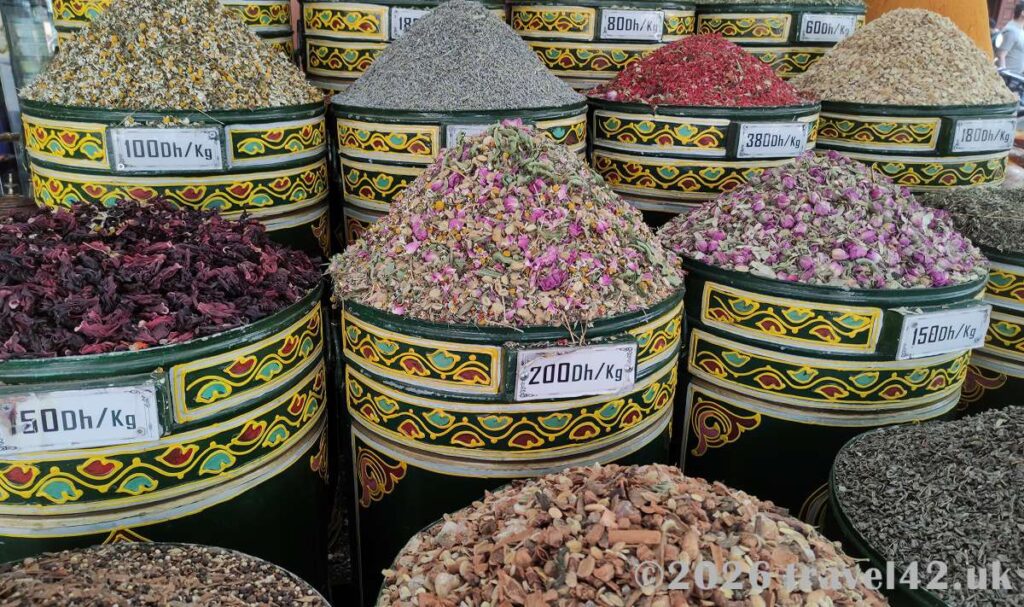
Jemaa el-Fnaa and the Souks
No visit to Marrakech is complete without spending time around Jemaa el-Fnaa and the surrounding souks.
During the day, the main square feels relatively open and manageable. By evening, it transforms completely:
- food stalls appear,
- musicians gather,
- smoke rises from grills,
- and the entire area becomes louder, brighter and far more chaotic.
Touristy? Absolutely.
Still worth experiencing? Without question.
Around the square, the souks spread out like a maze. Many are organised loosely by speciality:
- Souk Semmarine for general shopping,
- Souk Attarine for spices,
- Souk Haddadine for metalwork,
- Souk Cherratine for leather,
- Souk Zrabi for carpets,
- and many more hidden between them.
We particularly enjoyed the spice stalls because Moroccan spices are something we always bring home in large quantities.
The aromas alone are unforgettable:
- saffron,
- cumin,
- ras el hanout,
- cinnamon,
- paprika,
- dried mint,
- and countless spice mixtures whose recipes are closely guarded.
When buying spices or food, there is definitely room for bargaining. The more you buy, the bigger the discount you can usually negotiate. At some stalls, you may even be invited inside for a glass of Moroccan mint tea. In those situations, do not rush. Sit down, enjoy the moment and chat with the seller for a while. Those small interactions remain some of our favourite memories from Marrakech.
If you shop for more practical items, bargaining can become considerably tougher, particularly when it comes to lowering the initial price significantly. It depends on the specific shop, but that seemed to be a fairly common pattern throughout the city.
One thing we would recommend is occasionally stepping slightly away from the busiest tourist routes. Marrakech remains busy almost everywhere, but quieter local corners still exist if you wander far enough.
you can learn more about our Moroccan spice experiences reading about cooking classes near Marrakech.
Bahia Palace
One of the most worthwhile historical sites in Marrakech is Bahia Palace.
Built in the late 19th century, the palace was intended to be one of the grandest residences of its time. Today, visitors can walk through a series of courtyards, gardens and richly decorated rooms showcasing traditional Moroccan craftsmanship.
The details are what make the visit memorable:
- painted cedar ceilings,
- intricate zellige tilework,
- carved stucco,
- and peaceful internal courtyards that feel surprisingly calm compared with the streets outside.
The palace is not overwhelmingly large, which actually makes it pleasant to visit without becoming exhausting. Around one hour is usually enough for most visitors.
Queues can become significant later in the day, so mornings are generally the best time to visit.
One practical note: cash is still useful in Morocco, including at some tourist attractions and smaller shops.
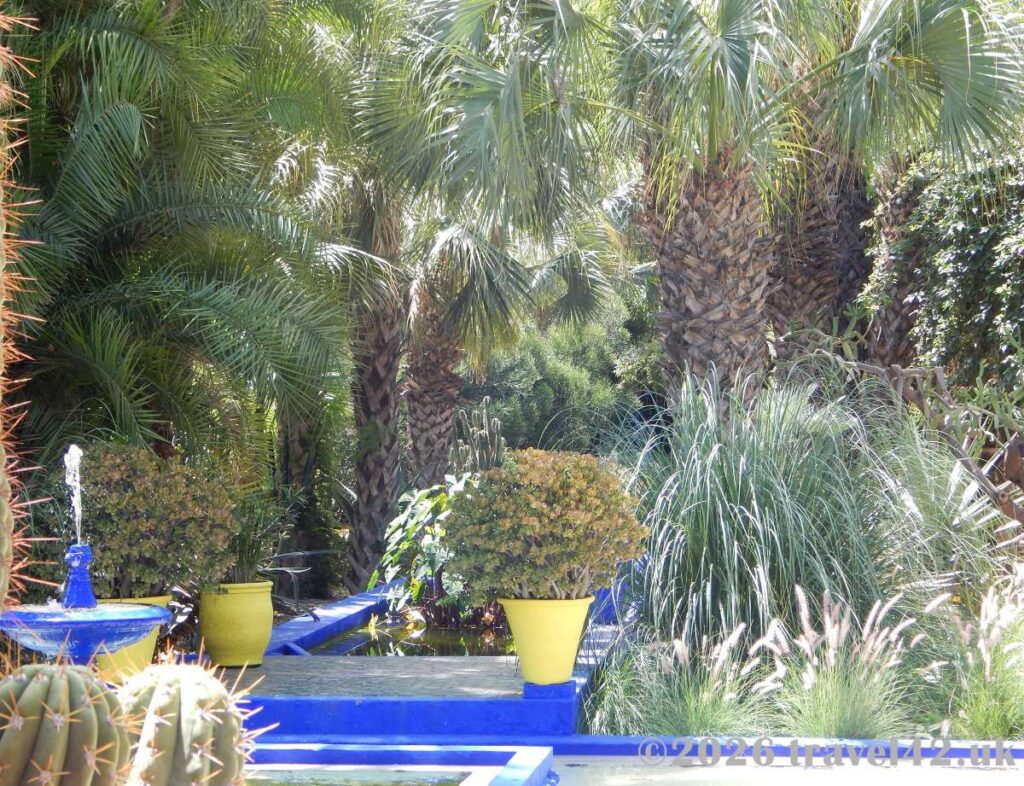
Jardin Majorelle
We also walked to Jardin Majorelle from the Medina – roughly four kilometres there and back altogether.
The garden was originally created by French artist Jacques Majorelle and later restored by fashion designer Yves Saint Laurent and Pierre Bergé.
Today, it is one of the most visited attractions in Morocco.
The deep cobalt-blue buildings, exotic plants and calm pathways create a completely different atmosphere from the intensity of the Medina. After several busy days in Marrakech, the gardens feel almost therapeutic.
If possible, book tickets in advance and visit early in the morning before larger tour groups arrive.
Hammams and Slowing Down
No couples trip to Morocco feels complete without visiting a hammam at least once.
Traditional hammams are part sauna, part cleansing ritual and part relaxation experience. Typically, the process includes:
- steam,
- black soap cleansing,
- exfoliation with a kessa glove,
- washing,
- and finally mint tea afterwards.
It is both relaxing and slightly brutal at the same time.
During our second trip, we planned to use the hammam facilities at our hotel, but availability was surprisingly limited because the spa was simply too small for the number of guests staying there.
Booking ahead is definitely worthwhile if hammams are important to your trip.
Food and Evenings in Marrakech
Evenings were probably our favourite part of the city.
As temperatures cooled, Marrakech became far more pleasant to explore. Historic sites filled with lantern light, music drifted through the Medina, and the atmosphere softened considerably compared with the midday heat.
There is something particularly memorable about sitting on a rooftop terrace late in the evening, listening to the distant sounds of the city while the warm air slowly cools around you.
Moroccan cuisine also deserves far more attention internationally than it often receives.
Some of the dishes we kept returning to included:
- lamb tagine with prunes,
- grilled meats,
- harira soup,
- fresh flatbreads,
- zaalouk aubergine salad,
- and sweet mint tea served almost everywhere.
And, of course, the spices.
Always the spices.
Practical Tips for Couples Visiting Marrakech
Best Time to Visit
Spring (March to May) and autumn (September to November) offer the most comfortable temperatures. Summers can become extremely hot.
Currency
Morocco uses the Moroccan dirham (MAD). Cash remains important in markets and smaller businesses.
Getting Around
Walking is best inside the Medina. Petit taxis are inexpensive for longer journeys.
Staying Connected
Most riads and hotels offer Wi-Fi, though speeds can vary.
Dress Code
Morocco is relatively relaxed by regional standards, but modest clothing is still culturally appreciated.
Safety
Marrakech generally feels safe for tourists, though persistent selling and occasional scams are common around major tourist areas.
Airport Transfers
Arrange one through your accommodation if staying inside the Medina for the first time.
Is Marrakech Worth Visiting as a Couple?
Yes – but it helps to arrive with the right expectations.
Marrakech is not polished in the way many European city-break destinations are. It can be chaotic, noisy and occasionally exhausting. Some visitors fall in love with it immediately; others need time.
We probably belonged to the second category at first.
But the city grows on you surprisingly quickly.
Because beneath the intensity there is also beauty:
- hidden riads,
- centuries of history,
- incredible food,
- warm evenings,
- and a rhythm unlike almost anywhere else we have travelled.
For us, Marrakech remains a mixture of emotions in memory. After long walks and countless interactions – both wanted and unwanted – the city can sometimes feel tiring and overwhelming. Yet at the very same time, it can also feel romantic, atmospheric and deeply relaxing.
Perhaps that is exactly why the culture of riads and hammams became so important here. Marrakech constantly shifts between intensity and calm, and part of the experience is finding the balance that suits you best.
And eventually, somewhere between the spice stalls and the evening call to prayer, Marrakech starts making sense.
Travel42 UK is a couples travel journal dedicated to immersive road trips, slow travel, and destination storytelling.
Explore More of Morocco:
–





The long way round, as a couple
About the Author
The author, ainarsbl, is a Level 7 Google Local Guide, Master Reviewer and expert travel reviewer focused on scenic landscapes, UNESCO sites and meaningful couples travel experiences.