Some days on a trip are planned around a long list of sights. Others are much simpler.
Our visit to the Isle of May was one of the simple ones.
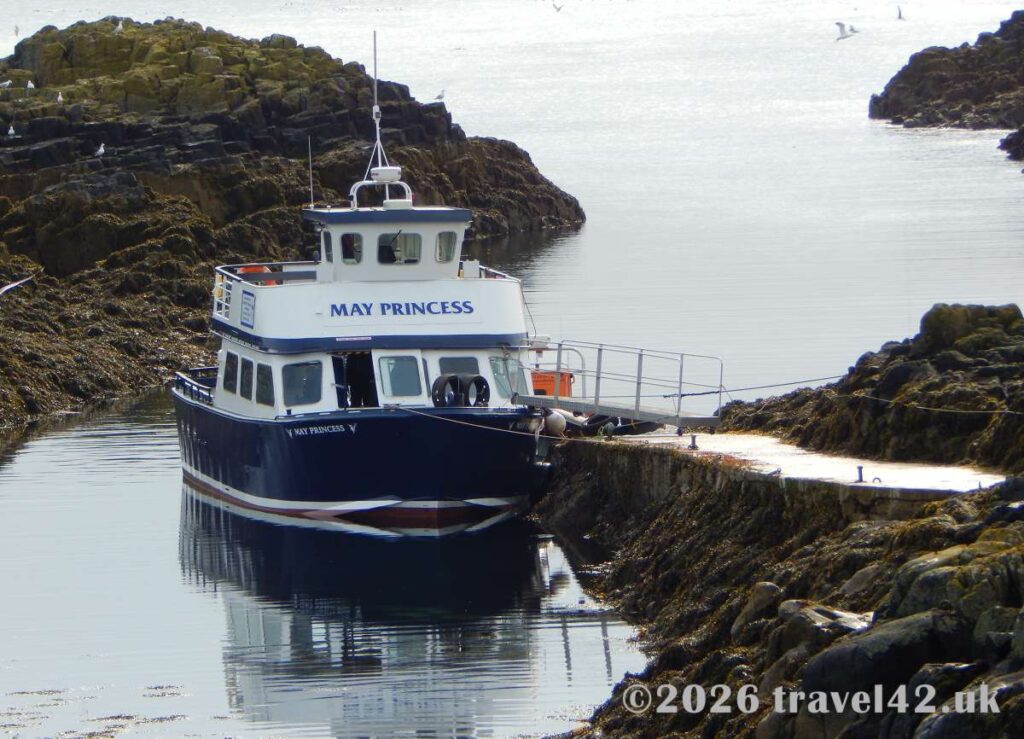
On the first day of April, a few years ago, we drove from Edinburgh to Anstruther, boarded the May Princess and headed out into the Firth of Forth. There was no grand itinerary waiting for us on the island. We wanted to walk, enjoy the views and see as many seabirds as possible.
And, if we were lucky, perhaps a puffin or two.
As it turned out, we did find puffins, although not quite where we expected them. We spotted them on the water close to the coast, which made for a memorable sight after a day of exploring the island.
The Isle of May makes an excellent day trip for couples who like being outdoors together without filling every minute. It is a place for walking, wildlife watching and sea views – and for being somewhere different for a few hours.
From Edinburgh to Anstruther
The journey to Anstruther was part of the day for us. We drove east towards the Fife coast, and the landscape gradually shifted from city to sea.
Anstruther is a small harbour town in the East Neuk of Fife and one of the departure points for boats to the Isle of May.
That contrast is part of the appeal. You leave Edinburgh behind, drive to the coast and then leave the mainland altogether. By the time the boat pulls away from the harbour, the day has become less about sightseeing and more about the sea and whatever you find on the island.
There is no need to rush from one landmark to the next.
Taking the Boat to the Isle of May
The Isle of May can only be reached by boat, which gives the visit a sense of adventure from the start.
The boat trip we used ran from Anstruther. Our day followed a simple pattern: drive to Anstruther, take the boat across, spend time exploring the island and return to Anstruther by the same boat. We set off at around 10 am and planned to head back at around 2 pm.
The crossing is also your first chance to look for wildlife. Depending on conditions and the time of year, the waters around the island can offer views of seabirds and seals.
Then the island appears ahead.
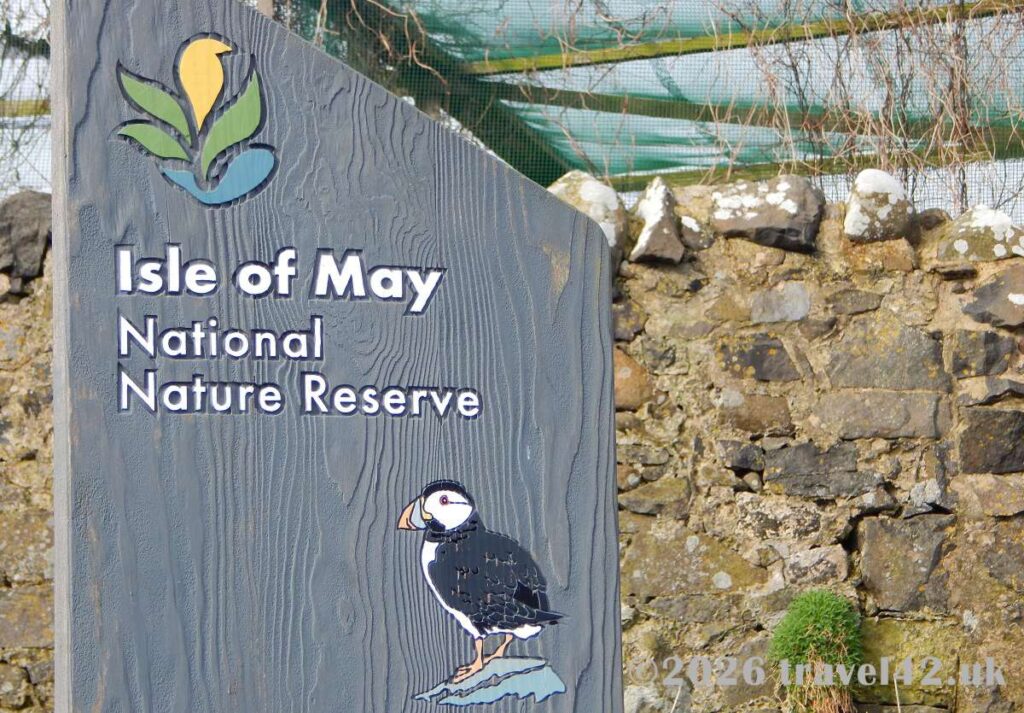
There is something satisfying about arriving somewhere you can’t simply drive to. You have made the journey deliberately, and that makes the first steps ashore feel different from pulling into another car park.
Exploring the Isle of May
The island is small, roughly 1.5 km long and 0.5 km wide, but it packs in a lot of wildlife. It is managed by NatureScot as a National Nature Reserve and is internationally important for its seabirds and grey seals.
For us, the main attraction was simply walking around and watching the birds. Wildlife watching has its own unhurried rhythm: you walk for a while, stop when something catches your attention, watch the cliffs or the sea, then carry on when you’re ready.
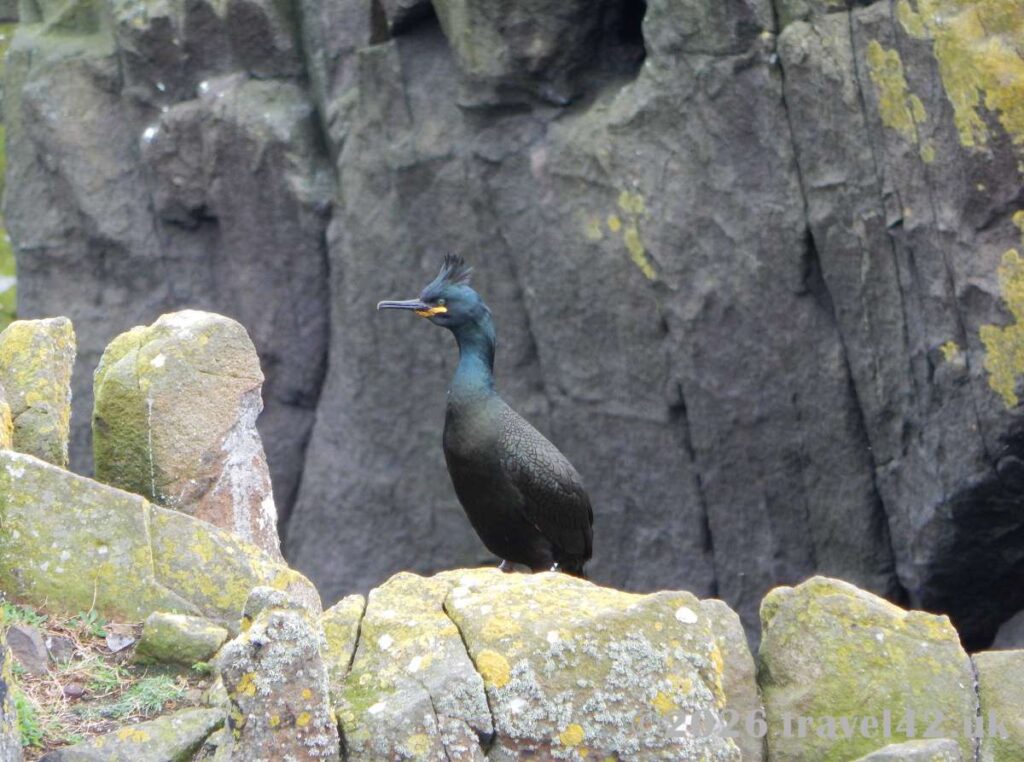
That suits couples well. You don’t need to agree on a schedule. You can wander together, stop for photographs, point birds out to each other and stay as long as you like at a good viewpoint.
We can’t say exactly how long we walked, but it was a slow loop, stopping at the cliffs in different spots to watch the seabirds.
NatureScot provides visitors with a map of the paths and points of interest. The island has low-level tracks, and visitors are asked to stay on the marked routes to protect nesting birds and their burrows. That matters on an island where wildlife is quite literally under your feet.
A Day Surrounded by Seabirds
The Isle of May is best known for its seabirds, and in the breeding season it becomes an extraordinarily busy place.
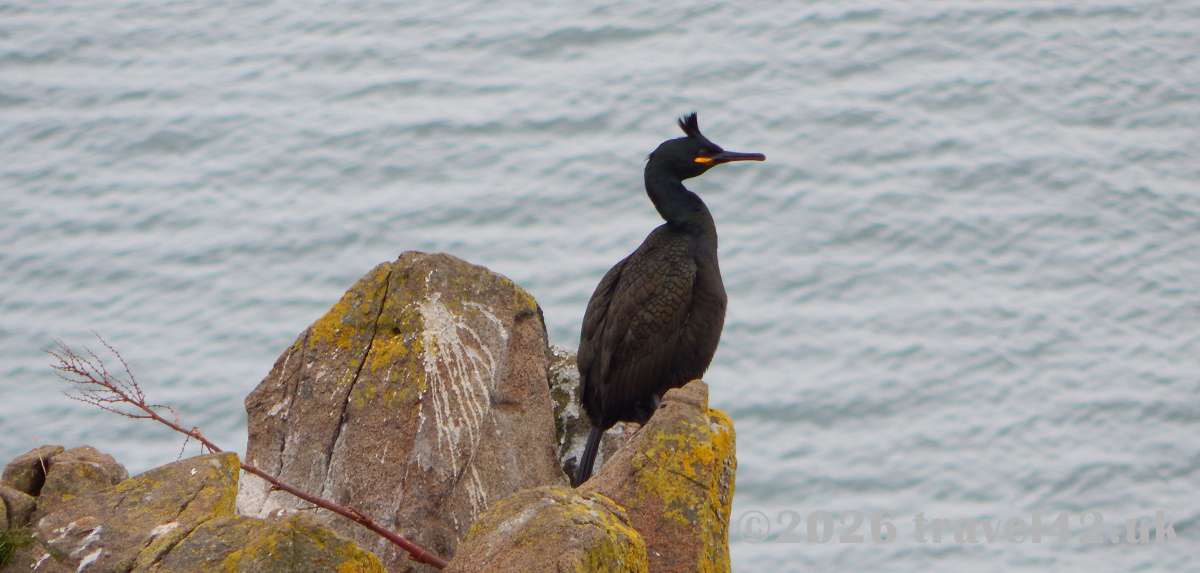
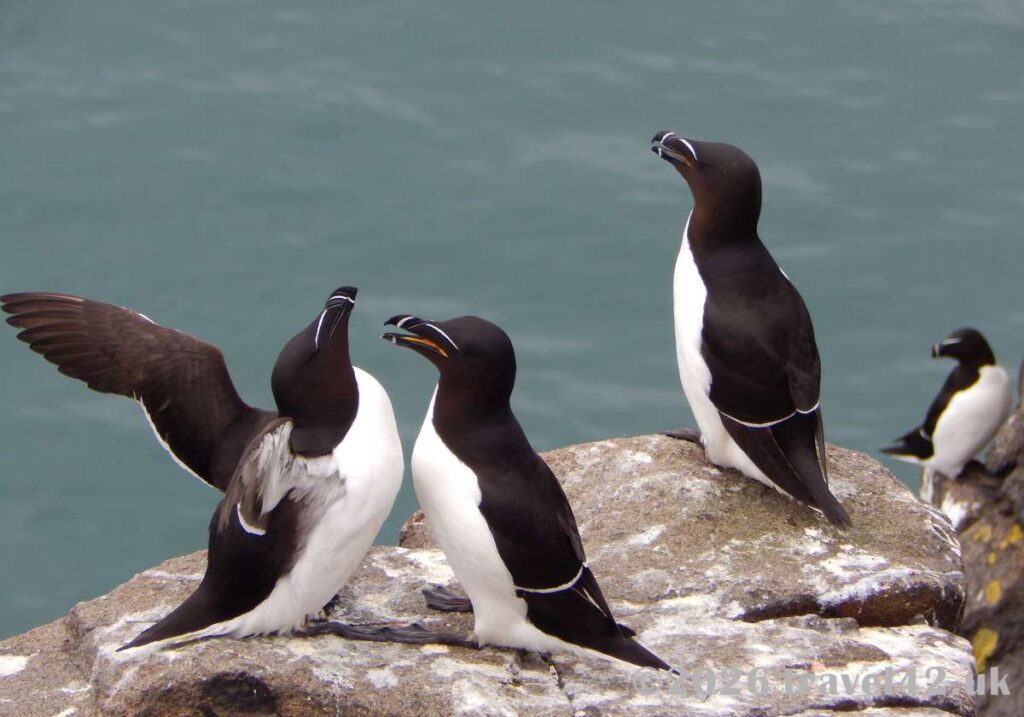
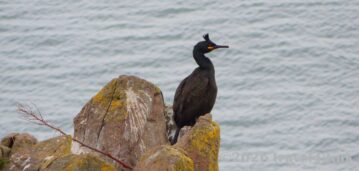
Puffins are the birds most visitors hope to see, but they are far from the only reason to bring binoculars. The island supports breeding guillemots, razorbills, kittiwakes, shags, eiders and other seabirds.
The cliffs are at their most impressive when the birds are nesting. Instead of a quiet coastal walk, you find yourself surrounded by movement and noise, with birds flying back and forth, calling from the ledges and disappearing towards the sea before returning again.
It needs no interpretation. You can simply stand there and watch, and a few hours disappear surprisingly easily.
And Yes, We Found Puffins
Puffins were the birds we most hoped to see. The Isle of May is an important breeding site for Atlantic puffins, with the main breeding-bird season running from spring into early summer.
Our sighting wasn’t the classic scene you might imagine, with puffins standing outside their burrows on the clifftop. We saw them on the water close to the coast before we saw them on land.
It was a small moment, but it stayed with us. After so long looking towards the cliffs, we suddenly spotted these unmistakable little birds floating on the sea.
Then we realised there were many more.
They were gathering in their hundreds, some swimming, some flying and some catching fish. The most fascinating part was watching how fast they beat their small wings.
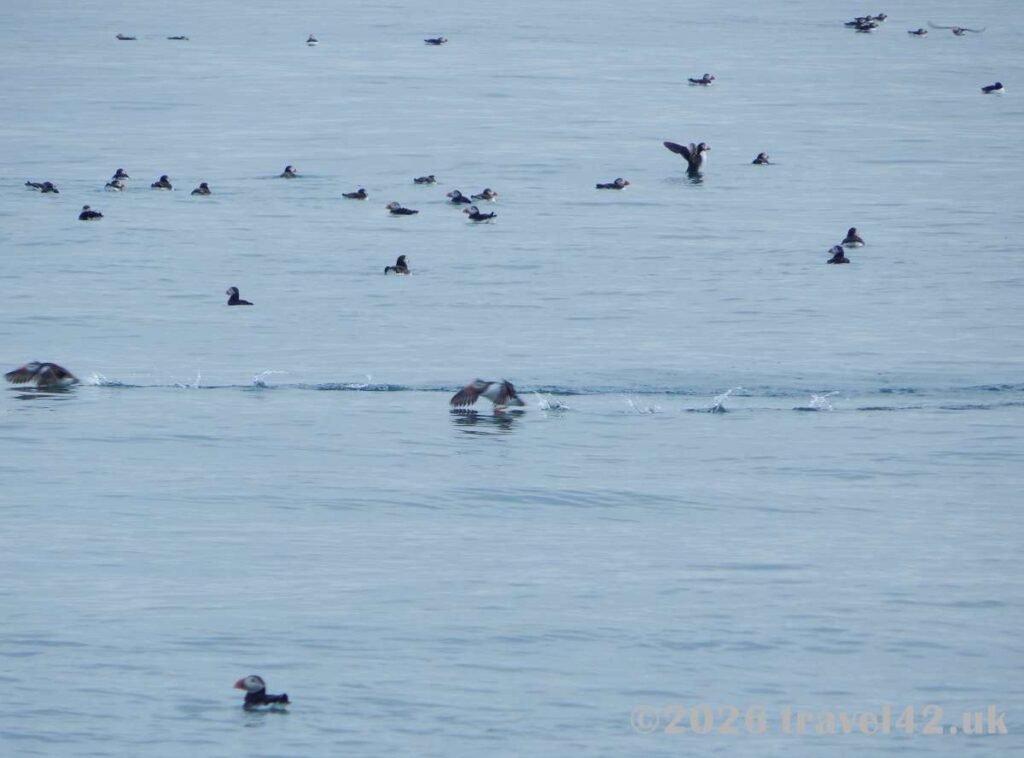
Photographs don’t quite capture the experience. Puffins are surprisingly small, and picking them out among the movement of the waves takes a little patience.
That is another reason to slow down: the longer you look, the more you notice.
More Than Just Puffins
Puffins may be the headline act, but the Isle of May is much more than a puffin-spotting destination. NatureScot highlights its guillemots, razorbills, kittiwakes, shags and eiders, while grey seals can also be seen around the coast.
There is human history here too. The island has religious, maritime and military connections stretching back centuries, including early Christian links and Scotland’s first lighthouse.
There is a visitor centre, but you don’t need to turn the day into a history tour. For us, the wildlife and the walking were the main event, and the history simply added another layer to what might otherwise look like a small piece of land in the Firth of Forth.
Planning Your Isle of May Day Trip
If you’re thinking of going, a few things are worth knowing.
Start from Anstruther
Anstruther was our departure point, and it makes the Isle of May an easy addition to a wider East Neuk or Fife road trip.
If you’re coming from Edinburgh, you could combine the island with a stop elsewhere on the Fife coast. Our Scotland Travel Guide for Couples is a useful starting point if you’re building a longer trip.
Choose Your Season Carefully
The experience changes considerably through the year. Spring and early summer are the key period for breeding seabirds, with puffins among the species you may see.
If puffins are your main goal, check the seasonal information before booking rather than assuming they’re there all year.
We went in early April, a little before the peak, but were lucky enough to see almost all the birds the island is known for.
Wear Sensible Footwear
This is a nature reserve, not a paved attraction. Expect Scottish coastal weather to have a say in your plans.
It was cold and the ground was wet when we went, and our hiking shoes kept our feet dry. Weather can change quickly, so allow plenty of time to get back to the boat, and keep to the marked paths to protect the nesting birds.
Take Binoculars if You Have Them
Binoculars help, although even without them we got close enough to see the birds in great detail.
Some are easy to identify close by, while others move around the cliffs or on the water. We also had a camera with a decent zoom, but you don’t need specialist equipment to enjoy the island.
The best photograph may not be the one with the biggest zoom. Sometimes it’s simply the one that reminds you where you were.
Our Isle of May Video
We filmed our day too. It’s only around three and a half minutes long, with my original music track, but it gives a good feel for the boat journey, the island and the seabirds.
Watch our Isle of May video on YouTube.
Is the Isle of May Worth Visiting as a Couple?
For us, the Isle of May was never about ticking off attractions. It was about spending a day somewhere different.
We drove from Edinburgh to the coast, crossed the Firth of Forth by boat and spent several hours exploring an island and watching wildlife together. We saw plenty of seabirds and, eventually, the puffins we had hoped for, bobbing on the water close to the coast.
That is exactly the kind of day we enjoy as a couple. There is enough adventure to feel like an escape, but not so much structure that you spend it watching the clock.
If you enjoy coastal landscapes, wildlife and walking, and like journeys that feel slightly removed from the usual sightseeing route, the Isle of May deserves a place on your Scotland list.
And when the boat leaves the harbour and all you have planned for the next few hours is wandering around an island together, that is quite enough.
Travel42 UK is a couples travel journal dedicated to immersive road trips, slow travel, and destination storytelling.
Explore More of Scotland:




The long way round, as a couple
About the Author
The author, ainarsbl, is a Level 7 Google Local Guide, Master Reviewer and expert travel reviewer focused on scenic landscapes, UNESCO sites and meaningful couples travel experiences.