This is the second part of our 2007 summer road trip around France. After the Alps, Provence and Rocamadour, we turned west towards the Atlantic coast. It was a slower, more relaxed stretch of the journey, with a wine stop, oysters, a giant sand dune and a couple of surprises on the way back north.
Barsac: Sweet Wine Country Near Bordeaux
Before reaching the coast, we drove about 200 kilometres from Rocamadour and made a short stop in Barsac, roughly 30-40 kilometres south-east of Bordeaux. We had planned to visit a wine producer there, Château Gravas, at 6 lieu-dit Gravas, 33720 Barsac.
Barsac belongs to the wider Sauternes wine-producing area, but it has a privilege of its own. Producers in Barsac can label their wines either Barsac or Sauternes, while wines from the area’s other four communes are sold under the Sauternes appellation.
We tasted five different white dessert wines, each with its own character depending on the vintage. I think that is one of the beauties of wines from a single estate: every vintage tells a slightly different story, shaped by that year’s weather and growing conditions. We were welcomed by the owner of the winery, which made the visit even more personal.
This was where we first discovered that a dessert wine is not simply a sweet wine. It can be a wine of great quality and complexity when the grapes are grown in the right place, carefully selected and turned into wine with passion. These wines are often made from grapes affected by noble rot, a beneficial fungus that helps concentrate the sugars and flavours.
One thing particularly interested us: many vineyards in the area are relatively small. Château Gravas was a seven-hectare estate when we visited, as far as I remember. That makes sense when you learn that the grapes are picked by hand, with only suitably ripe grapes selected for the wine.
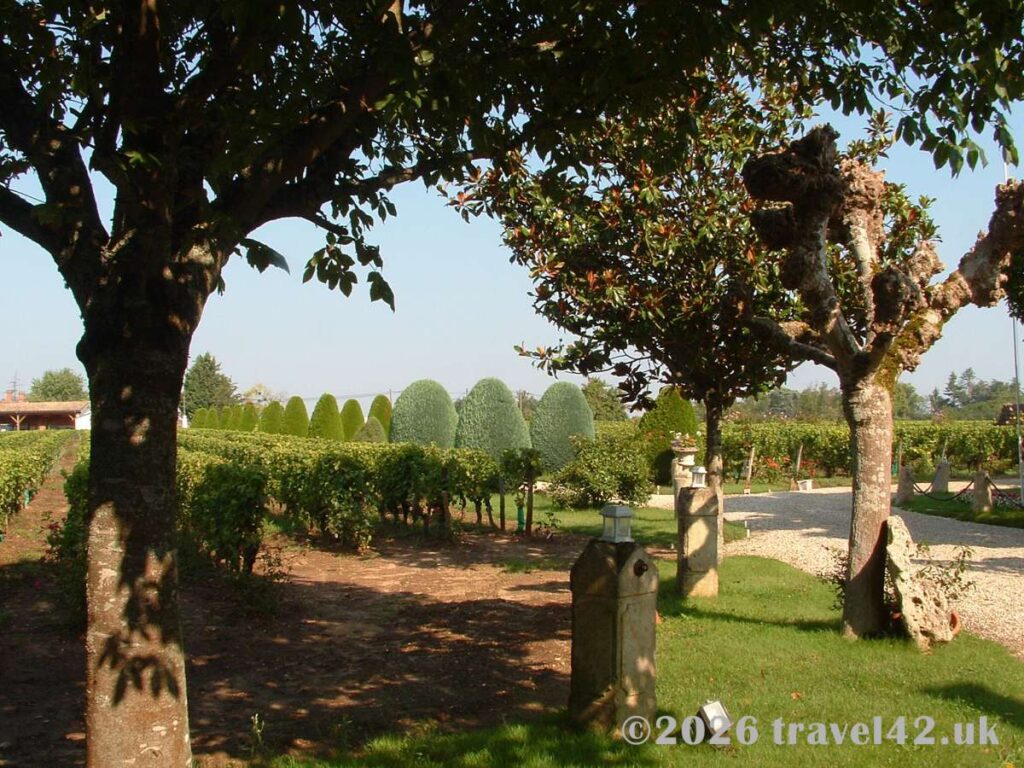
The winery and the wider Barsac area remain among our favourites. Whenever we spot a dessert wine from there in the UK, we are likely to buy it without much thought, either to keep for a special occasion or to give to someone who appreciates excellent wine.
Cap Ferret: Our Base on the Atlantic Coast
After another 90 kilometres or so, we reached Cap Ferret in the afternoon. This sandy peninsula separates the Atlantic Ocean from the Bay of Arcachon. We had booked a bungalow at Camping Les Viviers for three nights. It is a large, busy four-star campsite, so booking in advance is sensible, particularly in summer. A deposit was required when we made our reservation.
The campsite was very good and felt safe, while the bungalow was clean and comfortable. It was the same bungalow mentioned in our Rocamadour story, where a dog ate the cheese we had left outside.
We chose Cap Ferret for several reasons: to enjoy the beautiful beaches of France, visit the nearby attractions and, of course, taste oysters from the Bay of Arcachon.
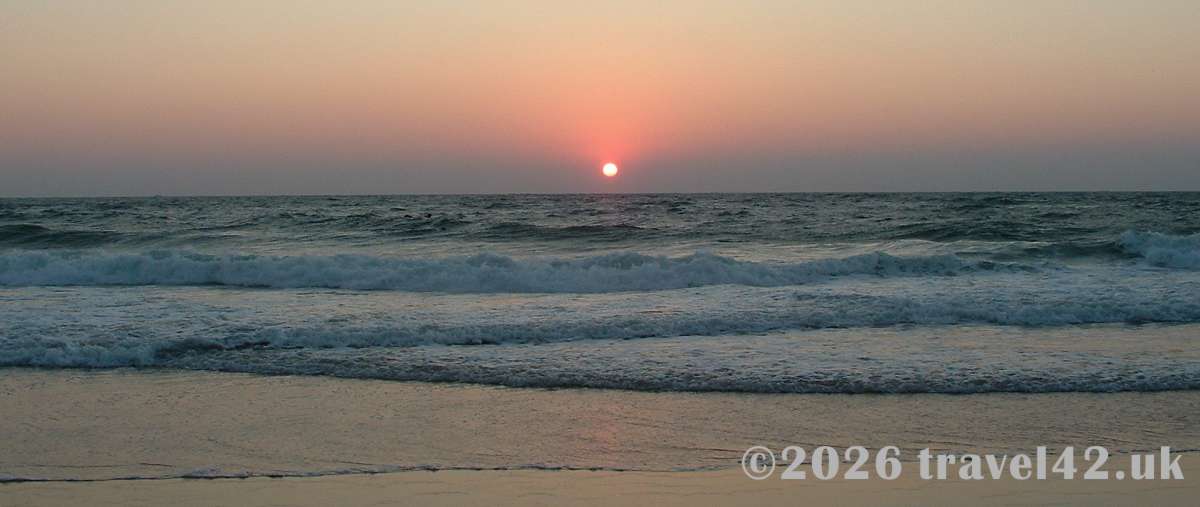
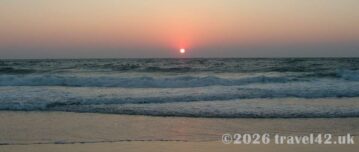
Most of all, we enjoyed the Atlantic sunsets, when the sun sinks into the ocean. The August weather was lovely, and we continued walking along the beach even after sunset. It was one of those romantic moments you can enjoy together while feeling an almost infinite sense of freedom.
For couples: After the Alps and Provence, three nights in one place, with a bungalow instead of a tent, felt like a genuine rest. That is another lesson we took from this trip: if you spend most nights in a tent, build in a more comfortable stay now and then. A little extra comfort can make a long road trip much more enjoyable.
Oysters on the Bay of Arcachon
One of the best things about the Atlantic coast of France is its seafood. We enjoyed the oysters and can honestly say they were among the best I have ever tasted. Of course, the right drink matters too, and in our case it was a delicious French champagne.
We ate them in a simple restaurant near the Dune du Pilat. We have to admit that it is not always the setting that matters most, but the food, the drink and the company. These are the simple, and sometimes not so simple, pleasures that make travelling worthwhile.
Arcachon and the Dune du Pilat
Arcachon and the dune lie on the other side of the bay from our campsite. We therefore had to drive around the bay and combined the two visits into one day. If you plan to do the same, allow plenty of time for the journey. A ferry may also operate between Cap Ferret and Arcachon, but we did not investigate that option during our visit.
As planned, we visited the Great Dune of Pilat, also known as the Dune du Pilat or Dune du Pyla. It is widely described as the highest sand dune in Europe. It rises to around 100 metres, stretches for almost three kilometres and is roughly 600 metres wide, although its dimensions change with the wind. It stands at the entrance to the Bay of Arcachon, opposite Cap Ferret.
The Dune du Pilat is one of the best-known attractions on this stretch of the coast, and it is easy to understand why. The scenery is spectacular, and from the top the ocean, the bay and the surrounding pine forests create an exceptional panorama.
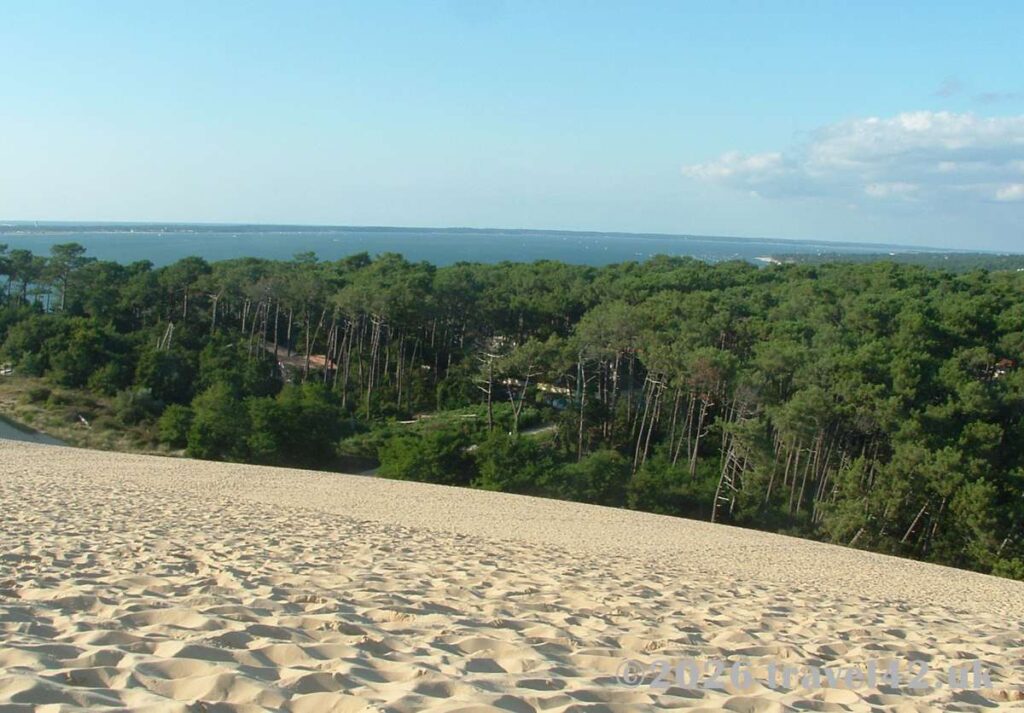
One more practical detail: if you do not fancy a long walk to reach the site, the main car park is close to the visitor entrance. We appreciated that convenience.
Château de Chenonceau on the Way North
The Atlantic coast was the westernmost point of our trip. From there, we began our journey home via Paris and Reims, with a few more places to visit in the Loire Valley before reaching the capital. One of them was near Tours, roughly halfway between Cap Ferret and Paris.
Our first stop was the Royal Château de Chenonceau, whose present-day building was constructed in the early sixteenth century over the River Cher. We spent a few hours there, visiting the château and wandering through the grounds. Its most striking feature is the magnificent gallery spanning the river, while the gardens are also beautifully maintained.
The château is often called the Château des Dames, or Ladies’ Château, because several influential women shaped its history. Katherine Briçonnet supervised the construction of the main residence, Diane de Poitiers commissioned the bridge across the Cher, and Catherine de’ Medici later added the famous gallery above it.
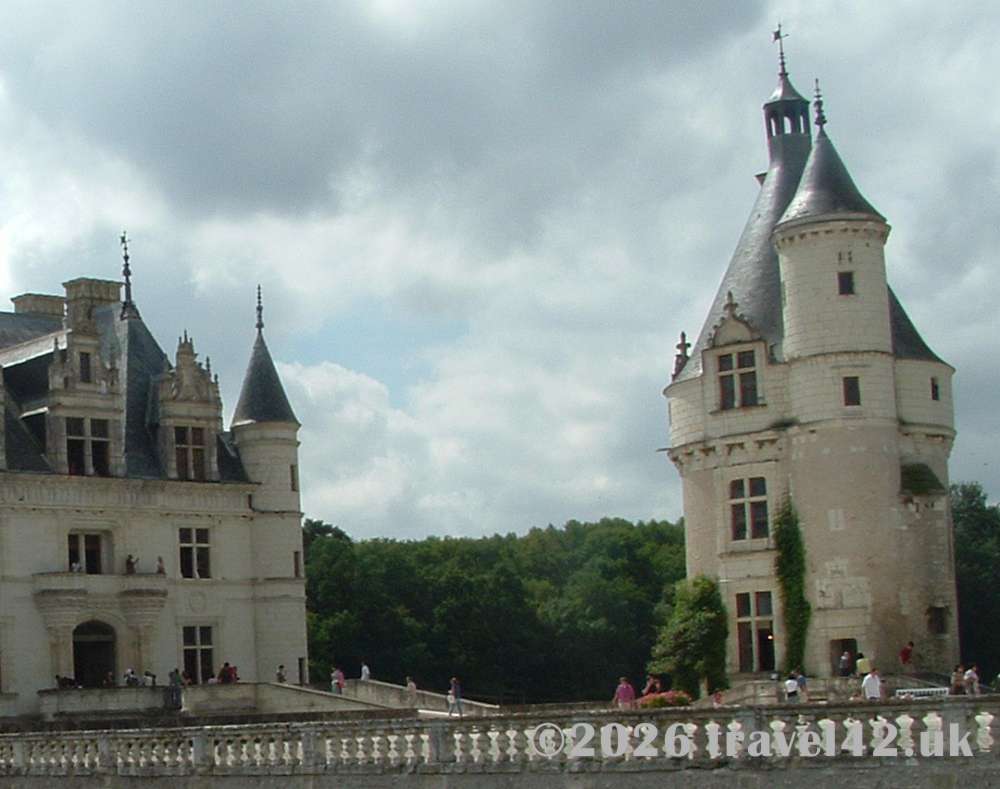
For couples: Chenonceau is a place to enjoy at a leisurely pace. A few hours gives you time to explore the rooms and gardens without rushing. It is a good stop if you appreciate historic architecture, beautiful grounds and a little romance along the way.
Cave des Roches: Mushrooms and an Underground Town
After visiting the château, we made another stop, around 15-20 kilometres away, at Cave des Roches in Bourré. This former tufa quarry contains an underground mushroom farm and a sculpted recreation of a town.
The mushroom farm is located about 50 metres underground, where the temperature remains cool and humidity is high throughout the year. It is much colder than outside in summer, so take a jumper if you visit.
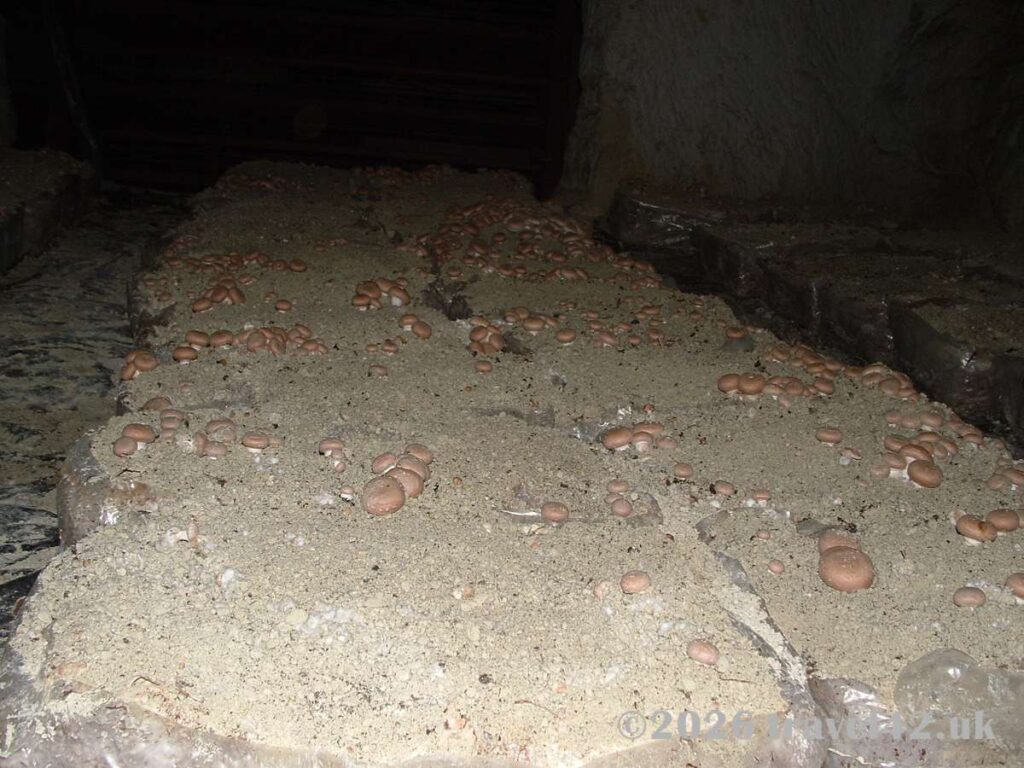
During our guided tour, we were told that the farm accounted for around 40% of the world’s production of one particular variety, the pied bleu, or blue-foot mushroom. We were also told that its mushrooms supplied top restaurants in cities such as New York, Tokyo, London and Geneva.
The other attraction is the Underground Town, a sculpted recreation of a nineteenth-century town created by an artist in the old quarry. It is a modern work of art rather than a real town where people once lived.
We found the combination unusual and interesting: one part was a working agricultural operation, while the other offered an imaginative look at underground sculpture and craftsmanship.
When we visited, the guided tours ran several times a day, with more tours in summer than in winter. The prices and timetable have changed over time, so check the current arrangements directly with Cave des Roches before planning your visit.
Heading to Paris and Versailles
The next leg of our journey took us towards Paris and Versailles. After the vineyards of Barsac, the beaches of Cap Ferret and the underground caves of the Loire Valley, the pace was about to change again. We still had some distance to cover, but we planned to arrive in Paris around sunset.
You can read about the final part of our journey in our post on Paris, Versailles and Disneyland Paris.
For more routes and destinations across the region, visit our Western Europe Travel Guide for Couples.
Travel42 UK is a couples travel journal dedicated to immersive road trips, slow travel, and destination storytelling.
Explore More of Western Europe:
The long way round, as a couple
About the Author
The author, ainarsbl, is a Level 7 Google Local Guide, Master Reviewer and expert travel reviewer focused on scenic landscapes, UNESCO sites and meaningful couples travel experiences.