
There is a moment when Zanzibar shifts from turquoise calm to something entirely different.
For us, that moment came before sunrise – leaving Paje in darkness for a two-day safari in mainland Tanzania’s vast wilderness: Nyerere National Park, formerly known as the Selous Game Reserve. (Some Tanzanians may not yet recognize it by its new name.)
If you’re travelling as a couple and wondering whether it’s worth combining beach relaxation with a short safari – the answer is yes. And for us, two days turned out to be exactly right.
In fact, it was another serious adventure added to our Zanzibar holiday, with the total cost for everything related to the mainland safari just over $1,500. On the other hand, we saved a lot by not flying separately from Europe to Tanzania – this two-in-one journey made financial sense and felt seamless.
A Seamless Start: From Paje to the Sky
Our alarm rang long before sunrise.
A private taxi took us from Paje to Abeid Amani Karume International Airport for our 6am departure. (Booked locally in advance for $35 each way – reliable service, more affordable than through the hotel.)
At the airport, a company representative met us, handled check-in, and provided boarding cards. That level of organisation made the early start smooth rather than stressful. After a short wait at the gate, we were guided to our plane.
Our aircraft was small – around 10-12 seats – intimate and almost personal. Shortly after take-off, we climbed above a blanket of clouds.
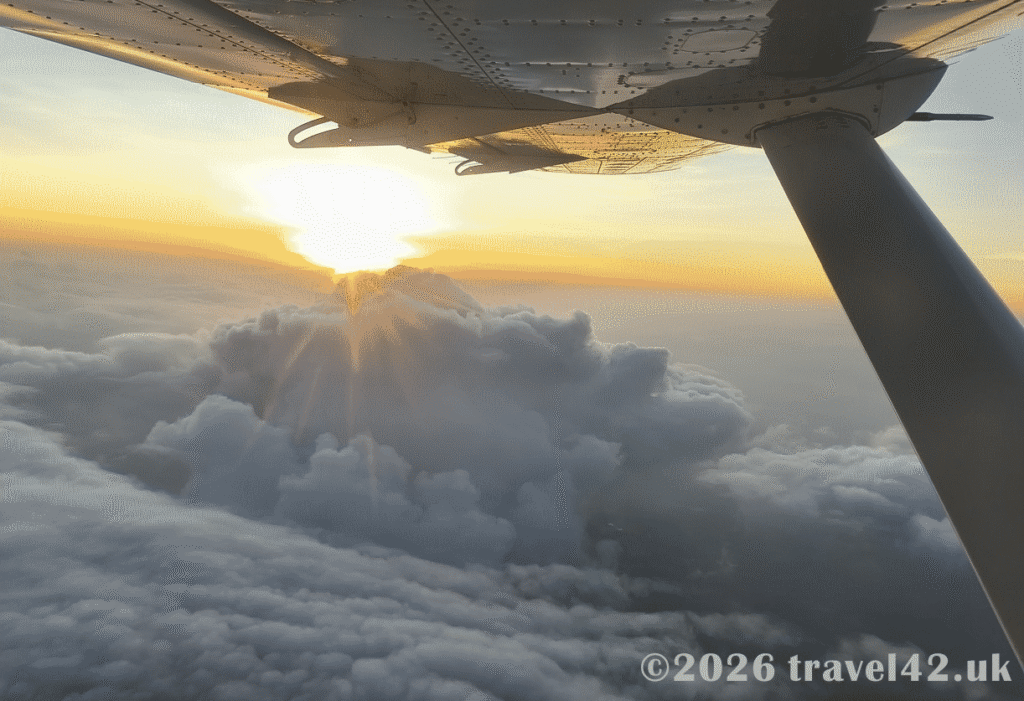
And then the sun rose – beautiful, golden light spilling across a white cloudscape, transforming the sky into layers of amber and soft pink. Watching sunrise from a tiny window, high above the world, felt almost unreal – one of those rare moments when everything goes quiet.
We didn’t speak much. We just watched.
Landing at Mtemere: Safari Begins Immediately
Less than an hour later, we descended into wilderness and landed at Mtemere Airstrip – a simple clearing carved into the bush.
Safari vehicles were waiting beside the runway. Within minutes, our bags were loaded into an open-sided vehicle, and we drove straight into the park. No terminal buildings. No transition period. Immediate immersion.
It was one of the most seamless travel transitions we’ve ever experienced. (On the way, we were told plans exist to build a small terminal in the future.)

Day One: A Full Day in the Wild
Our first day was entirely dedicated to a game drive across Nyerere National Park.
The scale is immense. The landscapes feel endless – wide plains dotted with trees, lake systems cutting through dry earth, and more dense forest on the way back.
We were lucky. Over the course of the day, we saw:
- Giraffes moving with slow elegance
- Large herds of gazelles
- Several buffalo and zebras grazing under trees
- Elephants crossing directly in front of us
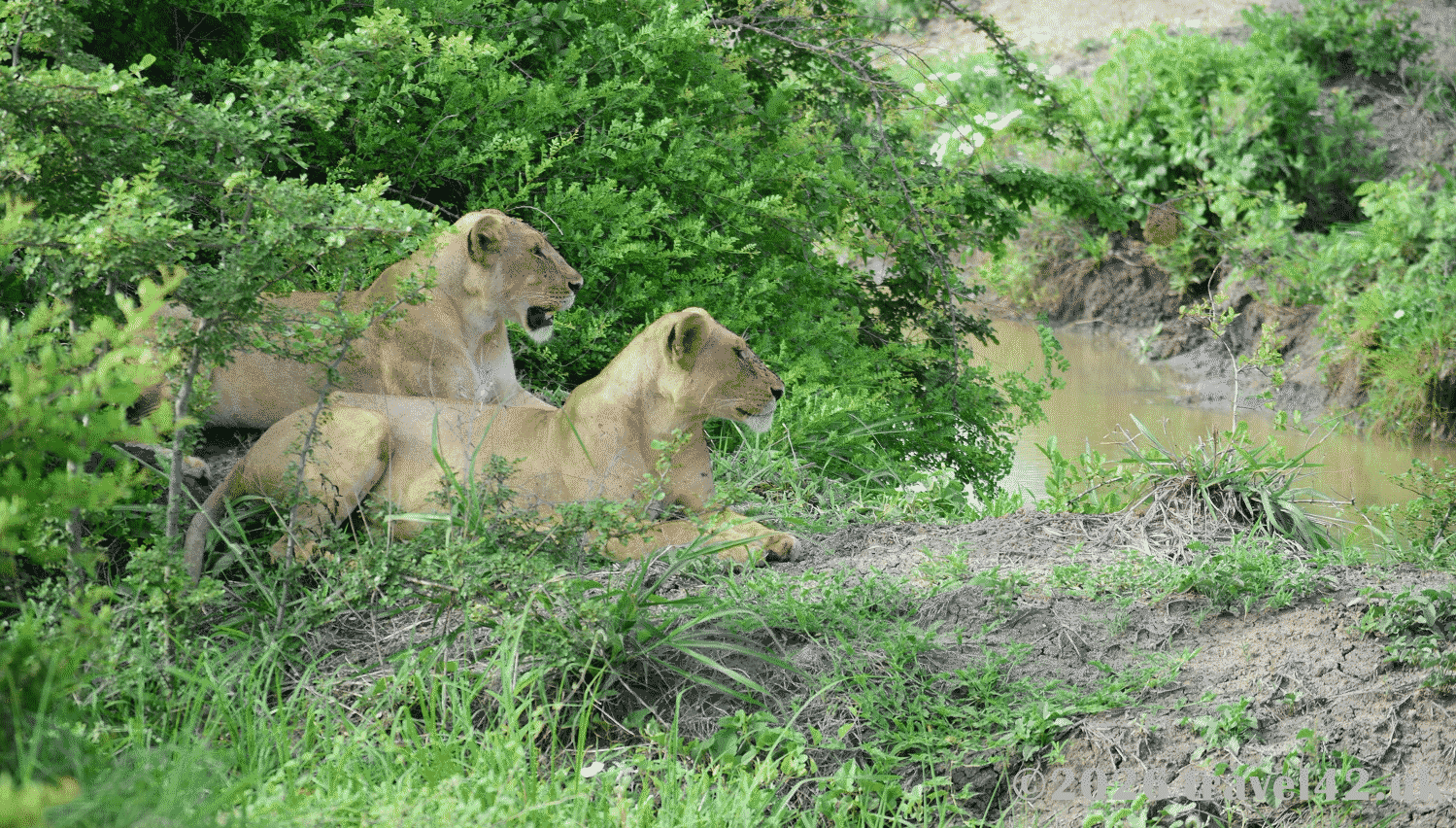
- Lions resting just next to our vehicle (three times!)
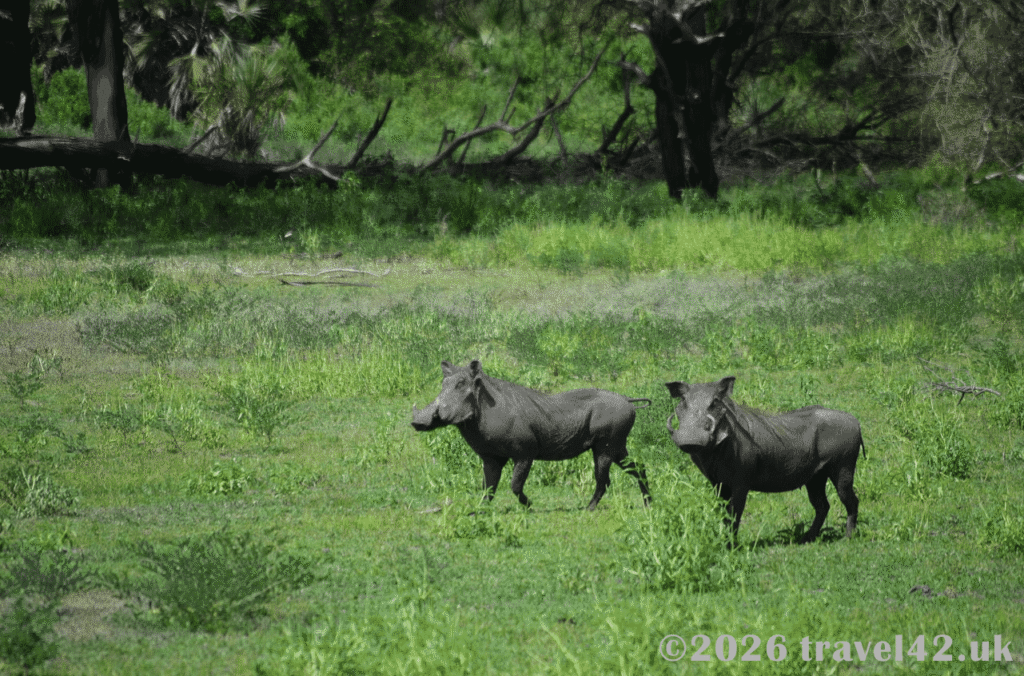
- Warthogs (“pumbas”) eating on their knees and darting through the grass
- A huge variety of birds, from tiny flashes of colour to vultures and majestic birds of pray
Our guide was exceptional – explaining behaviours, habitats, and subtle details we would never have noticed on our own. The driver handled sandy tracks and uneven terrain with calm professionalism.
For couples (we were two couples in our car), safari creates quiet shared adrenaline: the squeeze of a hand when elephants appear, whispered “look there,” the stillness and excitement when watching lions together.

After a lunch stop around midday, by late afternoon, we had seen an extraordinary range of wildlife. Tips of around $30 are customary but expected for the ride at the end of the day.
Night Near the Park
That evening, we transferred to accommodation in the nearby village of Mloka.
Dinner felt grounding after such a sensory day. Before the meal, we enjoyed a pint of cold Kilimanjaro beer ($2.30 per bottle) – exactly what we needed. Safari brings a particular tiredness, filled with replaying images long after the sun sets.
Day Two: Slower, Different Perspectives
The second day unfolded at a gentler pace.
Morning Bush Walk
We began with a guided bush walk just outside the park entrance. We noticed footprints of hippos from their nocturnal walks (not something you want to meet unexpectedly!), broken branches from larger animals, and distant bird calls.
It was less dramatic than spotting lions but deeply immersive and educational. Our guide, a local with tremendous knowledge of the bush, shared insights about animals and local plants, including medicinal uses. Two hours felt like minutes, and we rewarded him with a generous $15 tip.
River Safari on the Rufiji
Later, our guide took us to explore the Rufiji River by boat. From the water, we observed:
- A crocodile resting motionless on a branch on a small island
- Groups of hippos partially submerged, avoiding us as we approached
- Birds nesting along sandy islands and riverbanks
- Farmers and locals working in the fields across the river
The river safari felt calmer – a strong contrast to the dusty savannah – but wildlife is unpredictable, and each moment felt precious.

Two Days Were Exactly Right
Here’s something important – perhaps different from what you often read: two days were perfect for us.
One full day in the park is enough if you are lucky enough to see a wide range of animals. The second day offers a different perspective – walking, river views, slower observation. Wildlife is never guaranteed, but that unpredictability is part of the magic.
We didn’t see hyenas or African wild dogs – rare in this region. But instead of disappointment, we felt content. Safari isn’t about ticking boxes; it’s about immersion.
We experienced elephants, lions, giraffes, buffalo, hippos, crocodiles, and countless birds in their natural habitat. That felt complete. The animals we didn’t see? They give us a reason to return – perhaps to another park, or another country entirely. One day.
And that feels like a satisfying, unfinished story.
Returning to Zanzibar
By late afternoon, we were airborne again – trading wilderness for coastline. Less than 48 hours after leaving, we were back on white sand in Paje for dinner at our hotel (nearly $30 for a simple meal; full meals would be around $60).
The contrast made both experiences stronger. Beach calm with the usual breeze felt softer. Safari intensity felt even more powerful in hindsight.
Why This Combination Works So Well for Couples
Adding a short safari to a Zanzibar holiday:
- Creates a powerful contrast
- Adds depth beyond beaches and local sights
- Feels achievable within a limited timeframe
- Delivers unforgettable shared moments
- Saves money if combined with Zanzibar instead of flying separately
For us, two days in Nyerere National Park struck the perfect balance between adventure and relaxation. We left fulfilled – not exhausted, not chasing more, just grateful.
And perhaps already thinking about where the next safari might take us.
Read more:




Adventure travel Bulgaria City break Coastal Travel Dalmatia Dorset England Food Heritage Hiking Holidays Islands Montenegro Mountains Nature North Macedonia Puglia Rail Travel Road trips Rome Scotland Sicily Weekend travel Wine tasting
The long way round, as a couple
About the Author
The author, ainarsbl, is a Level 7 Google Local Guide, Master Reviewer and expert travel reviewer focused on scenic landscapes, UNESCO sites and meaningful couples travel experiences.