
From the moment we left Zhangjiajie, we knew our China journey was building towards something special. Guilin and Yangshuo delivered exactly that – and then some.
This part of southern China is the kind of place that makes you stop mid-sentence and just stare. Karst mountains rising from flat plains, rivers winding between ancient villages, rice terraces glowing gold in the early light. For couples, it is one of the most visually beautiful regions in the entire country.
Here is everything we experienced, and everything you need to know to plan your own trip.
Booking Trains, Hotels and Attraction Tickets in China.
Before diving into Guilin and Yangshuo, it is worth sharing how we handled bookings across the whole China trip – because it saved us a lot of stress and will likely help you too.
We bought all our train tickets through chinahighlights.com and had a very good overall experience. Read our guide to China high-speed rail. One thing to be aware of: tickets are only released by China Railway approximately two weeks before departure, regardless of when you book and pay. Your e-ticket is sent after China Rail confirms the seats – that is simply how the system works, and as far as we know all ticket vendors operate this way.
For hotels, we used booking.com throughout and found the pricing worked well for us, though many travellers also use trip.com. For attraction tickets across the country, we used travelchinaguide.com, which was an excellent experience – particularly for first-timers managing everything in advance. You are assigned a dedicated agent who keeps you updated on any changes.
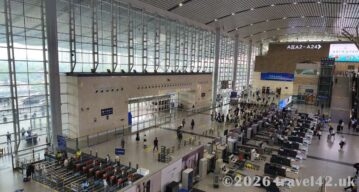
One more important note for foreign passport holders travelling by high-speed rail: you may not need to collect paper tickets at all. At every station we visited, our passports were used directly at the entrance gates, linked to our booking details. All the advice we had read about navigating Chinese ticket offices turned out to be unnecessary. It really is that simple.
Getting to Guilin: High-Speed Rail via Changsha
We began this leg of the journey in Fenghuang Ancient Town and made our way to Guilin by high-speed train. There was no direct connection, so we changed trains in Changsha – straightforward, and like every high-speed rail journey we took in China, faster and more comfortable than expected.
Arriving in Guilin: Our Hotel and First Impressions
We arrived in the late afternoon and spent one night in Guilin at the Aroma Tea House – Former Jing Guan Ming Lou Museum Hotel, priced at around £50 per night including breakfast. The name alone signals something different, and the hotel did not disappoint.
What surprised us most was the scale of it – from the outside it appeared to be quite a substantial building, but inside it truly felt like a museum. Even the communal spaces were filled with exhibits and artefacts from the past, and the whole place had an atmosphere that no boutique hotel could manufacture. Our room was enormous, with a generously sized bathroom – which turned out to be essential after the evening ahead.
One unexpected pleasure: this was the first place in China where breakfast felt noticeably European. After wholeheartedly enjoying Chinese food throughout the trip, there was something quietly comforting about a familiar morning spread.
Guilin itself is a pleasant city – more relaxed than the megacities we had passed through, surrounded by the karst scenery that quietly defines this whole region. You feel the landscape before you have even fully explored it.

Two Rivers and Four Lakes Cruise – Guilin at Night
Our first evening in Guilin was spent on the Two Rivers and Four Lakes Cruise, booked in advance through travelchinaguide.com. For the two of us, the tickets came to just under £60.
The evening had other plans. Heavy rain had raised the water levels so dramatically that the boat could not pass under some of the bridges, and we were unable to complete the full route to the fourth lake.
And yet – it became one of the most beautiful evenings of our entire China trip.
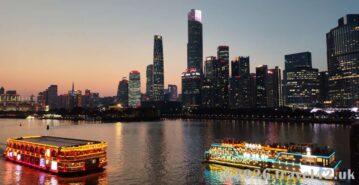
As soon as the cruise began, the skies cleared and we were able to step outside the cabin and take in the views properly. The illuminated bridges, the floodlit trees reflected in the water, the buildings glowing along the riverbanks – it felt like drifting slowly through a painting. Each bridge we passed beneath was different, with its own lighting and character; some arched elegantly, others were so narrow the boat seemed to slip through by inches.
At one point, a house on the riverbank lit up, music began to play, and figures inside started to dance – and then, as we passed, it went dark again. To this day, we are not entirely sure whether those were real people or some kind of projection. Either way, the moment was magical.
Later in the journey, we even caught a brief cormorant fishing display on the water. We were also fortunate that the boat was not full, which meant we could move freely between the cabin and the deck whenever we liked – making the most of every view.
Heavy weather, it turns out, does not ruin a river cruise. Sometimes it makes it considerably better.

Longji Rice Terraces – A Full Day Worth Every Kilometre
The next morning, a car was waiting for us – booked via TripAdvisor reviews, though the booking was ultimately fulfilled through travelchinaguide.com. The plan was a full day at the Longji Rice Terraces. In retrospect, hiring a taxi driver independently might have been more straightforward; this was the only attraction where we used a guided service, and the only one where the experience was not entirely what we had hoped for.
The company sent a different driver from the one whose reviews we had read on TripAdvisor – a small but notable discrepancy. The guide himself was genuinely knowledgeable and helpful in most respects. However, throughout the day there was a persistent effort to add extra stops and paid attractions, even before we had reached the rice terraces themselves. We visited one village along the way that, in our honest opinion, felt more like a filler stop than a genuine recommendation. We declined all further additions for the rest of the day.
If you prefer to travel at your own pace without the pressure of upselling, arranging an independent taxi is likely the better option.
What the Day Cost
Costs accumulated steadily throughout the day. For an honest overview:
- Rice terrace entrance tickets for two adults – approximately £60
- Village show ticket – approximately £20
- Driver and guide – approximately £120, including the onward drive to Yangshuo (rice terraces only would have been around £90)
- Shuttle from the car park to the terraces – a smaller additional amount
- Tip for the driver – approximately £20 (tips are expected, though the amount is at your discretion)
By the time the day was over, the total from Guilin to Yangshuo – excluding accommodation and food – came to around £200. Worth knowing when budgeting.
The Rice Terraces Themselves
None of the above mattered once we arrived.
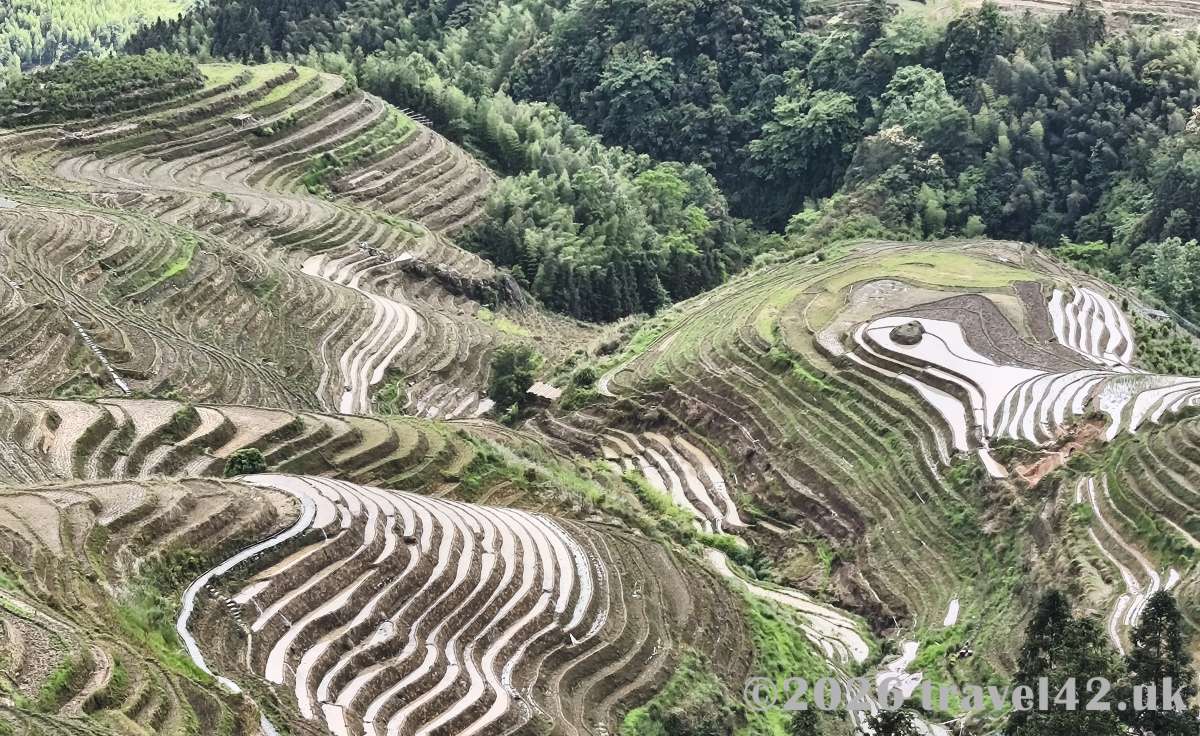
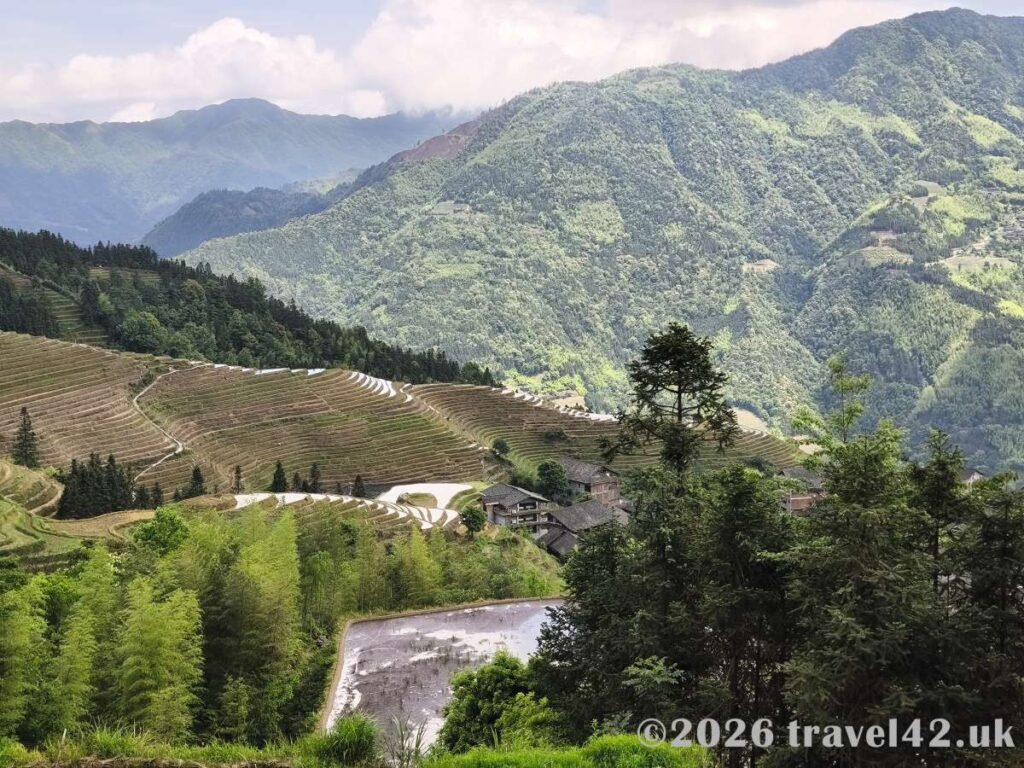
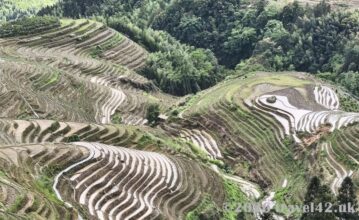
The Longji Rice Terraces are one of those landscapes that takes a moment to fully register.
housands of curved terraces cut into the hillsides, following the contours of the mountains like ripples frozen in green and gold.
We arrived at the Ping’an Terrace Fields – slightly later than planned, but at exactly the right moment. Locals were beginning to flood sections of the terraces in preparation for the new rice season, and where the water had just been introduced, the reflections turned the landscape into something almost mirror-like. It was one of the most quietly beautiful things we saw in all of China. (Note: there are two further terrace areas – the Ancient Zhuang fields and the Jinkeng Red Yao fields – which we did not reach on this visit.)
We took the local shuttle up to the higher viewpoints and walked back down, stopping at each viewpoint along the way. The walk itself takes a little over an hour at a relaxed pace, though we spent considerably longer – there was simply too much to look at.
Before returning to the car park, we had lunch at one of the village restaurants. The freshly squeezed juice was wonderfully refreshing, and genuinely exactly what we needed after a morning in the sun. We also tried the rice cooked in bamboo tubes – a dish with a devoted following and many enthusiastic reviews – though, honestly, the traditional Chinese dish we also ordered was the more satisfying of the two. Your experience may differ.
Getting from Guilin to Yangshuo – A Happy Coincidence
We had spent a good deal of time weighing up the Guilin-to-Yangshuo journey. The Li River cruise is the classic choice, and rightly so. But having already experienced a wonderful river cruise in Guilin the evening before, and a night river cruise in Fenghuang earlier in the trip, we felt the river experience had already been well and truly celebrated. We wanted to arrive in Yangshuo with time and energy to spare.
The solution presented itself naturally: at the end of the rice terraces day, we asked our guide and driver whether he could continue with us directly to Yangshuo. After a quick call to his company, he agreed. It saved us a significant amount of time, worked out well financially compared to the alternatives we had priced up, and made for a comfortable, relaxed ride through the countryside as the afternoon light faded.
Sometimes the best travel decisions are the unplanned ones.

Yangshuo – Our Base for the Next Few Days
We stayed in Yangshuo for several days at the Yangshuo Tea Cozy Hotel – £40 per night, with breakfast available at an additional £5 per person.
The hotel sits in a peaceful area outside the town centre, roughly a five to seven minute walk from the Yulong River. Whenever we wanted to go further afield, taxis were easy to find, arrived quickly and cost very little – so the slightly out-of-centre location never felt like a compromise. In fact, it made the stay feel more restful and genuinely romantic.
We arrived very late on our first night. The hotel restaurant had long since closed, but the staff were kind enough to cook a pizza for us so we could eat in comfort rather than head back out into the dark. It was the sort of small, unhurried gesture that stays with you.
The rooms were large – ours had a separate living room, a bedroom and a balcony. Breakfast offered both Chinese and European options with good coffee. On our last day, when the heat had built to something considerable, we made full use of the outdoor pool. It was exactly the kind of pause the trip needed before continuing to Guangzhou.
Yangshuo itself has been welcoming travellers for a long time, and it shows in the best possible way – there is a well-worn ease to the place, with good food, pleasant streets and the karst scenery pressing in from every direction.
Bamboo Rafting on the Yulong River
One of the classic Yangshuo experiences is bamboo rafting on the Yulong River, and it fully earned its reputation. Unlike the Li River, which carries considerably more boat traffic, the Yulong is quieter and more intimate – the kind of river that rewards slow travel.
We walked along the riverbank from the hotel and reached the first rafting station in about twenty minutes. It turned out they had run out of rafts that day, which was a minor setback – though given that we were not in any rush, it barely registered as a disappointment.
The stations along the river share information about availability on a whiteboard – in Chinese, naturally. With the help of a translation app, we identified a station with rafts available and booked a short taxi ride to get there. A few minutes of queuing at the box office, and we were in.
A member of staff guided us to the departure point, helped us settle onto the raft, and introduced us to our captain – the person responsible for navigating us downstream while we sat back and took in the surroundings. Despite the river being busy with other rafters, it never felt chaotic; our captain handled everything with practised calm.
The water was clear enough to see the riverbed, the karst peaks rose on either side, and the whole experience had a pleasantly unhurried quality that suited Yangshuo perfectly. The cost for two was roughly £30, though this varies depending on the route you choose.

Impression Sanjie Liu – The Most Memorable Evening of Our Trip
We have seen a number of spectacular evening performances during our travels together. None has come anywhere close to Impression Sanjie Liu.
This outdoor show, created by acclaimed director Zhang Yimou, uses the river itself as its stage, with the karst mountains rising behind as a natural backdrop. Light, music, local performers, the surrounding landscape and modern special effects combine in a way that genuinely feels unlike anything else we have experienced.
We bought VIP tickets – around £150 for two – and it was one of the best decisions we made during the entire China trip.
The experience begins well before the performance itself. Even approaching the venue, the whole surrounding area feels designed for the evening – walkways, striking architecture and a sense of anticipation building from the moment you arrive. At the entrance, we were briefly paused while a member of staff made a call; moments later, someone came to meet us personally, guided us inside the building, and handed us to another team member who escorted us to our private lounge. Tea and fruit were waiting at our own table.
We had not expected that level of attention from the outset. It was, simply put, a genuinely special experience from start to finish.
The reason the VIP tickets are worth the premium is also entirely practical: it was raining on the evening we attended. Our covered lounge meant we stayed dry and comfortable throughout. The rest of the audience sat in the open in the rain. We watched the performance unfold across the water and mountains – light and colour shifting through the darkness, figures moving across the river, the whole scene framed by the karst peaks – for approximately one hour that felt both immersive and timeless.
Long after the show ended, we were still describing specific images from it to each other.
One small practical note: when leaving, we walked a short distance away from the main entrance before booking a taxi. The traffic immediately outside the venue was completely gridlocked after the show – walking a couple of hundred metres first made an enormous difference.
Why Guilin and Yangshuo Work So Well for Couples
This region works so well for couples because it combines genuine natural beauty with experiences that feel designed to be shared.
The rice terraces, the river cruise, the bamboo rafting, the night show – none of these are experiences you want to have alone. They gain enormously from being witnessed together, from having someone to turn to when something takes your breath away.
It is also a region of contrasts: early mornings in mountain landscapes, relaxed afternoons in riverside towns, spectacular evenings under floodlit skies and karst peaks. The rhythm feels completely natural for two people who want to move between adventure and ease.
Practical Tips for Couples Visiting Guilin and Yangshuo
- Getting there: High-speed rail from most major Chinese cities; change at Changsha if travelling from Fenghuang or Zhangjiajie
- Train tickets: Book through a reputable agent such as chinahighlights.com; tickets are released approximately two weeks before travel regardless of when you book
- Passports as tickets: Foreign passport holders are likely to find their tickets linked directly to their passport – no ticket office queue needed
- Two Rivers and Four Lakes Cruise: Book in advance; do not be deterred by rain – the illuminated evening cruise is beautiful in almost any weather
- Longji Rice Terraces: Consider arranging an independent taxi rather than a guided tour if you prefer to travel at your own pace and avoid upselling
- Yangshuo accommodation: Staying slightly outside the centre can make your trip feel more relaxed and romantic; taxis are cheap and readily available
- Impression Sanjie Liu: Book early, particularly in peak season; VIP tickets are worth the extra cost for the covered seating, the service and the views
- Budget overview: Yangshuo is excellent value for food and local activities; the main investment is the night show and the rice terraces day
Suggested Guilin and Yangshuo Itinerary for Couples
Day 1 – Guilin: Arrive in the afternoon, check in, Two Rivers and Four Lakes evening cruise
Day 2 – Longji: Full day at the Longji Rice Terraces (one or more terrace areas); continue to Yangshuo in the late afternoon
Days 3- 4 – Yangshuo: Bamboo rafting on the Yulong River, explore the town and local food, Impression Sanjie Liu on one evening; allow time to rest if your hotel has a pool
Final Thoughts
Guilin and Yangshuo were everything we had hoped for – and gave us considerably more than we had planned on. This is a part of China that quietly encourages you to slow down. We did not visit everything on our original list, and we have absolutely no regrets. Everything we did was worth doing, and no amount of time here would ever feel quite enough.
The rice terraces alone would have justified this entire leg of the journey. Add the evening cruise through Guilin’s illuminated waterways, the bamboo rafting on the Yulong, and one extraordinary performance on a river surrounded by mountains and light – and this part of China becomes almost impossible to fault. The fact that all of this is possible in three days and one afternoon is, frankly, remarkable.
For couples travelling China, this region sits alongside Zhangjiajie as one of the truly unmissable stops. The landscapes are extraordinary. The experiences are made to be shared. And some evenings stay with you long after you have come home.
Our journey continued from Yangshuo to Guangzhou, where a different kind of China was waiting. From there, our journey continued to Shanghai.
This guide is part of our China Travel Guide for Couples series.
Travel42 UK is a couples travel journal dedicated to immersive road trips, slow travel, and destination storytelling.
Explore More of China:
–


The long way round, as a couple
About the Author
The author, ainarsbl, is a Level 7 Google Local Guide, Master Reviewer and expert travel reviewer focused on scenic landscapes, UNESCO sites and meaningful couples travel experiences.